
My Octopus Teacher: Community, Pain, and God’s Providence
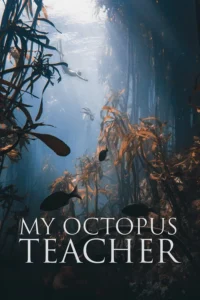
| 🎬 Title & Year | My Octopus Teacher (2020) |
| 🎥 Director | Pippa Ehrlich, James Reed |
| 👥 Starring | Craig Foster |
| 🕒 Genre / Runtime | Documentary, Nature · 85 mins |
| 🔞 MPA Rating | TV-G |
| ✝️ Core Faith Themes | Divine Providence, Community & Hospitality, Compassionate Accompaniment, Sacrificial Love |
| 📖 Key Scripture | Job 12:7–10, John 12:24 |
Table of Contents
During my graduate studies in documentary filmmaking, we had an in-depth discussion about the Netflix documentary My Octopus Teacher. We explored various themes surrounding what humanity can learn from the profound connection between a human and an octopus. In this post, I want to share a My Octopus Teacher Christian reflection through the lens of biblical faith and God’s sovereign providence.
The Power and Dilemma of Documentaries
In film school, we defined documentaries as the craft of capturing reality—real people, actual events, and natural phenomena. It is perhaps the purest medium for documenting the raw truth. However, one question our professor posed always stayed with me: “Is a documentary truly neutral, or does it inevitably carry the weight of propaganda?”
While early documentary history saw non-fiction film used heavily as an instrument of state propaganda, the true strength of modern documentary lies in its realism. Because it presents actual reality, the meaning is shaped by the lens through which the viewer watches. Ironically, while fiction films dictate a specific narrative, a realistic documentary can be interpreted in countless ways depending on one’s worldview. As believers, looking at films through the biblical lens is the heart of what we do here. This is precisely the core purpose of this blog. Shall we dive into the world of this documentary together?
The First Encounter: The Art of Patient Waiting
Though an octopus has a brief lifespan of just one to two years, anyone who has watched the film knows they possess remarkable intelligence. At first, this fragile creature was intensely wary of Craig Foster, hiding behind shells and playing hide-and-seek while watching him from a safe distance.
Think about how newcomers enter our church communities. Don’t they often act like that cautious octopus? In the film, Craig did not rush to touch or chase her. Instead, he visited the exact same kelp forest day after day, simply floating nearby to prove he posed no threat. When newcomers step into our churches, overwhelming them with instant familiarity can sometimes feel intrusive. Craig reminds us that true hospitality often begins with gentle patience and respectful space.
Lowering the Guard: The First Touch of Trust
One of the most moving moments in the documentary is when the octopus finally lowers her guard, cautiously extending a single arm to touch Craig’s hand. Just one tentacle—a tentative first step toward trust.
This scene brought back vivid memories of when I first arrived in the United States to study. I still remember attending an American church for the very first time, shaking hands, and sharing names with unfamiliar faces. For weeks, I had sat quietly in the back and left immediately after service, much like that cautious creature. Over time, that octopus grew so comfortable that she rested entirely on Craig’s chest and swam alongside him. It mirrors the beautiful journey of a newcomer finding safety, belonging, and genuine fellowship within a spiritual community.
The Shark Attack: Compassion Over Control
The tone shifts dramatically when a pajama shark attacks the octopus. Early on, my eyes were glued to Craig, but the moment she lost an arm to the predator, my heart completely shifted toward the octopus. I felt deep empathy for her vulnerability.
What stood out most was Craig’s choice not to intervene, despite the agonizing emotional conflict he felt. In our small groups and church communities, we witness members facing unexpected trials and external hardships. While our instinct is to eliminate every “shark” in their lives, true support often means walking beside them in prayer and compassionate presence rather than trying to micromanage their struggles. Craig visited her den every day, quietly witnessing how she healed and regenerated her missing limb through resilient biological grace.
Trusting God’s Sovereign Providence
Craig resisted the urge to intervene because he recognized that doing so would disrupt the delicate balance of the marine ecosystem. The shark, too, was a creature trying to survive. Craig chose to submit to the natural order.
As Christians, what we call the “natural order” is ultimately God’s sovereign plan and providence. Recognizing that God is in control frees us from the anxiety of trying to control every outcome in the lives of those we love.
A Grain of Wheat and New Life
Scripture reminds us: “Unless a grain of wheat falls into the earth and dies, it remains alone; but if it dies, it bears much fruit.” (John 12:24). This truth resonates deeply with the conclusion of the documentary.
At the end of her life, the octopus pours her remaining strength into guarding and aerating her eggs, sacrificing everything so the next generation might thrive. Perhaps the newborn octopuses Craig discovered in that same forest were her final gift to him. As we reflect on this profound story, how are we called to approach, love, and sacrifice for our families, friends, and church communities today?
“Ask the beasts, and they will teach you; and the fish of the sea will declare to you… In his hand is the life of every living thing and the breath of all mankind.”
Key Takeaways & Faith Insights
- The Art of Patient Waiting & Trust: Welcoming newcomers into our faith communities begins with gentle patience and persistent presence, mirroring the cautious journey from hesitation to deep fellowship.
- Compassion Over Control: When loved ones face sudden trials, genuine spiritual support means walking alongside them with prayerful presence rather than attempting to micromanage God’s sovereign process.
- Sacrifice That Yields New Life: Like a grain of wheat falling into the earth, pouring our lives out for others reflects Christ’s sacrificial love and God’s providence across every living thing. (John 12:24, Job 12:7–10)
“A lot of people say that an octopus is like an alien. But the strange thing is, as you get closer to them, you realize that we’re very similar in a lot of ways.” — Craig Foster
Explore More Screen Devotions:
- 🎬 Movies: Explore Other Faith-Based Film Reflections
- 🎨 Animation: Spiritual Insights in Animated Films
Scripture taken from the Holy Bible, NEW INTERNATIONAL VERSION®, NIV® Copyright © 1973, 1978, 1984, 2011 by Biblica, Inc.® Used by permission. All rights reserved worldwide.