
Titanic: Nearer, My God, to Thee and the Power of Sacrificial Love
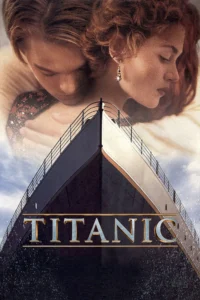
| 🎬 Title & Year | Titanic (1997) |
| 🎥 Director | James Cameron |
| 👥 Starring | Leonardo DiCaprio, Kate Winslet, Billy Zane, Kathy Bates |
| 🕒 Genre / Runtime | Drama, Romance, History · 194 mins |
| 🔞 MPA Rating | PG-13 |
| ✝️ Core Faith Themes | Incarnational Humility, Substitutionary Atonement, Eternal Hope, New Identity |
| 📖 Key Scripture | John 15:13, Philippians 2:6–8, 2 Corinthians 5:17, Luke 15:4–7 |
Table of Contents
Welcome to this Titanic Christian review. The moment has finally arrived. Among all the films I have longed to review, this is the one I have anticipated most: Titanic. Alongside La La Land, Titanic is a masterpiece I have watched dozens of times. Back during my university years, I often wondered what it would be like to analyze Titanic through a biblical worldview. More than fifteen years have passed since that initial thought. Today, let us explore the gospel message echoing from the freezing waters of the North Atlantic through a Christian lens.
James Cameron’s Titanic (1997) stands as one of the greatest cinematic achievements in history. While celebrated globally as a monumental historical tragedy and an epic romance, viewed through a biblical worldview, it offers profound spiritual reflections. Beyond the grand decks, rigid Victorian social hierarchy, and the inevitable collision with the iceberg lie core themes of the gospel: incarnational humility, substitutionary atonement, heavenly peace in the face of death, and spiritual rebirth.
Humanity frequently overestimates its own ingenuity, convincing itself that it can build an “unsinkable” vessel. Yet when earthly security nets collapse, true salvation arrives not through high social status or material wealth, but through a sacrificial love that steps down to the lowest place. Just as humanity once boasted of the unsinkable ship, it crumbled in moments—much like the Tower of Babel in Scripture.
Leaving the High Places for the Lowly
The narrative of Titanic constructs two sharply contrasting worlds. On one hand, there is the suffocating atmosphere of the first-class cabins—Rose’s world—filled with outward luxury, hypocrisy, and rigid social decorum. On the other hand, there is the lively, unpretentious steerage below deck where Jack resides. Trapped in an arranged marriage designed to protect her family’s social standing, Rose was suffocating spiritually. Desperate to escape this agonizing reality, she ran to the stern to end her life. That was when she first met Jack. As their bond deepened, they crossed an unspoken boundary: a first-class aristocrat descending into the lower deck where the third-class passengers lived.
Rose’s descent into the steerage quarters was a deliberate abandonment of aristocratic self-righteousness and superficial facade. Casting aside her corset and high-society decorum to dance barefoot and share beer with Jack mirrors the mystery of the Incarnation in Scripture, bringing Philippians 2:6–7 to mind. While we do not equate Rose directly with Christ, witnessing these moments allows us to reflect naturally on Jesus stepping down into humanity.
Jesus did not linger in the banquets of arrogant religious elites; He walked among the marginalized, tax collectors, and sinners, sharing meals and authentic fellowship with broken people. True life and restoration do not begin when we lift our heads proudly in high towers, but when we strip away our outward pretensions and step down to share genuine grace with the broken.
God Delights in Worship from the Whole Heart
Midway through the film, a Sunday service is held in the first-class dining saloon, led by Captain Smith. Rose, her fiancé Cal Hockley, and her mother sit impeccably dressed, singing a hymn. The hymn they sing is Eternal Father, Strong to Save (“Hear us when we cry to Thee, for those in peril on the sea”). This scene serves as a sharp satire of first-class hypocrisy and hubris. Convinced they were in no peril on an unsinkable ship, their singing reflected the pride of Babel—the illusion that human achievement rivals God. Even more striking, when Jack arrives outside seeking Rose, he is stopped and driven away by security. This parallels the religious establishment of Jesus’ day, which rejected the living Truth standing outside its temple walls.
True faith welcomes all people regardless of wealth or background. Any community that isolates itself, turns away ordinary people, and hoards grace operates in stark contradiction to genuine Christian fellowship.
Nearer, My God, to Thee: Praise Amidst the Sinking Ship
Earthly narratives cannot sustain a fairy tale forever. The ship declared unsinkable began tilting rapidly into the ocean after striking an iceberg, plunging the decks into absolute terror and chaos. While people screamed and fought for survival, Wallace Hartley and his orchestra refused to flee. Remaining at their posts, they lifted their instruments and played their final piece: the nineteenth-century hymn Nearer, My God, to Thee.
As sacred music resounded over life-and-death chaos, it created the most spiritually profound moment in the film. Meanwhile, Cal Hockley approached First Officer William Murdoch, slipping a large wad of cash into his coat pocket to secure a private seat on a lifeboat, clinging to money and prestige until the very end. But as panic surged among steerage passengers rushing the final collapsible boat, Murdoch drew his weapon to restore order, fatally shooting an innocent passenger in the panic. Overcome with guilt and despair, Murdoch saluted and ended his own life, falling into the sea.
Before that moment, Murdoch delivered one of the most unforgettable lines in cinema. When Cal insisted, “We had a deal!”, Murdoch hurled the cash into his face and shouted:
“Your money can’t save you anymore than it can save me!”
Can heaven be bought with indulgences? Does the sound of coins falling into a coffer purchase forgiveness of sins? Cal attempted to buy his way into salvation, but Murdoch’s declaration exposed the utter vanity of wealth. Salvation cannot be purchased with money or human status; it is entered solely through faith in God’s kingdom. Facing eternal judgment and physical death, earthly riches are powerless to save a soul. Cal’s corrupt attempt at survival sharply magnifies the purity of Jack’s sacrifice, who gave his own life freely without demanding anything in return.
A Sacrificial Love in the Freezing Deep
The grand vessel that promised invulnerability vanished into the deep sea because of an iceberg. The emotional climax of the story unfolds in the freezing waters of the North Atlantic. With only a single wooden door capable of supporting one person above the lethal temperature, Jack places Rose onto the debris and remains in the sub-zero water himself.
This act serves as a vivid cinematic metaphor for substitutionary atonement. Jack absorbed the lethal environment so Rose could survive, extracting a solemn promise that she would live on before slipping quietly into the frozen depths. Scripture defines true love not as fleeting sentiment, but as self-giving sacrifice: “Greater love has no one than this: to lay down one’s life for one’s friends” (John 15:13).
On the cross, Jesus Christ bore the eternal penalty and death that humanity deserved, lifting us up into life. Jack’s freezing hands holding Rose until his last breath reflect Christ’s unconditional love—the Good Shepherd who leaves the ninety-nine to rescue the one lost sheep at all costs.
Living with a New Name and True Freedom
The redemptive arc reaches completion when Rose is rescued by the RMS Carpathia. When the officer asks for her identity, she discards her family lineage and answers, “Rose Dawson.” Abandoning the oppressive heritage and transactional life planned for her, she fully embraced the name of the one who laid down his life to save her. Renouncing her former status reflects the posture of Christ, who emptied Himself of heavenly privilege to enter our world.
The closing montage of 100-year-old Rose showcases photographs of her riding horses, piloting airplanes, and living a bold, expansive life. Her days were not squandered in passive grief or bondage to the past. She lived fully, honoring the life that was given for her redemption.
This illustrates the transformed identity granted to every believer redeemed by the blood of Christ. Anyone who is in Christ is a new creation, freed from the yoke of past sin and legalism:
“Therefore, if anyone is in Christ, the new creation has come: The old has gone, the new is here!”
We are no longer bound by past wounds or fear. As recipients of unmerited grace, we are called to live out each day in purposeful freedom and gratitude.
What is the “unsinkable ship” in your own life, and when that very ship shakes and begins to sink, what is your soul holding onto—and to whom are you directing your praise?
Key Takeaways & Faith Insights
- Grace Descends to the Lowly: Stepping down from aristocratic pretension into steerage mirrors Christ’s incarnation—abandoning artificial pride to bring genuine fellowship to broken places.
- Salvation Cannot Be Bought: Wealth and status cannot rescue a soul from death; redemption is found solely through unmerited grace and substitutionary sacrifice.
- A Transformed Identity: Taking on a new name and living with courage reflects the believer’s calling as a new creation in Christ, honoring the love that redeemed us.
“Winning that ticket, Rose, was the best thing that ever happened to me… it brought me to you. And I’m thankful for it, Rose. I’m thankful.” — Jack Dawson
Explore More Screen Devotions:
- 🎨 Animation: Spiritual Insights in Animated Films
- 🌍 Documentaries: Biblical Perspectives on Real-World Issues
Scripture taken from the Holy Bible, NEW INTERNATIONAL VERSION®, NIV® Copyright © 1973, 1978, 1984, 2011 by Biblica, Inc.® Used by permission. All rights reserved worldwide.