
The Passion of the Christ: The Torn Veil and the Cost of the Cross
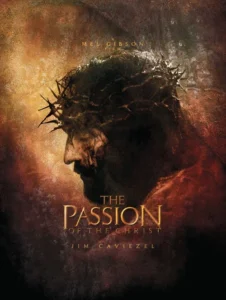
| 🎬 Title & Year | The Passion of the Christ (2004) |
| 🎥 Director | Mel Gibson |
| 👥 Starring | Jim Caviezel, Maia Morgenstern, Monica Bellucci |
| 🕒 Genre / Runtime | Drama, History · 127 mins |
| 🔞 MPA Rating | R |
| ✝️ Core Faith Themes | The Vicarious Atonement, Co-Suffering, Forgiveness, Ultimate Obedience |
| 📖 Key Scripture | Isaiah 53:5, Romans 5:8, Luke 23:34 |
Table of Contents
Did you know that The Passion of the Christ is deeply rooted in traditional Catholic theology and visual heritage? Director Mel Gibson is a Traditionalist Catholic who adheres to the pre-Vatican II Latin Mass. Beyond the canonical Gospels, the film heavily incorporates the mystical visions of Anne Catherine Emmerich, an 18th-century German Catholic nun whose book, The Dolorous Passion of Our Lord Jesus Christ, inspired visceral scenes like Mary wiping the blood after the scourging. The film emphasizes Mary’s co-suffering far more than standard Protestant traditions and mirrors the liturgical rhythm of the Catholic Stations of the Cross (Via Crucis).
Yet, beyond denominational distinctions, we are invited to examine the biblical truth of Christ’s sacrifice through a unified Christian worldview.
Initially, I considered making The Passion of the Christ the very first review on Screen Devotions. The story reveals the raw reality of Christ’s life and sacrifice with unparalleled directness. However, films like Soul Surfer offered a direct reflection of how we overcome daily adversity and walk by faith in our present lives. Today, we turn back to the foundation of that faith: the cross of Golgotha.
Beyond Historical Drama to Spiritual Reality
Few films have pierced the modern conscience quite like Mel Gibson’s The Passion of the Christ. Far from being a mere historical retelling, this work functions as a cinematic liturgy—a visceral encounter with the final twelve hours of Jesus of Nazareth.
By stripping away romanticized religious imagery, the narrative forces believers and seekers to confront an inescapable truth: redemption was never an abstract concept. It was forged in agony, complete physical surrender, and boundless divine love. Regardless of whether one is Protestant or Catholic, witnessing the raw physical cost of our Lord’s suffering creates a deep empathy and reverent awe.
Gethsemane: The Crushing of Self-Will
In The Passion of the Christ, the journey opens not under the midday sun, but in the suffocating darkness of Gethsemane. The film captures the spiritual warfare as Satan whispers doubts regarding whether dying for a broken humanity is truly worth the price.
Gethsemane, meaning “oil press,” becomes the literal ground where Christ’s human will is pressed under the weight of His divine calling. When Jesus declares, “Not my will, but Yours be done,” and crushes the serpent’s head beneath His foot, the film delivers a clear message: true spiritual victory begins with absolute obedience to the Father’s will in the midst of suffering.
The Scourging and Isaiah 53: Counting the Cost
As the narrative of The Passion of the Christ moves to Pilate’s judgment, the brutality reaches its peak when Jesus is delivered to the Roman soldiers. The agonizingly extended scourging sequence serves as an undeniable visual exposition of Isaiah 53:5:
“He was pierced for our transgressions, He was crushed for our iniquities; the punishment that brought us peace was on Him, and by His wounds we are healed.”
Every strike on screen strips away the illusion that grace is cheap. Christ’s silent dignity before His persecutors does not signal defeat; rather, it reflects majestic restraint rooted in eternal salvation.
Mary’s Perspective: Co-Suffering and Surrendered Love
One of the most emotionally resonant theological elements in the film is the portrayal of Mary. Mel Gibson masterfully cuts between Jesus collapsing beneath the weight of the cross and a memory of Him falling as a young boy in Nazareth.
In both moments, Mary runs toward her Son. Through her eyes, the audience witnesses the collision of motherly grief and divine surrender. Mary’s silent tears at Golgotha reflect the Christian calling to hold onto faith even when God’s promises seem shrouded in darkness. Given the Catholic background of The Passion of the Christ, Mary’s role is highlighted profoundly, inviting us to reflect on both the heart of Jesus and the faithful witness of those who stood by Him.
The Paradox of the Cross: Victory and the Torn Veil
At Golgotha, earthly cruelty peaks, yet supreme divine justice is accomplished. When Jesus cries, “Father, forgive them, for they know not what they do,” He dismantles the worldly cycle of vengeance. When He proclaims, “It is finished” (Tetelestai), humanity’s spiritual debt is fully canceled.
The earthquake and the tearing of the temple veil from top to bottom remain among the most powerful moments in The Passion of the Christ.
In the Old Testament, the veil separated humanity from the Holy of Holies, entered only once a year by the High Priest. When torn from top to bottom, it signified that God Himself opened the way. Human hands tear cloth from the bottom up; God tore the veil from above, removing the barrier of separation forever. Through Christ’s blood, every believer can approach the throne of grace boldly without an earthly intermediary.
Living Beyond the Passion: Walking in Resurrection Power
The film comes to a quiet and magnificent close with the morning of the Resurrection, where He stands boldly with nail-pierced hands in the light of the empty tomb.
To Christian audiences, The Passion of the Christ challenges us to break away from a lukewarm and complacent faith and live with deep gratitude and reverence. When we realize the costly price paid on the cross, our daily life, interpersonal relationships, and each of our callings are newly realigned through the lens of sacrificial love. We are called not simply to be an audience pitying His wounds, but to be witnesses who live boldly in the power of the resurrection.
“He was pierced for our transgressions, He was crushed for our iniquities; the punishment that brought us peace was on Him, and by His wounds we are healed.”
I hope today becomes a day where we meditate on whether we are living with daily gratitude and remembering Jesus, who was scourged, suffered, and died on the cross on our behalf—we who had no choice but to die—to forgive our sins because He loved us.
Key Takeaways & Faith Insights
- The High Cost of Grace: Redemption was never an abstract theological concept; it required the full physical, emotional, and spiritual expenditure of Christ to heal our brokenness.
- The Torn Barrier: The tearing of the temple veil from top to bottom signifies that God Himself eradicated the separation of sin, granting every believer direct access to the throne of grace.
- Victory Through Complete Surrender: True spiritual triumph over darkness does not come through worldly power, but through unshakeable obedience to the Father’s will even in the midst of suffering.
“Father, forgive them, for they know not what they do.” — Jesus of Nazareth
Explore More Screen Devotions:
- 🎨 Animation: Spiritual Insights in Animated Films
- 🌍 Documentaries: Biblical Perspectives on Real-World Issues
Scripture taken from the Holy Bible, NEW INTERNATIONAL VERSION®, NIV® Copyright © 1973, 1978, 1984, 2011 by Biblica, Inc.® Used by permission. All rights reserved worldwide.