
Oppenheimer and the Tower of Babel: Nuclear Hubris and the Chain Reaction of Sin
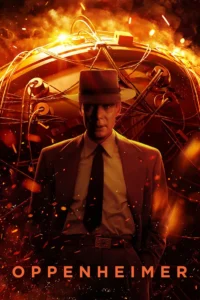
| 🎬 Title & Year | Oppenheimer (2023) |
| 🎥 Director | Christopher Nolan |
| 👥 Starring | Cillian Murphy, Emily Blunt, Matt Damon, Robert Downey Jr., Florence Pugh |
| 🕒 Genre / Runtime | Biography, Drama, History · 180 mins |
| 🔞 MPA Rating | R |
| ✝️ Core Faith Themes | Human Hubris, Moral Guilt, Illusion of Power, Divine Judgment |
| 📖 Key Scripture | Genesis 11:1–9, Proverbs 16:18, Psalm 51:1–2, Hebrews 9:14, 2 Peter 3:10 |
Table of Contents
Exploring The Oppenheimer Christian Worldview reveals the stark realities of human intellectual arrogance, uncontrollable guilt, and divine judgment. Before we delve into Christopher Nolan’s film The Odyssey in an upcoming discussion, I previously explored his visionary work Interstellar. Today, we turn our focus to another monumental cinematic achievement—Oppenheimer. Through this analysis, we will examine how the film exposes the depths of human hubris and the weight of moral consequence. Watching this film became a profound personal reminder of how relentlessly greedy and ambitious human nature can be. Have you all put on your protective goggles to witness the atomic test? Let us step into the experiment together.
Personally, watching this film in 70mm IMAX left an unforgettable shock through its overwhelming silence and sound design. The exact moment the detonation switch was pressed during the Trinity test, the silent flash filling the screen followed seconds later by an earthquake-like shockwave shaking the entire theater was far more than mere cinematic technique—it felt like a chilling glimpse into the threshold of hell opened by fallen humanity. In that instant, I vividly experienced the same suffocating awe I felt during the silent vacuum of deep space in Interstellar. Released in 2023, Oppenheimer is a landmark biographical film chronicling the quantum leap of modern physics and the genesis of humanity’s most devastating weapon. The film meticulously weaves together two perspectives: color representing Oppenheimer’s subjective inner world and nuclear fission, and black-and-white capturing Lewis Strauss’s objective political machinations and nuclear fusion, dissecting the dark abyss of human nature.
Promethean Fire and the Arrogance of the Tower of Babel
The film opens with an ancient mythical warning: “Prometheus stole fire from the gods and gave it to man. For this, he was chained to a rock and tortured for eternity.” This directly aligns with the Tower of Babel narrative in Genesis 11. Driven by a desire to make a name for themselves and reach the heavens like God, humanity built a massive tower—only for God to confuse their language and shatter their self-centered desires overnight.
Intellectual pride that encroaches upon God’s sovereign domain inevitably conceives the seeds of uncontrollable ruin. The physicists’ ambition to split the fundamental building blocks of matter and harness infinite energy went beyond pure academic curiosity; it exposed humanity’s primal hybris—the delusion that mortal beings can save or destroy the world by their own hands.
“Now I Am Become Death”: Existential Terror and Inescapable Blood
There is a widely known quote from Oppenheimer:
“Now I am become Death, the destroyer of worlds.”
When his creation reduced Hiroshima and Nagasaki to ash and claimed hundreds of thousands of innocent lives, Oppenheimer is haunted by horrifying spiritual visions inside the celebratory auditorium where he is hailed as America’s hero. Amidst roaring applause, he envisions the skin peeling off his colleagues’ faces and walks over charred, blackened corpses—a stark depiction of the human condition unable to conceal the devastating weight of sin.
Watching Oppenheimer, another thought-provoking work immediately came to mind: the Netflix documentary The Social Dilemma. For those who have watched it, didn’t a lightbulb instantly turn on in your head? The former Google and Facebook insiders in The Social Dilemma confessed that they originally built these platforms to connect people and foster communication. Yet, as capital took over, those very platforms evolved into systems that manipulate human psychology and erode genuine connection. The unchecked greed embedded in algorithms ended up controlling human behavior and impoverishing minds. While we will explore The Social Dilemma in greater detail in a future analysis, the underlying pattern is identical to Oppenheimer.
Returning to the film, Oppenheimer’s raw confession to President Truman in the Oval Office—”Mr. President, I feel I have blood on my hands”—captures humanity’s primal guilt that can never be cleansed by moral effort, human law, or earthly honors. Just like King David’s desperate cry after his sin regarding Bathsheba and Uriah, human power alone can never wash away the blood staining our hands.
An Unstoppable Chain Reaction: An Apocalyptic Warning
In the early days of the Manhattan Project, the most terrifying calculation confronting the scientists was the possibility that an atomic blast might ignite the atmosphere and trigger a chain reaction that destroys the entire planet—a probability that was “near zero,” yet not absolute zero. Watching the film, I initially thought: “If this experiment carries even the slightest risk of incinerating the entire earth, shouldn’t they stop immediately?” Yet the film depicts Oppenheimer and the leadership driven by blinding ambition and national urgency, consumed by a madness where human collateral seemed secondary to achieving their goal. This reckless pursuit is precisely why he later collapses under suffocating guilt, crying out that he has blood on his hands—revealing the absolute powerlessness of fallen humanity.
The final scene by the Princeton pond between Oppenheimer and Einstein delivers a chilling revelation. While the physical atmosphere did not ignite, Oppenheimer confesses: “I believe we did.” The apocalyptic vision of an endless arms race and nuclear warheads blanketing the sky mirrors biblical eschatology, warning that technological advancement detached from God’s sovereignty inevitably leads to self-destruction.
Look at our world right now as I write this post. Observe the ongoing conflicts between the United States and Iran, or Russia and Ukraine. While the ultimate threshold of nuclear deployment has not been crossed, humanity’s fallen desires are already driving the very chain reaction Oppenheimer foresaw, playing out across our news feeds and social media daily. In these end times, we must deeply reflect and pray about how we ought to live each day as Christians.
Toward True Salvation and Restoration
Oppenheimer definitively demonstrates that human intellect and technology can never save humanity. Can nuclear deterrence truly bring lasting peace to our world? It is an ironic premise. While the world attempts to preserve peace through sheer scientific terror, true peace (Shalom) is found exclusively through the atonement of the Cross and God’s holy justice.
The fire ignited by human hands is a destructive fire that burns the world, but the fire of the Holy Spirit is a holy, restorative fire that refines broken hearts and births new life. Surrendering human pride and submitting all sovereignty before the Lord of all creation is the only way to break the endless chain reaction of eternal destruction.
Today, we see another modern chain reaction mirroring Oppenheimer’s legacy: Artificial Intelligence. AI was initially developed to assist humanity and enrich our daily lives. Yet where are we today? We have reached a point where AI poses potential existential risks to humanity. Even though safeguards are programmed to prevent harm, think of films like I, Robot starring Will Smith or Terminator starring Arnold Schwarzenegger. Such realities may arrive far faster than we anticipate—just as a nuclear chain reaction accelerates beyond human control.
“Pride goes before destruction, a haughty spirit before a fall.”
Living in a fast-paced world that moves far quicker than human calculation, how should we steward our finite lives each day?
Key Takeaways & Faith Insights
- The Modern Tower of Babel: Intellectual pride and scientific achievement detached from God’s sovereignty inevitably breed the seeds of uncontrollable destruction.
- Inescapable Guilt & Atonement: Human morality, worldly honors, or political power can never wash away “blood on our hands”—true cleansing comes solely through divine grace.
- The Unstoppable Chain Reaction: Humanity’s fallen ambitions spark destructive cycles beyond mortal control, reminding us of the urgent need for God’s providential guidance in the end times.
- True Shalom Over Nuclear Fear: Lasting peace is not sustained by mutual destruction or technological terror, but is found exclusively in the reconciling love of the Cross.
“Now I am become Death, the destroyer of worlds.”
— J. Robert Oppenheimer
Explore More Screen Devotions:
- 🎨 Animation: Spiritual Insights in Animated Films
- 🌍 Documentaries: Biblical Perspectives on Real-World Issues
Scripture taken from the Holy Bible, NEW INTERNATIONAL VERSION®, NIV® Copyright © 1973, 1978, 1984, 2011 by Biblica, Inc.® Used by permission. All rights reserved worldwide.