
The Hunchback of Notre Dame: What Makes a Monster and What Makes a Man?
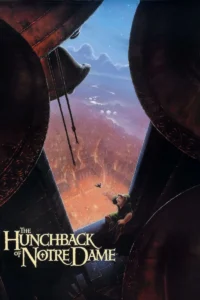
| 🎬 Title & Year | The Hunchback of Notre Dame (1996) |
| 🎥 Director | Gary Trousdale, Kirk Wise |
| 👥 Starring (Voices) | Tom Hulce, Demi Moore, Tony Jay, Kevin Kline, Paul Kandel, Jason Alexander |
| 🕒 Genre / Runtime | Animation, Drama, Family, Musical · 91 mins |
| 🔞 MPA Rating | G |
| ✝️ Core Faith Themes | Inner Beauty & Heart (Imago Dei), Religious Hypocrisy vs. Grace, Spiritual Sanctuary (Refuge), Mercy to the Outcasts |
| 📖 Key Scripture | 1 Samuel 16:7, Matthew 23:27–28, Matthew 25:37–40, Romans 12:19–21 |
Table of Contents
Rewatching The Hunchback of Notre Dame as an adult, the very moment I saw the protagonist Quasimodo, Ephialtes from the movie 300 immediately came to mind. In this The Hunchback of Notre Dame Christian review, I want to compare Quasimodo and Ephialtes through a biblical lens, examining how we as Christians should view human dignity, grace, and rejection. Now, shall we step into our seventh classic Disney animation review, the story of The Hunchback of Notre Dame?
Disney’s 1996 classic animation The Hunchback of Notre Dame is far more than a simple medieval epic; it is a profoundly theological work that directly contrasts the religious hypocrisy of fallen humanity with God’s unconditional grace. In the title, “Notre-Dame” translates from French as “Our Lady,” referring to the Virgin Mary, while “Hunchback” points to the bell-ringer Quasimodo, born with severe spinal deformities. Mirroring the paradox of combining a sacred cathedral with a physically disfigured human being, the film sharply exposes through Quasimodo’s life the fierce collision between the corrupt gaze of the world and the true values of the Kingdom of God.
A Soul Reduced to a Tool: Frollo’s Hypocritical Control and the Crowd’s Cruel Exploitation
A fallen world does not look upon human beings as the image of God; instead, it reduces them to mere “tools” meant to satisfy personal greed and self-preservation. Claude Frollo, the highest judicial authority in Paris, drove an innocent Gypsy mother to her death and attempted to murder the infant Quasimodo by drowning him in a well.
However, when the Archdeacon delivered a solemn warning about committing such a grievous sin before the eyes of the Virgin Mary, Frollo took the child in—not out of genuine repentance before God, but merely as a “religious shield (an indulgence)” to escape the punishment of hellfire. Doesn’t this scene look remarkably similar to the story of Moses in animation? Back then, Moses was placed inside an ark of bulrushes to escape Pharaoh’s decree ordering all newborn Hebrew boys to be thrown into the Nile River to drown. We will delve much deeper into this reflection when we cover the animated film The Prince of Egypt.
Returning to our story, for twenty long years, Frollo confined Quasimodo within the cathedral’s bell tower, subjecting him to cruel emotional gaslighting by constantly repeating, “The world despises you as a monster, and I alone care for you.” Quasimodo’s personhood was utterly erased, and he was exploited both as manual labor to ring the massive bells and as a hunting hound to track down the Gypsies’ hideout. The tragedy continued outside the cathedral walls.
The crowd gathered for the “Feast of Fools” elected Quasimodo the “King of Fools,” consuming him merely as an entertaining spectacle for their festival. Yet the moment it was revealed to be his actual face rather than a mask, their cheers instantly turned into sadistic mockery. The mob bound him to a pillory, hurled filth at him, and ruthlessly trampled his dignity. It was a harrowing moment that laid bare humanity’s cruel nature, which turns even the weaknesses and suffering of others into consumables for fleeting pleasure.
The Heart Beyond the Outer Shell: The Image of God (Imago Dei) Hidden Beneath a Monster’s Appearance
Scripture declares that while mortals judge by outer appearance, the Lord looks straight into the heart (1 Samuel 16:7). Through this sacred standard, the film poses a piercing question: “Who is the real monster?” Judge Frollo, who outwardly wore clean judicial robes and prided himself on being a blameless, righteous man, was the true monster who could neither govern the internal flames of murder and lust (“Hellfire”) nor refrain from trying to burn innocent people alive. He was a quintessential Pharisee hiding behind the facade of religious law and institutional authority.
Conversely, Quasimodo, bearing a twisted hump and a deformed face, never surrendered his soul to wrath or vengeance despite enduring relentless mockery and abuse. Instead of cursing the world that persecuted him, he released an injured bird with tender hands and preserved a pure heart that deeply empathized with the pain of others. By worldly standards, he was an outcast who deserved banishment, but within God’s created order, he was a precious bearer of the image of God (Imago Dei), radiating unconditional Agape love. Quasimodo’s pure spirit proves just how vain and powerless the world’s scales—judging human worth solely by outward splendor—truly are before God.
The Crossroads of Two Hunchbacks: The Betrayal of Ephialtes in 300 vs. The Sacrifice of Quasimodo
As I mentioned at the very beginning of this post, looking at Quasimodo reminded me of a similar figure, the betrayal of Ephialtes in the movie 300, so let us compare these two characters.
The spiritual posture of humanity when confronting wounds and rejection becomes all the more vivid when contrasting Quasimodo with Ephialtes, the hunchbacked soldier in the film 300. Both individuals were born with physical limitations due to spinal deformities and experienced the cold rejection of the world. However, their internal choices in handling the profound agony of rejection diverged in completely opposite directions.
Ephialtes in 300 was rejected when he sought to join the Spartan phalanx, which plunged him into deep inferiority and bitter resentment. He eagerly swallowed the worldly bait offered by the Persian King—wealth, glory, and sensual pleasure—and became a traitor who sold out the secret mountain path of his homeland and comrades. Just like Judas Iscariot, he used his wounds as an excuse to sell his soul to darkness.
Quasimodo, on the other hand, never walked the path of hatred or compromise, even when he suffered the extreme humiliation of being tied to a pillory and publicly mocked by the entire city during the Feast of Fools. Instead, he harbored compassion toward the world that rejected him and risked his very life to rescue Esmeralda from the burning stake.
What destroys a human being is not physical disability or rejection from others; rather, it is the internal choice one makes in response to that pain. While Ephialtes represents the tragedy of letting one’s inner soul degenerate into a monster, Quasimodo demonstrates the dignity of a soul that overcomes evil with good, even from the lowest place in the world.
| Criteria | Quasimodo (The Hunchback of Notre Dame) | Ephialtes (300) |
|---|---|---|
| Physical Limitation | Severe facial and spinal deformities | Spinal deformity preventing proper shield defense |
| Worldly Treatment | Treated as a monster, publicly humiliated | Rejected from the Spartan phalanx formation |
| Response to Rejection | Endured pain, chose compassion and sacrifice | Succumbed to resentment, sought revenge and wealth |
| Spiritual Path | The Way of Christ (Overcoming evil with good) | The Way of Judas (Selling the soul to darkness) |
| Ultimate Legacy | Protected the sanctuary and was embraced by society | Destroyed comrades and remembered as a traitor |
A True Sanctuary of Grace for the Broken
At that place of shame where the crowd spat upon him and Frollo stood by in cold apathy, it was the marginalized Esmeralda who broke the silence. She pushed through the armed soldiers and the frenzied mob to loosen Quasimodo’s bonds and hand him a cup of cool water. Just as Jesus taught that whatever we do for the least of our brothers and sisters, we do unto Him (Matthew 25:40), God restored the trampled dignity of a crushed soul through the hands of the most despised Gypsy woman in society.
At the climax of the film, Quasimodo rescues Esmeralda from the flames of the stake, carries her to the heights of the cathedral beneath the cross, and roars, “Sanctuary!” That cry was not an assertion of the institutional authority of a medieval cathedral built of cold stones. It was a holy proclamation heralding the genuine grace of the Cross, which gathers and protects wounded souls from the world’s condemnation and the dominion of death. A true sanctuary is not a massive religious institution; it is the love of Christ itself, opening wide its arms to embrace broken and abandoned neighbors.
The world relentlessly measures others as instruments for personal benefit and discriminates based on outward appearance. Yet the gospel of the Cross shatters that cruel silence, descending to the lowliest place to transform it into a sacred dwelling of peace. True beauty does not reside in the outer shells applauded by the world, but in a heart of mercy and love cultivated in humble surrender.
“Between Frollo’s hypocrisy—living with the world’s glamorous facade while clutching a sword of condemnation—and Quasimodo’s purity—preserving the mercy of the Cross even in the lowliest place—to which side does our heart dwell closer today?”
“For the Lord sees not as man sees: man looks on the outward appearance, but the Lord looks on the heart.”
Key Takeaways & Faith Insights
- The Trap of Self-Righteousness and Hypocrisy: Judge Frollo exposes the fatal danger of legalism and spiritual pride. Hiding behind religious status while harboring cruelty and unchecked lust proves that outward piety without humility leads only to destruction. (Matthew 23:27–28, Romans 2:1)
- God Looks at the Heart (Imago Dei): While the world judges value by physical perfection, prestige, and utility, God sees the hidden person of the heart. Quasimodo’s pure compassion and self-sacrificial spirit reflect the true image of God far more than any polished worldly exterior. (1 Samuel 16:7, 1 Peter 3:3–4)
- The Response to Rejection (Quasimodo vs. Ephialtes): Wounds and societal rejection are tests of the soul. Succumbing to bitterness leads to betrayal and spiritual ruin like Ephialtes, but choosing love and mercy enables believers to overcome evil with good. (Romans 12:19–21, Genesis 50:20)
- Extending Grace to the Outcasts: Esmeralda offering water to Quasimodo on the pillory embodies the authentic call of the Church. True Christian witness is not found in rigid exclusion, but in reaching out to loosen the chains of the marginalized with selfless hospitality. (Matthew 25:37–40, James 1:27)
- Sanctuary Beyond Stone Walls: The cry of “Sanctuary!” points beyond grand architecture to the shelter of the Cross. Christ Himself is the eternal refuge for the broken and condemned, offering unfailing mercy that no secular power can overturn. (Psalm 46:1, Hebrews 6:18–19)
“So, here is a riddle to guess if you can, sing the bells of Notre Dame: What makes a monster and what makes a man?”
— Clopin Trouillefou
Explore More Screen Devotions:
- 🎬 Movies: Explore Other Faith-Based Film Reflections
- 🌍 Documentaries: Biblical Perspectives on Real-World Issues
Scripture taken from the Holy Bible, NEW INTERNATIONAL VERSION®, NIV® Copyright © 1973, 1978, 1984, 2011 by Biblica, Inc.® Used by permission. All rights reserved worldwide.