
My Love, Don’t Cross That River: Covenant Love Beyond Death
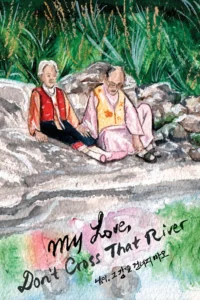
| 🎬 Title & Year | My Love, Don’t Cross That River (님아, 그 강을 건너지 마오, 2014) |
| 🎥 Director | Jin Mo-young |
| 👥 Starring | Jo Byeong-man, Kang Gye-yeol |
| 🕒 Genre / Runtime | Documentary, Romance, Biography · 86 mins |
| 🔞 MPA Rating | Not Rated (PG-equivalent) |
| ✝️ Core Faith Themes | Covenant Love, Sanctity of Marriage, Mortality (Earthly Tent), Grief & Resurrection Hope |
| 📖 Key Scripture | Ephesians 5:31–32, 2 Corinthians 4:16, 1 Thessalonians 4:13–14, 1 Peter 1:24–25 |
Table of Contents
Welcome to our in-depth My Love Don’t Cross That River Christian review. To be honest, I had always intended to cover Korean films, Korean documentaries, and Korean animations at some point. However, because most of my subscribers and readers are from the English-speaking world, I originally planned to feature widely recognized, popular works first if I were to introduce Korean cinema, documentaries, or animations. For example, I thought of starting with titles known across the globe, such as Director Bong Joon-ho’s Parasite or the zombie thriller Train to Busan.
Yet, I decided to set those titles aside for later because another work came to mind—one that I wanted to show you before anything else. As you all know, doesn’t our blog view cinema through a Christian worldview? When we watch movies, taking God’s Word in Scripture as our standard, I believe that if the entire narrative of the Bible were condensed into a single word, that word would be “Love.” Therefore, I selected this piece today thinking it would be wonderful to introduce what may truly be the most beautiful love in this world as our very first Korean feature.
That film is the documentary titled My Love, Don’t Cross That River (님아, 그 강을 건너지 마오).
When cinema sets out to explore love, it frequently relies on grand spectacles, dramatic conflicts, or youthful infatuation. Yet, genuine love is rarely validated on grand stages. It is forged in the quiet rhythm of ordinary days—in two pairs of weathered hands clasping tightly along a dirt path, and in the unspoken devotion of decades.
The documentary My Love, Don’t Cross That River follows the lives of Grandpa Jo Byeong-man (98) and Grandma Kang Gye-yeol (89), who reside in a quiet mountain village in Hoengseong, Gangwon Province. Having shared life together for 76 years, they still wear color-coordinated Hanbok, playfully toss fallen leaves, and warm each other’s cold fingertips with their breath during harsh winter winds. However, as the physical body wears down and mortality knocks on their door, the film transcends an ordinary romance to deliver an indelible sermon on the nature of human existence, sacrificial devotion, and eternal hope.
I would like to share with you a deep reflection through a Christian worldview, illuminating the sacred marital covenant, life’s finite tent, and the river of eternity. While watching this documentary, I held back my tears trying desperately not to cry, but the moment it ended, I broke down and wept bitterly. Shall we step together into this story of profound, beautiful love—a love you will never find in any other work?
76 Years of Walking Hand in Hand: A Sacred Covenant Beyond Emotion
In contemporary culture, relationships are frequently viewed through the lens of emotional utility and consumerist convenience. People fall in love when feelings are fresh and discard commitments when self-fulfillment wanes. Society treats marriage as a fragile contract negotiated for personal happiness rather than an unbroken bond. While people say that true love remains unchanged through the passing of time, looking around us, we frequently see marital and family crises reported in the news everywhere.
However, Grandpa Jo Byeong-man and Grandma Kang Gye-yeol in this documentary present an entirely different standard: the biblical model of Covenant. Watching them play together, they never look like a 98-year-old and an 89-year-old; they look just like a young boy and girl.
Watching the couple step out in color-coordinated Hanbok and hold hands whenever they walk, one might mistake their connection for a naive, perpetual honeymoon in the twilight of life. Yet their affection is not sustained by shallow romance; it is rooted in deep mutual reverence. When Scripture speaks of marriage, it does not depict two self-seeking individuals striking a deal of mutual interest. It describes a profound mystery pointing to Christ and His church:
“For this reason a man will leave his father and mother and be united to his wife, and the two will become one flesh. This is a profound mystery—but I am talking about Christ and the church.”
The 76-year companionship between these two souls reflects the unswerving fidelity of God. Their love remained intact not because their lives were devoid of hardship. They survived historical turmoil, extreme poverty, and the agonizing grief of burying six children in their hearts, yet through every trial, they chose to honor the sacred pledge of being “one flesh.”
Furthermore, as I observed their conversations closely, I noticed they were filled with mutual consideration and unreserved praise—telling each other how pretty they look, how delicious the food is, and how much they love each other. Isn’t that genuine, heartfelt love for one another?
Wildflowers and Gentle Play: Humble Joy in the Image of God (Imago Dei & Humble Joy)
As I mentioned a moment ago, the most disarming aspect of this documentary is the pure, childlike joy that permeates the daily routine of these two elderly partners.
In spring, Grandpa pauses by the roadside to pluck modest wildflowers and tenderly tucks them behind Grandma’s ear and into his own hair. In autumn, sweeping dry leaves across the courtyard turns into an affectionate, playful game of scattering foliage at one another with bright smiles. In the heart of winter, a quiet snowfall turns into a gentle snowball fight, followed by Grandpa blowing warm breath over Grandma’s freezing hands.
The world constantly whispers that joy is proportional to material luxury, status, and worldly power. Yet this couple finds boundless contentment in God’s simple creation—dry leaves, falling snow, mountain streams, and the presence of one another. To behold another person, especially through the ravages of old age, and still see in them a precious soul bearing the image of God (Imago Dei) is a rare spiritual grace. They embody the truth that loving someone deeply is fundamentally an act of worship and gratitude toward the Creator who made them and entrusted them to our side.
They did not love because they were wealthy. It was not because they had an affluent home. Nor was it because they were young. Simply being thankful and loving each other for being together in this very moment—is that not truly the childlike heart spoken of in Scripture?
The Wearing Out of the Earthly Tent: The Changing of Seasons and Inevitable Physical Limits (The Mortal Body)
Life in a fallen world inevitably confronts the boundary of physical decay. As the rustling of autumn leaves gives way to the harsh, wheezing breath tearing from Grandpa’s chest, the mood of the documentary settles heavily.
When Grandpa was still in good health, he once told Grandma: “Those tree leaves sprout in spring, live well through the rain all summer long, and then fall as soon as the autumn frost arrives. It’s the same with people. When we are young, a flower bud forms and blooms. It would be wonderful if it could stay in bloom, but as we grow old, we wither and fall away. Once you fall, it’s all in vain.”
Even Grandpa, who was once so healthy, innocent like a boy, and always smiling, could not help but grow frail before the passage of time. His cough grew hollower and deeper day by day. Walking up modest stone steps became an arduous, painful climb.
In the pitch-black night, Grandma lies awake, softly stroking his frail back as he struggles for breath. Watching that scene made me reflect deeply on how agonizing it must have been for them. Then came the sudden, heartbreaking news: the unexpected death of their little white dog, ‘Kkoma,’ who guarded their yard. It cast a dark shadow over the home, painfully reminding us that an end comes to every living creature on earth.
Although Kkoma was a female dog, for some reason her passing felt like a foreshadowing that Grandpa’s death was imminent.
The Apostle Paul describes our mortal frame as an earthly tent that can be dismantled at any time (2 Corinthians 5:1). Watching Grandpa’s strength fade was truly heartbreaking, yet in their disposition, there was no resentment toward God nor cynicism toward life.
Instead, physical frailty invited an even deeper tenderness and devotion. As Grandpa’s body slowly crumbled, Grandma’s hands became his feet, his breath, and his sanctuary. It teaches us that a believer’s body is merely a fragile jar of clay, and that this very human frailty serves as the grace-filled canvas upon which sacrificial love shines most radiantly.
Sparks from the Hearth: A Holy Farewell for Departed Children and Husband (Sacrifice & Pure Devotion)
A scene that deeply moved my heart was learning that Grandma had given birth to twelve children in total. Back then, vaccines were rare and medical care was scarce, so many children could not survive long and passed away. Out of their twelve children, six died during their youth. Seeing Grandma purchase six sets of thermal underwear, never forgetting those children even after decades had passed, brought overwhelming emotion to my heart.
Watching her buy those garments, I could not even dare to fathom the depth of a parent’s heart toward children lost so long ago.
And in one of the most spiritually stirring scenes, Grandma Kang Gye-yeol, sensing that her final parting from her husband is near, begins carefully sorting through his garments. Grandma feeds his clothes into the outdoor hearth fire one by one, ensuring he will have seasonal clothing to change into in the world beyond. As smoke rises into the quiet mountain air, she tosses into the flames the little garments for the six children lost in their youth to illness and poverty. That was the reason she had bought those six sets of clothing.
Swallowing her flowing tears, Grandma calmly whispers a request into the rising flames: when he reaches the other side, please find their little children and hand them these fine clothes that she could never dress them warmly in during life.
Grandma’s sorrow is neither self-pity nor despair. It resembles a holy act of worship, serving the other person until the very end. Even in the face of life’s inescapable separation, her first instinct was her husband’s peace and the well-being of her departed children. Grandma’s own knees were in terrible pain; she had to visit the hospital herself. Yet, seeking not her own, bearing all things, and enduring all things, her love blooms purest at the threshold of eternity.
The Snow-Covered Hill: Hope Beyond the Uncrossable River (Hope Beyond the River)
The closing scene of the film presents a solemn beauty that will forever remain in the history of Korean documentary cinema. At this moment, my own tears were on the verge of bursting forth.
Pure white snow blankets the hill where Grandpa is laid to rest. As the mourners depart one by one, Grandma, dressed in white mourning attire, sits alone beside the snowy burial mound and weeps quietly. Soon, she rises, takes a few steps forward, stops, and turns back toward the snow-covered mound. Wiping her tears, she looks back again and again. Torn between her longing to linger beside her beloved and the reality of returning to an empty home, she finds it hard to take another step.
Among traditional Korean songs, there is an ancient lyric called Gongmudohaga (公無渡河歌, “My Love, Do Not Cross the River”). In Korean sensibility, crossing the river signifies a permanent severance into the realm of death from which one can never return. When a beloved pet dog passes away, what do people say? We say they have “Crossed the Rainbow Bridge,” don’t we? It carries the exact same meaning.
However, when viewed through the lens of Jesus Christ’s cross and resurrection, the river of death is not the tragic, final end of all things:
“Brothers and sisters, we do not want you to be uninformed about those who sleep in death, so that you do not grieve like the rest of mankind, who have no hope. For we believe that Jesus died and rose again, and so we believe that God will bring with Jesus those who have fallen asleep in him.”
Grandma’s tears are completely natural tears of human mourning, yet they are distinct from the arid tears of those who have no hope. In faith, the river of death is not a dark abyss that swallows love, but a temporary threshold to step across. We are pilgrims residing briefly in this land, longing for a better, heavenly homeland. Grandma also whispered to Grandpa:
“Grandpa, go on ahead, get things settled, find a nice spot, and take good care. I will follow you soon. If I cannot come quickly, come back to take me. When you do, I will take your hand and go with you.”
Isn’t that a truly heartbreaking line? Yet Grandma held a firm faith that she would meet him once again.
The 76 years they spent together on that mountain may be as brief as a fleeting breath in the light of eternity. Grandpa crossed that river first, but the holy covenant of love they built before God has never perished. True love, anchored in the eternal God, does not freeze beneath the winter snow; it quietly awaits that day when they will meet again in our true home on the other side of resurrection morning.
My Love, Don’t Cross That River strips away the worldly illusions surrounding the question: “What is a truly meaningful life?”
Are we loving our spouses with sacrifice and patience, as Christ embraced the church? Or are we lingering in conditional affection merely to satisfy ourselves? Do we cherish the fragile souls entrusted to us, or are we pursuing fleeting youth and worldly glamour as our idols?
Grandpa Jo Byeong-man and Grandma Kang Gye-yeol left behind neither commercial buildings nor massive inheritances. Instead, they left an inheritance far more valuable than any secular achievement: a living blueprint of a faithful, enduring biblical covenant. True love is not proven by sweet, ornate whispers when the sun shines warm, but by weathered, wrinkled hands that refuse to let go when the winter blizzards rage.
Our lives are like flowers. Just as blossoming and withering happen in an instant, our lives pass by so swiftly. In this fleeting journey, I earnestly pray that each of you will live every single day loving your wives, husbands, children, families, friends, neighbors, and fellow church members with all your heart.
“Place me like a seal over your heart, like a seal on your arm; for love is as strong as death… Many waters cannot quench love; rivers cannot sweep it away.”
Key Takeaways & Faith Insights
- The Sacred Bond of Marital Covenant: Biblical marriage is not a temporary emotional arrangement, but an enduring covenant that mirrors Christ’s union with His church. True love chooses daily self-denial and unwavering fidelity across 76 years of poverty, sorrow, and time. (Ephesians 5:31–32)
- Childlike Joy in God’s Humble Gifts: Authentic joy does not stem from material abundance or youthful ease, but from a grateful heart that cherishes God’s creation and sees His image (Imago Dei) in another person—even in dry autumn leaves, gentle snowfall, and wrinkled hands. (Proverbs 15:17)
- Sacrificial Devotion Amid Human Frailty: Our earthly bodies are fragile tents subject to decay, yet physical weakness provides the very canvas where Christlike sacrificial love shines brightest—serving, warming, and comforting to the very last breath. (2 Corinthians 4:16)
- Resurrection Hope Beyond the River of Death: For those anchored in Christ, the river of death is not an eternal void, but a fleeting threshold. Grief is met not with despair, but with the quiet assurance that love perseveres and will be reunited on resurrection morning. (1 Thessalonians 4:13–14)
“Grandpa, go on ahead, get things settled, find a nice spot, and take good care. I will follow you soon… When you come for me, I will take your hand and go with you.”
Grandma Kang Gye-yeol
Explore More Screen Devotions:
- 🎬 Movies: Explore Other Faith-Based Film Reflections
- 🎨 Animation: Spiritual Insights in Animated Films
Scripture taken from the Holy Bible, NEW INTERNATIONAL VERSION®, NIV® Copyright © 1973, 1978, 1984, 2011 by Biblica, Inc.® Used by permission. All rights reserved worldwide.