
Yes Man: When Saying Yes Requires Discernment
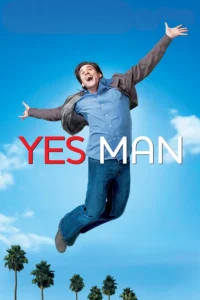
| 🎬 Title & Year | Yes Man (2008) |
| 🎥 Director | Peyton Reed |
| 👥 Starring | Jim Carrey, Zooey Deschanel, Bradley Cooper, Terence Stamp |
| 🕒 Genre / Runtime | Comedy, Romance · 104 mins |
| 🔞 MPA Rating | PG-13 |
| ✝️ Core Faith Themes | Gospel Freedom vs. Legalistic Bondage, Holy Discernment in Service, Breaking Relational Isolation, Heart-Driven Stewardship |
| 📖 Key Scripture | Hebrews 10:24–25, Matthew 5:37, Romans 8:28, Proverbs 15:1, 2 Corinthians 9:7, Galatians 6:9–10 |
Table of Contents
Welcome, everyone to this Yes Man Christian Review as we explore Gospel freedom, healthy boundaries, and the Christian’s discerning ‘YES’ and ‘NO’ through a biblical worldview. In our previous review of the movie Bruce Almighty, we meditated together on the profound sovereign grace of why God sometimes responds to our prayers with a painful ‘NO’ instead of an unconditional ‘YES’. As promised at the end of that post, moving beyond the meaning of ‘YES’ from God’s perspective, I would like to explore how Christians should wisely discern and use ‘YES’ and ‘NO’ in human relationships through another of Jim Carrey’s comedy masterpieces, Yes Man (2008).
The journey of the protagonist, Carl Allen—who starts from an extreme defense mechanism of rejection and staggers into uncritical agreement—presents a practical and sharp spiritual challenge to modern Christians who need to establish healthy boundaries between the world and their neighbors while enjoying true Gospel freedom.
The Holy Adventure of Breaking Down the Self’s Defense Mechanism: The ‘YES’ of Trust That Shatters an Isolated Life
The film’s protagonist, Carl Allen, is a bank loan officer who lives with all channels to the world shut down following the deep pain of a divorce. He dodges phone calls from friends with lies, and after work, he locks himself inside a comfortable yet dry cave, watching movies rented from the video store alone. To avoid the hassle and hurt that come from relationships with others, the defensive mechanism he habitually utters is only one: ‘NO’.
Many Christians also lock the doors of their hearts due to past failures or relational wounds. However, the sturdy defense shield built to protect the self eventually drives the soul into isolation and spiritual lethargy. In Hebrews 10:24–25, the Scripture exhorts:
“And let us consider one another in order to stir up love and good works, not forsaking the assembling of ourselves together, as is the manner of some, but exhorting one another, and so much the more as you see the Day approaching.”
Toward the soul hiding in fear of being hurt, God calls us to take a step forward in faith. The ‘YES of holy adventure’—welcoming unfamiliar neighbors, responding to the call of community, and courageously stepping into the new opportunities God grants—becomes the starting point of restoration that cracks the frozen shell of our lives. This is precisely why we gather in fellowship and meet spiritual brothers and sisters in church. It is possible to live out one’s faith alone. However, just as we are commanded not to forsake assembling together, I believe that when we respond to the community’s call, God will surely reveal a greater plan.
The Trap of Blind Obedience and Discernment: The Confusion Born of Legalistic Compulsion
This is truly one of the scenes where I felt deeply touched and had many thoughts. Carl, attending a ‘YES Covenant Seminar’ at the strong urging of a friend, surrenders to the pressure of the charismatic speaker Terrence and makes a blind vow to shout only ‘YES’ to every question in life. Weighed down by the fear that a terrible curse will fall upon him if he says ‘NO’, Carl pours out indiscriminate affirmations—ranging from the absurd demands of a homeless person to registering on suspicious websites, and even to unwanted intimate seductions from a neighbor.
This depiction of Carl resembles the self-portrait of believers bound by blind legalism or human approval while misunderstanding the essence of the Gospel. The life of a ‘spiritual yes-man’ who indiscriminately accepts every request out of fear that refusing will bring God’s punishment or people’s criticism produces hypocrisy and burnout rather than dedication. Jesus firmly commanded in the Sermon on the Mount in Matthew 5:37:
“But let your ‘Yes’ be ‘Yes,’ and your ‘No,’ ‘No.’ For whatever is more than these is from the evil one.”
Mature faith is not a passive state of being blindly dragged along; it is rooted in the spiritual discernment and courage to firmly declare ‘No’ before things that contradict God’s justice and truth, and before temptations that destroy one’s soul and family.
This scene felt just like looking back at my teenage years. Whenever it was church work or ministry, I shouted YES, unconditional YES. Meanwhile, I left my own studies and schoolwork neglected in the background. A student ought to act like a student and focus on studying, but I remember how unable I was to say ‘no’ to requests for church service and tasks.
Hospitality and the Bridge of Life Offered in Clumsy Words: The Providence That Turns Even Immature Steps into Good
Under the compulsion to accept everything unconditionally, Carl receives a street flyer and signs up for a Korean language class on impulse. Though it was a pursuit begun without any clear goal or deep meaning, this eccentric attempt becomes an astonishing connection at an unexpected moment. Perhaps because I am Korean, this scene resonated with me as even more humorous and meaningful.
At a bridal shop visited to prepare for a friend’s wedding, Carl encounters a Korean female employee (Soomi Lee) at the counter and greets her with a clumsy accent, articulating clearly: “How is the weather in Cheongju?”, “Nice to meet you.” In the face of this unexpected kindness spoken in her native tongue in an unfamiliar foreign land, a bright smile spreads across the employee’s face, and the awkward air of the store is instantly filled with warm delight.
This small resonance of communication does not end as a simple comic incident; it expands into a decisive bridge of life in the latter half of the film. When discovering a Korean man driven to the brink of life, attempting to end his life on a bridge railing, Carl quietly sings a song in his ear using the awkwardly learned Korean and guitar playing. To that desperate soul who believed no one was listening to his pain, that unpolished sincerity offered across borders and language barriers melts the frozen heart and ultimately turns him back from the threshold of death.
Even though Carl’s starting point was an immature ‘YES’ driven by legalistic fear, God never let that clumsy step taken out of the self’s shell go to waste. Romans 8:28 promises:
“And we know that all things work together for good to those who love God, to those who are the called according to His purpose.”
Even if we are not perfectly prepared, or even if our initial motives were clumsy and weak, God shapes our small gestures of hospitality and learning toward our neighbors into spiritual instruments that revive dying lives. A single kind word I extend to the world and my neighbor today can become the hand of salvation prepared by God for someone.
In Korea, there is a proverb that says, “A kind word can pay off a debt of a thousand nyang.” In the American context, expressions like “Kind words cost nothing, but can pay off a huge debt” or Proverbs 15:1 (“A soft answer turns away wrath”) could be seen as comparable. Because it means that a single word spoken can pay off immense debts, every word we casually utter can either deeply move someone’s heart or end up destroying someone’s soul.
From a Contract of Law to a Covenant of the Heart: Voluntary Dedication Blossoming in Grace
At the film’s climax, Carl’s blind ‘YES’ ultimately causes a fatal fracture in authenticity. His beloved Allison, upon learning that all the choices Carl made in approaching her and traveling together were not born of sincere love but of a mechanical vow made at the seminar, feels a deep sense of betrayal and leaves. When Carl seeks out the speaker Terrence, who is hospitalized after a car accident, and confronts him, the speaker confesses a shocking truth: unconditional ‘YES’ was not a magical incantation, but merely a form of shock therapy to open a tightly closed heart, and what truly mattered in the end was genuine choice welling up from the heart.
The Apostle Paul proclaims in 2 Corinthians 9:7:
“So let each one give as he purposes in his heart, not grudgingly or of necessity; for God loves a cheerful giver.”
Reluctant obedience offered grudgingly out of fear or concern for one’s reputation cannot save a person’s soul, nor can it please God. The true Gospel of the Cross liberates us from being slaves to oppressive duty, granting us the freedom of children who respond to God and our neighbors with joy and spontaneity. Just as Carl tears up the mechanical vow, seeks out Allison in earnest, and confesses his love once more, believers must serve the world with a wholehearted ‘YES’ that wells up from within, moved by God’s unconditional grace rather than bound by the law.
The same applies to church ministry. It is an issue we must consider deeply. I currently attend a Korean immigrant church, and I believe that calling upon someone who has no heart for the work simply because the church lacks people, and making them do tasks, is absolutely unbiblical. Having worked in broadcasting and video production for a long time, I received offers from the church asking if I would handle church media-related work. However, no matter how much I reflected, I could not find a genuine, wholehearted YES welling up from the depths of my inner self.
I will proudly tell and teach this to my own children as well: it is only when one is so overwhelmed by God’s grace that inspiration rises within spontaneously without anyone asking, and one steps forward on their own to dedicate, serve, and work for the church, that it becomes a true, complete YES.
I can say this with certainty: if someone is pushed by people and does it reluctantly because of a request, they will surely grow exhausted quickly while working, and that work becomes labor done for people. When that happens, they are easily wounded and collapse under people’s gossip and talk. However, if one works from a heart that wells up from within, they will not burn out easily, and they will view church work not as something done under the gaze of people or to be seen by other believers, but as service offered to God. The very starting point is distinctly different.
A Channel of Life Holding a Neighbor’s Hand: A True Steward Beyond Self-Centeredness
Even amidst the commotion of unconditional ‘YES’, the most radiant transformation in Carl’s life is that his perspective finally breaks free from the narrow prison of self and begins to open toward suffering neighbors. As a bank loan officer who always found fault and stamped ‘rejection’, Carl becomes a channel approving loans while looking into the eyes and dreams of small business owners who desperately need small capital. Furthermore, his small ‘YES’ moments—learning Korean and practicing guitar—are used as miraculous instruments that reach out with a song and save a desperate soul standing on the bridge railing.
When we open the door to our comfort and stretch out our arms toward others, we truly become God’s living hands and feet. Galatians 6:9–10 encourages us: “And let us not grow weary while doing good, for in due season we shall reap if we do not lose heart. Therefore, as we have opportunity, let us do good to all, especially to those who are of the household of faith.”
A Christian’s ‘YES’, equipped with Gospel discernment, must firmly resist the world’s greed and injustice, while willingly offering time and extending a hand to the tears of wounded and marginalized neighbors, serving as a channel of holy ministry.
Comparison: Legalistic Blind Affirmation vs. Discerning Gospel Freedom
| Dimension | Mechanical “YES” (Legalistic Bondage) | Discerning “YES & NO” (Gospel Freedom) |
| Motivation | Fear of divine punishment or anxiety over human disapproval | Deeply moved by God’s unconditional love and inner grace (2 Cor 9:7) |
| Posture in Community | Passive agreement leading straight to burnout and bitterness | Wholehearted, voluntary service grounded in clear boundaries (Mt 5:37) |
| Focus of Life | Self-preservation in an isolated cave to avoid being hurt | Courageously stepping out in faith to encourage the body (Heb 10:24–25) |
| Ministry Outcome | Exhausting human labor performed under the gaze of people | Becoming a gentle channel of life that rescues perishing souls (Gal 6:9–10) |
Key Takeaways & Faith Insights
- The Courage to Shatter Isolation: Retreating into a self-protective shell after suffering relational wounds ultimately starves the soul. Taking a “holy adventure of YES” by responding to the community’s call breaks spiritual apathy and aligns us with God’s restorative purpose. (Hebrews 10:24–25)
- Freedom from Legalistic Compulsion: Indiscriminately agreeing to every demand out of fear or people-pleasing creates spiritual burnout and hypocrisy. Authentic Christian maturity requires the holy courage to utter a firm, discerning “NO” against guilt-driven expectations. (Matthew 5:37)
- Providential Care Through Awkward Obedience: God never wastes even our clumsy, imperfect attempts at kindness. An awkward greeting in an unfamiliar language or an unpolished song can cross deep cultural divides to pull a despairing soul back into hope. (Romans 8:28)
- The Power of Intentional Words: As the Korean saying reminds us that kind words can pay off insurmountable debts, our speech carries life-giving weight. Gentle, gracious words cost nothing, yet they hold the power to either resurrect a wounded heart or wound a vulnerable spirit. (Proverbs 15:1)
- A Heart-Driven Covenant Over Forced Duty: Serving the body of Christ under external pressure or demographic guilt reduces ministry to pleasing human spectators, leading straight to exhaustion and relational injury. True stewardship begins when God’s unmerited grace stirs an unprompted, cheerful “YES” from deep within. (2 Corinthians 9:7)
“You’re saying ‘yes’ not because you have to, not because a covenant tells you to, but because you know in your heart that you want to.”
Terrence Bundley (Terence Stamp)
Explore More Screen Devotions:
- 🎨 Animation: Spiritual Insights in Animated Films
- 🌍 Documentaries: Biblical Perspectives on Real-World Issues
Scripture taken from the Holy Bible, NEW INTERNATIONAL VERSION®, NIV® Copyright © 1973, 1978, 1984, 2011 by Biblica, Inc.® Used by permission. All rights reserved worldwide.