
Howl’s Moving Castle Meaning: Beauty, Love, and the Lost Heart
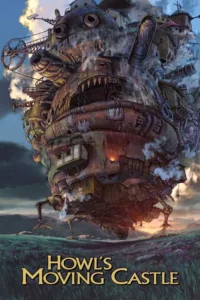
| 🎬 Title & Year | Howl’s Moving Castle (2004) |
| 🎥 Director | Hayao Miyazaki |
| 👥 Starring | Chieko Baisho, Takuya Kimura, Akihiro Miwa, Tatsuya Gashuin |
| 🕒 Genre / Runtime | Animation, Fantasy, Romance, Adventure · 120 mins |
| 🔞 MPA Rating | PG |
| ✝️ Core Faith Themes | Identity Beyond Appearance, Love and Brokenness, The Cost of Power, Restoring the Heart, Love Without Control |
| 📖 Key Scripture | 1 Samuel 16:7, Romans 5:8, Mark 8:36, 1 John 4:19 |
Table of Contents
If I were to introduce Japanese animation to Screen Devotions for the first time, I would choose Hayao Miyazaki’s Howl’s Moving Castle without hesitation. A bizarre castle walking on enormous mechanical legs, the beautiful blond wizard Howl, Sophie suddenly transformed into an old woman, and Calcifer endlessly burning inside the castle’s fireplace—at first glance, the film may seem like an unusual love story filled with magic and fantasy. But when I think about it more deeply, I find a much richer story beneath the surface: one about appearance, identity, fear, war, love, and above all, the restoration of a lost heart.
While watching this film, I naturally think of Disney’s Beauty and the Beast. Both stories involve cursed characters and restoration through love, but interestingly, they approach similar questions from almost opposite directions. In Beauty and the Beast, the Beast looks frightening on the outside, yet Belle gradually discovers the humanity that still remains within him. Howl, by contrast, is extraordinarily beautiful and charming on the outside, but behind that beauty lives a man filled with insecurity and emptiness because he has literally lost his heart.
That is why this film makes me ask: What do we actually see when we look at another person? Do we see only what is visible on the outside, or do we see the heart? And beyond that, as we gain more and more from the world, are we perhaps losing our own hearts in the process?
Sophie Grows Old: When Appearance Fades, the Real Self Begins to Appear
At the beginning of the film, Sophie does not think of herself as someone special. She is not glamorous like her sisters, and she does not have much confidence in her appearance. She quietly works in a hat shop, living almost as though the course of her life has already been decided. Then, after meeting Howl, she is cursed by the Witch of the Waste and transformed overnight into an elderly woman.
On the surface, this is a terrible curse. A young woman has suddenly become old. Yet ironically, Sophie becomes freer after taking on the appearance of an old woman. When she was young, she lived timidly, conscious of her appearance and of how other people saw her. But once she begins thinking, “Well, I’m an old woman now,” she becomes strangely fearless. She enters Howl’s castle and starts cleaning it, speaks her mind directly to Howl, and steps forward to protect others even in dangerous situations.
I find this fascinating because although Sophie’s outward appearance has aged, her inner life seems to become younger and more alive. The way her appearance occasionally shifts back and forth between young and old also feels connected not only to the mechanics of the curse but to how she sees herself. When she shrinks inward and thinks of herself as someone unworthy of love, she seems to return to her elderly appearance. But when she loves Howl, acts courageously, and steps forward to protect someone, her younger self seems to emerge naturally.
This reminds me of 1 Samuel 16:7, where God tells Samuel that human beings look at outward appearance, but the Lord looks at the heart. We judge people by appearance far too easily. We often assume that beauty and youth increase a person’s value, while age and weakness somehow diminish it. But before God, our worth is not determined by the shape of our face, our age, or the standards of beauty established by society.
Perhaps Sophie’s curse becomes, paradoxically, the very thing that breaks the false image she had been holding about herself. Only after losing the appearance she once worried about does she begin to discover how courageous she actually is and how deeply she is capable of loving. Perhaps the same question applies to us. If my job, appearance, ability, and the approval of others all disappeared, would I still be able to say who I am? Before God, my identity reaches far deeper than the way I appear.
Beauty and the Beast and Howl: Love Looks Beyond Appearance
As I watched the relationship between Howl and Sophie, I kept thinking about Belle and the Beast. Both stories involve curses being broken through love, yet structurally they move in opposite directions.
In Beauty and the Beast, the Beast’s greatest barrier is his appearance. He is enormous and frightening, so anyone seeing him for the first time naturally assumes that he is a monster. But as Belle spends time with him, she begins to discover the warmth, loneliness, and wounded humanity behind his frightening exterior. In that sense, Beauty and the Beast can be understood as a story warning us not to judge a person’s inner character by an intimidating appearance.
Howl is almost the reverse. From the moment he appears, he is beautiful. He possesses extraordinary magical ability, dresses extravagantly, and has the kind of charisma that immediately attracts attention. Yet the closer Sophie gets to him, the more she discovers what lies behind that beautiful appearance. Howl is deeply insecure, obsessed with his looks, inclined to run away from responsibility, and capable of behaving as though the world has ended simply because his hair color has gone wrong.
If I had to compare the two films in a single sentence, I would put it this way:
Beauty and the Beast asks us to see the beauty beyond a frightening appearance, while Howl’s Moving Castle asks us to see the wounds beyond a beautiful appearance.
And both films eventually bring us to the same question: Are we truly looking at the heart of another person?
When we see someone who is attractive, successful, talented, and confident, it is easy to assume, “That person must be doing just fine.” Yet even the most impressive-looking person may carry deep fear and pain within. Howl is exactly that kind of person.
Sophie loving Howl does not mean that she simply loves the handsome version of him. She sees him when he is frightened, weak, emotionally unstable, and even gradually becoming monstrous, yet she does not abandon him. Perhaps love is not simply looking at another person’s best version. Perhaps it is seeing even the parts that person wishes to hide and still receiving that person as a whole human being.
Of course, human love cannot simply be equated with the love of God. But this part of the film makes me think about the way God loves us. God does not know and love only the polished version of ourselves that we present to other people. He already knows the parts we would rather hide—our sin, fear, wounds, and weakness. Yet He still calls us. Romans 5:8 reminds us that God demonstrated His love for us while we were still sinners. In that sense, genuine love may be closer to saying, “I know that you are not perfect, and yet I still choose to love you,” than saying, “I love you because you are perfect.”
Howl Gives Away His Heart: What If We Gain the World and Lose Ourselves?
The most powerful symbol in Howl’s Moving Castle, in my opinion, is Howl’s heart. Near the end of the film, Sophie enters Howl’s childhood and witnesses the moment when he catches the falling star Calcifer and gives him his heart. In exchange, Howl gains extraordinary magical power, but at the same time he loses one of the most essential parts of himself.
This scene immediately brought Mark 8:36 to mind, where Jesus asks what good it is for someone to gain the whole world and yet forfeit his soul. Of course, Howl’s contract with Calcifer should not be equated directly with the biblical concept of the soul. But the symbolism of the film is striking. Howl gains power. He becomes an extraordinarily powerful wizard, living under different names across different kingdoms. Yet the price of that power is his own heart.
Could something similar happen in our lives? We may pursue more money, a higher position, greater fame, or the approval of more people until one day we can no longer even remember why we began pursuing those things in the first place. At first, we believe that success is something we use. But at some point, success may begin using us.
Howl also becomes increasingly involved in the war and gradually transforms into something monstrous. At first he resists the war, but as he continues fighting in order to protect those he loves, returning to his human form becomes increasingly difficult. Sophie fears that if he continues in this way, he may eventually lose the ability to return at all. I see Miyazaki’s anti-war message here, but I also see something broader about human nature.
When we continually surrender ourselves to hatred and violence, we may initially believe we are controlling them, but eventually they can begin changing us. Hold onto anger long enough and anger may become part of your identity. Hold onto power long enough and power may reshape your heart. Give everything to success and success may become your master.
That is why Howl’s problem is more than a fantasy plot about a wizard who has literally lost his heart. It returns the question to us: What am I giving my heart away in order to obtain?
Comparative Analysis: Beauty and the Beast vs. Howl’s Moving Castle
| Theme | Beauty and the Beast | Howl’s Moving Castle |
|---|---|---|
| Outward Appearance | The Beast appears frightening and monstrous | Howl appears beautiful, elegant, and powerful |
| What Lies Beneath | Belle discovers warmth, loneliness, and humanity beneath the frightening exterior | Sophie discovers insecurity, fear, emptiness, and a lost heart beneath Howl’s beauty |
| Love Learns to See | Beauty hidden behind an unattractive exterior | Brokenness hidden behind an attractive exterior |
| Central Question | Can we see the person beyond what frightens us? | Can we see the wounded heart beyond what impresses us? |
Returning the Heart: Love Restores Rather Than Possesses
At the end of the film, Sophie returns Howl’s heart to his body. The contract binding Calcifer and Howl is broken, and Howl finally receives his heart back. I believe this scene is the heart of the entire film.
Sophie does not hold onto Howl’s heart in order to make him hers. Instead, she gives his heart back to him. That distinction matters because this is what love looks like.
Sometimes we claim to love someone while actually trying to control them. “I love you, so you need to become the person I want you to be.” “I love you, so you should always stay beside me.” “I love you, so I should be able to decide what happens in your life.” But that may simply be possessiveness wearing the name of love.
Sophie’s love is different. Instead of holding onto Howl and reshaping him into someone who fits her desires, she helps him recover what he has lost. She returns his heart to where it belongs. Perhaps healthy love is not about binding another person to ourselves, but about helping that person become whole.
And Howl is not the only one who experiences restoration. Sophie also recovers her identity. At first, she thinks of herself as ordinary and unattractive, but she gradually becomes someone capable of loving, acting, taking risks, and stepping into danger for others. Howl regains his heart, while Sophie rediscovers who she is. Rather than saying that the two of them “save” each other, I think it is more accurate to say that through their relationship they help one another rediscover parts of themselves that had been lost.
In the Christian faith, God is ultimately the One who restores human beings. Human love cannot completely save another human being, so there is no need to turn Howl and Sophie’s relationship into a direct representation of the salvation of Jesus Christ. Yet the way they remain beside each other even after seeing one another at their weakest, and the way they help each other recover what has been lost, can still make us think carefully about the kind of love we are called to live out.
1 John 4:19 tells us that we love because God first loved us. Christian love does not begin by possessing or controlling another person. It begins by remembering the love we ourselves have received from God and recognizing that the person before us is also precious before Him.
Ultimately, Howl’s Moving Castle has far more to say than a simple fantasy romance about a wizard, a curse, and love. Through her elderly appearance, Sophie discovers who she is beyond her looks. Behind Howl’s beautiful face and extraordinary magic, his emptiness and fear are exposed. And through meeting one another, both gradually begin recovering what they had lost.
So after watching this film, I want to ask two questions: Am I looking beyond the outward appearance of the people around me? And am I gaining things from this world while quietly losing my own heart? Perhaps what we need most is not greater beauty or greater power. Perhaps what we need is to rediscover who we are before God and return the hearts that the world has pulled away from what matters most.
If Beauty and the Beast is a story about discovering the human being hidden behind the appearance of a monster, Howl’s Moving Castle is a story about discovering the human being who has lost his heart behind a beautiful face. And both stories ultimately leave us with a similar question:
“What are you looking at when you choose to love someone?”
Key Takeaways & Faith Insights
- God Looks Beyond Outward Appearance: Sophie’s appearance is transformed by a curse, yet her courage and capacity to love become clearer than ever. Our value does not come from appearance, age, or the judgment of the world, but from the heart that God sees. 1 Samuel 16:7
- Love Sees Beyond Both Beauty and Brokenness: Beauty and the Beast reveals humanity behind a frightening exterior, while Howl’s Moving Castle reveals wounds and emptiness behind a beautiful one. Genuine love does not love only another person’s best appearance; it sees weakness and still recognizes that person’s worth. Romans 5:8
- What Good Is Power If We Lose Our Heart? Howl gains extraordinary magical power but gives away his heart. We too should ask whether we are sacrificing what matters most before God in pursuit of success, recognition, influence, or power. Mark 8:36
- Love Restores Rather Than Controls: Sophie does not possess Howl’s heart; she returns it to him. Healthy love does not control another person according to our desires, but seeks that person’s restoration and wholeness. 1 John 4:19
“A heart’s a heavy burden.”
Sophie
Explore More Screen Devotions:
- 🎬 Movies: Explore Other Faith-Based Film Reflections
- 🌍 Documentaries: Biblical Perspectives on Real-World Issues
Scripture taken from the Holy Bible, NEW INTERNATIONAL VERSION®, NIV® Copyright © 1973, 1978, 1984, 2011 by Biblica, Inc.® Used by permission. All rights reserved worldwide.