
The Island: Who Does Human Life Belong To?
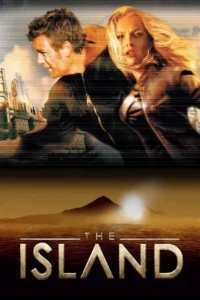
| 🎬 Title & Year | The Island (2005) |
| 🎥 Director | Michael Bay |
| 👥 Starring | Ewan McGregor, Scarlett Johansson, Djimon Hounsou, Sean Bean, Steve Buscemi |
| 🕒 Genre / Runtime | Science Fiction, Action, Thriller · 136 mins |
| 🔞 MPA Rating | PG-13 |
| ✝️ Core Faith Themes | Human Dignity, Bioethics, Technology and Moral Limits, Stewardship, Truth and Freedom, What It Means to Be Human |
| 📖 Key Scripture | Genesis 1:27, 1 Corinthians 10:23, Genesis 2:15, John 8:32, Psalm 8:4–6 |
Table of Contents
The Island is a film that has stayed with me for a long time. I even remember discussing it years ago when I was taking private lessons in essay writing. Even then, the questions surrounding cloning and bioethics were fascinating to me, but when I look back at the film now, it almost feels more relevant than it did before. At the time, human cloning seemed like a distant science-fiction idea. Today, however, we live in an age when artificial intelligence can generate language, images, and written content and interact with people in increasingly humanlike ways. Technology continues to advance, and someday we may find ourselves facing ethical choices that currently exist only in fiction.
Lincoln Six Echo and the other clones in the film live inside a controlled facility without even understanding that they are fully living human beings. They believe they are survivors of a contaminated world and are taught to hope that someday they may win a lottery and be sent to the paradise known as “the Island.” But the truth is entirely different. They exist so that their organs and bodies can be used for the benefit of the original humans from whom they were copied. That premise raises an deeply uncomfortable question:
Can one human life be reduced to a tool simply because it was created for the benefit of another? And if technology gives us the ability to do something, does that automatically give us the right to do it?
Can a Human Being Be Turned Into a Means?
The corporation in The Island does not treat the clones as human beings. They are products, insurance policies, and biological assets that can be used whenever necessary. Clients are told that their clones are unconscious biological organisms, yet in reality the clones think, fear, form relationships, ask questions, and desperately want to live. That is where the film immediately raises the question of human dignity.
Genesis 1:27 says that human beings are created in the image of God. From a Christian perspective, human dignity does not begin with productivity. A person’s value does not rise or fall according to income, health, intelligence, independence, or usefulness to society. The system in The Island, however, measures the clones almost entirely by function. If someone needs a heart, a clone provides a heart. If someone needs a liver, a clone provides a liver. If a client needs a pregnancy carried to term, the clone exists to perform that task. Their entire reason for existence is defined by how useful they are to someone else.
That may be science fiction, but the question reaches uncomfortably into real life. Do we see people as persons, or do we increasingly evaluate them by how useful they are? Workplaces measure productivity. Society often measures economic contribution. Even relationships can sometimes become transactional, shaped by the question, “What can this person do for me?” Yet a human being is more than a function. In a Christian worldview, dignity does not depend on how necessary someone is to somebody else. A person has value before that person becomes useful.
Just Because We Can Does Not Mean We Should
Another important question in The Island concerns the relationship between technology and morality. The scientists in the film have accomplished something extraordinary. They can create genetic copies of human beings, grow living organs, and offer wealthy clients the possibility of escaping disease and extending life. From a purely technological perspective, it is an astonishing achievement.
But the central problem is simple: the ability to do something does not mean that we ought to do it.
That question feels even more immediate today. Gene editing, artificial intelligence, biotechnology, autonomous systems, and other technologies are advancing in ways that once belonged almost entirely to science fiction. Technology gives us new possibilities, but every new ability also creates new responsibilities. We have to keep asking whether convenience alone is enough reason to adopt something, whether increasing human capability justifies crossing every available boundary, and who bears the consequences when innovation moves faster than moral reflection.
The age of AI also makes questions about human identity feel increasingly urgent. I do not think present-day AI should be treated as equivalent to the conscious clones in The Island. There is no sufficient basis for simply assuming that current AI possesses human consciousness or the same dignity that belongs to human persons. But as technology becomes better at imitating human language, behavior, and creativity, society will inevitably continue asking what distinguishes human beings. Is it intelligence? Memory? Emotion? Freedom? Consciousness? The ability to form relationships?
Perhaps the deeper question is not only how advanced technology becomes, but whether our ethics are maturing alongside it. 1 Corinthians 10:23 reminds us that not everything that is permissible is necessarily beneficial. Technology can be understood in a similar way. Possibility is not the same thing as morality. The greater our power becomes, the deeper our discernment must become.
Does a Creator Have the Right to Use What He Creates However He Wants?
The clones in The Island are, in one sense, lives produced through human technology. The corporation therefore behaves as though creation equals ownership: “We made you, so we have the right to use you.”
For Christians, that creates an interesting contrast with the biblical understanding of God as Creator. Of course, human scientists in the film are not creators in the same sense that God is Creator. They manipulate biological life rather than calling existence into being from nothing. Still, the contrast in the way power is exercised is striking. The corporation creates life in order to consume it for the survival and benefit of others. Scripture, by contrast, portrays God’s authority over creation together with care, responsibility, and ultimately self-giving love toward humanity.
That distinction matters. Possessing power does not mean that power should be used according to every desire of the powerful. In Scripture, authority repeatedly carries responsibility with it. Genesis 2:15 describes humanity as placed within creation to work it and care for it. Dominion is therefore difficult to reduce to permission for unlimited exploitation; it includes stewardship.
In that sense, The Island is asking more than a question about cloning. How should those with power treat those who possess less power? The question applies to parents and children, corporations and workers, governments and citizens, humanity and the natural world, and increasingly to the people who design technologies and the people whose lives those technologies affect. The ability to create, control, or manage something may not give us a license to exploit it. It may instead give us a greater responsibility to protect what has been placed within our power.
When Lincoln Learns the Truth, What Will He Do With His Freedom?
Lincoln is different from many of the other clones because he keeps asking questions. Why must they eat certain foods? Why can they not go outside? Does the Island really exist? Why should he simply accept everything he has been told? Once he discovers the truth, he chooses to escape.
That journey makes me think about freedom. Inside the facility, the clones are safe in one sense. Food is provided, schedules are controlled, health is monitored, and nearly every decision is made for them. What they do not have is freedom. If they never discovered the truth, they might even have remained relatively comfortable until the moment they were selected to die.
Lincoln chooses the uncomfortable truth instead.
That reminds me of Jesus’ words in John 8:32: “Then you will know the truth, and the truth will set you free.” The freedom depicted in the film should not simply be equated with the spiritual freedom Jesus is describing in John’s Gospel. But both force us to confront a similar question: Would we rather live inside a comfortable falsehood or face a truth that may disrupt everything?
Human beings often prefer familiarity to truth because truth can demand change. Discovering that a belief, habit, institution, or way of life has been wrong is painful. Lincoln’s escape is therefore more than movement from one physical location to another. He refuses to remain inside an explanation of reality simply because it is the only explanation he has ever known. He begins seeking what is true, even though the truth places him in danger.
Faith should require something similar from us. We should not merely collect ideas that make us comfortable or listen only to what confirms what we already want to believe. There are times when following God means allowing truth to challenge us before it comforts us.
Asking Again in the Age of AI: What Makes Us Human?
When I discussed this film years ago, the conversation centered mainly on cloning and bioethics. Today, I think the question has become much broader. Technology already performs tasks that were once closely associated with human ability: calculation, analysis, writing, image generation, and conversation. Those systems will continue to develop, and as they do, we may find ourselves asking more frequently what human beings actually are.
If human worth comes primarily from intelligence, what happens when machines perform certain intellectual tasks faster than we do? If productivity determines human value, do people become less valuable whenever technology becomes more efficient than they are? Those questions expose how fragile a purely functional definition of humanity can become.
Christianity begins somewhere very different. Human beings are not valuable because we outperform every other created thing. Human dignity begins with the claim that we are made in the image of God. Psalm 8:4–6 marvels that God is mindful of humanity and has entrusted human beings with responsibility within creation. Human worth, therefore, cannot simply be reduced to computational ability, efficiency, or economic usefulness.
That is why technological advancement should make us ask deeper questions, not fewer ones.As technology becomes more powerful, two questions become harder to avoid: What makes a human life valuable, and who gets to decide when that life may be used?
The Island was released in 2005, yet those questions may feel more relevant now than they did when the film first appeared. When science tells us, “We can do this,” someone still needs to ask, “But should we?” If we stop asking that second question, the moral distance between our world and the facility in The Island may become smaller than we would like to imagine.
Ultimately, this film leaves me with one question above all others: Who does human life belong to? Does it belong to the person who paid for it? The scientist who produced it? The corporation that patented or manages the technology? The government with the power to regulate it? Christian faith resists the idea that life is simply a commodity manufactured and owned by human beings. Life is received before it is controlled.
If that is true, then what we need as technology advances is not merely greater power. We also need wisdom and humility sufficient to govern that power. The more human beings become capable of making, modifying, and controlling, the more frequently we may need to ask not only “What can we do?” but “What should we do?”
Perhaps that is the warning The Island speaks most clearly to our own time.
Key Takeaways & Faith Insights
- Human Worth Cannot Be Reduced to Usefulness: Human value is not determined by productivity, health, intelligence, or usefulness to other people. Human dignity begins with the biblical claim that we are created in the image of God. Genesis 1:27
- Just Because We Can Does Not Mean We Should: Technological possibility does not automatically equal moral permission. As our abilities increase, so must our responsibility to ask whether using them is wise, loving, and just. 1 Corinthians 10:23
- Power Should Lead to Stewardship, Not Exploitation: Having power over someone or something does not give us the right to use it however we please. Biblical authority carries responsibility, care, and stewardship toward what has been entrusted to us. Genesis 2:15
- Truth Can Be Uncomfortable, but It Can Also Set Us Free: Lincoln chooses a dangerous truth over a comfortable lie. Faith also calls us to face reality honestly rather than holding only to what is familiar or convenient. John 8:32
- Technology Forces Us to Ask What Makes Us Human: As AI and biotechnology grow more capable, human dignity cannot be reduced to intelligence or productivity. Christianity roots human worth in our relationship to the Creator rather than our ability to outperform machines. Psalm 8:4–6
“I just want to live. I don’t care how.”
Lincoln Six Echo
Explore More Screen Devotions:
- 🎨 Animation: Spiritual Insights in Animated Films
- 🌍 Documentaries: Biblical Perspectives on Real-World Issues
Scripture taken from the Holy Bible, NEW INTERNATIONAL VERSION®, NIV® Copyright © 1973, 1978, 1984, 2011 by Biblica, Inc.® Used by permission. All rights reserved worldwide.