
Beauty and the Beast: Redeeming Love That Breaks the Curse Within
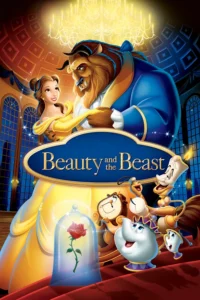
| 🎬 Title & Year | Beauty and the Beast (1991) |
| 🎥 Director | Gary Trousdale, Kirk Wise |
| 👥 Starring (Voices) | Paige O’Hara, Robby Benson, Richard White, Jerry Orbach, David Ogden Stiers |
| 🕒 Genre / Runtime | Animation, Family, Fantasy · 84 mins |
| 🔞 MPA Rating | G |
| ✝️ Core Faith Themes | Substitutionary Love, Grace Beyond Appearance, Faithful Intercession, Redemption |
| 📖 Key Scripture | 1 Samuel 16:7, Romans 5:8, 1 John 4:18 |
Table of Contents
I previously mentioned that Frozen holds a special place in my heart among animated films, while Zootopia provided me with some of the greatest life lessons. Yet, long before Frozen ever arrived, my undisputed favorite animated film was Beauty and the Beast.
I belong to the generation that grew up cherishing VHS tapes. I remember eagerly popping Disney cassette tapes into the VCR, and among the countless tapes in my collection, Beauty and the Beast was by far the one I rewatched the most. Even today, listening to “Tale as Old as Time” brings a profound emotional resonance. In this review, I want to explore how we can view Beauty and the Beast through the lens of a Christian worldview.
Long before modern cinema leaned heavily into cynical antiheroes, Disney’s 1991 animated masterpiece offered a timeless reflection on human fallenness, sacrificial love, and true redemption. At its foundation, this fairy tale mirrors the grand biblical narrative. A fallen prince, trapped in the horrific consequence of his own pride, stands completely powerless to save himself until an unmerited, pure love enters his dark domain. It is an unforgettable story known across generations.
A Father’s Ransom: Sacrificial Love in the Dungeon
The opening scenes of Disney’s Beauty and the Beast, with Belle, her father Maurice, and Gaston singing through the village, are well-known, so let us move directly to the pivotal turning point: Maurice getting lost and imprisoned in the Beast’s cold castle. When Belle discovers her shivering, ailing father in the damp cell, she does not negotiate for comfort or seek an easy compromise. Reflecting the noble selflessness characteristic of classic Disney heroines, she makes a decisive choice. Upon being discovered by the Beast, she demands that her father be released, willingly trading her lifelong freedom for his.
This voluntary exchange is a powerful cinematic portrait of Substitutionary Love. Just as Belle entered the dungeon so her father could walk out alive and free, Scripture reminds us that Christ willingly stepped into our spiritual prison. In our complete helplessness and condemnation, Jesus bore our penalty upon the cross, securing a divine freedom we could never attain on our own.
Beyond the Monstrous Countenance: Seeing with the Eyes of Grace
To the villagers—and even to himself—the Beast was merely a terrifying monster defined by fury, sharp claws, and utter despair. His outward appearance mirrored a soul hardened by years of selfishness. As a child watching this, the Beast represented pure dread and fear. Yet, Belle gradually begins to look past that menacing exterior to discern the wounded soul underneath.
This dynamic beautifully illustrates 1 Samuel 16:7: humans look at the outward appearance, but the Lord looks at the heart. In our fallen state, sin disfigures our true identity and renders us spiritually hideous. Yet, God’s sovereign gaze does not halt at our broken exterior. Through eyes of boundless grace, He beholds the dignity He originally created within us, pursuing us even when we remain unlovely. Belle’s patience models that transformative vision of grace.
Revisiting the film as an adult raises an intriguing question: how did Belle come to look beyond the Beast’s terrifying appearance? Did her perspective shift because she wandered into the forbidden West Wing and caught a glimpse of his original handsome portrait? Or did her feelings change after she touched The Enchanted Rose, fled in terror, and was rescued from a vicious pack of wolves?
While the animation leaves room for imagination, the true turning point lies in her heart breaking before his sacrificial bleeding. The real breakthrough occurs when Belle tends to the Beast’s wounds with a warm cloth. Up until that point, the Beast was an absolute tyrant who only roared and commanded. Yet, the moment the hot cloth touches his open wound, he flinches and winces like a vulnerable child. The terrifying monster is instantly redefined as a hurting, fragile creature in desperate need of gentle care.
Though the Beast possesses the sheer physical strength to overpower Belle effortlessly, he yields when she firmly scolds him with “Hold still!” Entrusting his raw wounds to another’s hands is the most primal form of building trust. When Belle quietly whispers, “Thank you for saving my life,” the Beast’s eyes soften with unprecedented emotion. Experiencing genuine dignity and unconditional warmth for the first time, he ceases viewing Belle as a captive and begins treasuring her as someone to protect. In both Belle and the Beast, believers can witness profound reflections of Christian grace, vulnerability, and mutual healing.
Taming the Savage Heart: The Hope of the Castle Servants
While Belle and the Beast are the central figures of Beauty and the Beast, the true unsung heroes are the enchanted castle servants: Lumière, Cogsworth, Mrs. Potts, and the household staff. Carrying the heavy burden of the curse alongside their master, they recognize a glimmer of hope the moment Belle enters the castle. Rather than passively waiting for magic to resolve their plight, they actively step forward as faithful intercessors and patient counselors.
When the Beast attempts to lock Belle in isolation, the servants offer lavish hospitality, singing “Be Our Guest” to prove that honor and warmth still reside within those cold walls. When the Beast struggles with his explosive temper, Lumière and Cogsworth whisper tactical counsel—teaching him basic table manners, encouraging emotional restraint, and guiding him to gift Belle the vast library. As the two finally dance in the grand ballroom, Mrs. Potts’ tender rendition of “Beauty and the Beast” provides the peaceful atmosphere needed for their hearts to connect.
Law, punishment, and brute force could never reform the Beast’s wild nature; left alone, he possessed neither the humility nor the vocabulary to change. The servants’ steadfast hospitality, wise counsel, and loving intercession bridged the vast divide between his hardened isolation and Belle’s redeeming presence.
This mirrors the essential mission of the Christian church. In our walk of faith, broken souls rarely experience restoration in isolation. God works through faithful intercessors—the body of believers—who embrace the weary with hospitality, speak wisdom into troubled spirits, and build bridges of reconciliation through prayer. Just as the castle servants labored to cultivate love in Beauty and the Beast, believers are called to be active instruments helping softened hearts encounter Christ’s transforming grace.
The Counter-Curse of Pure Love: Redemption and Restoration
As the final petal of the Enchanted Rose begins to fall, the story of Beauty and the Beast reaches its climactic summit. The Beast chooses the ultimate sacrifice: unconditionally releasing Belle so she may care for her father, fully aware that doing so seals his own doom. When Gaston delivers a fatal blow on the balcony, Belle’s tearful confession of love arrives at the threshold of death.
Unconditional love completely shatters the power of the ancient curse. In that moment of utter surrender, the dying beast is restored into his true identity as a prince, and the entire castle is renewed in glorious light. The gospel declares that the curse of sin and death cannot be overcome by worldly strength or human striving. It requires pure, sacrificial love—a love that laid down its life so that true life could begin.
The Real Monster: Gaston and the Illusion of Outward Righteousness
No theological reflection on Beauty and the Beast is complete without examining Gaston. Outwardly, Gaston embodies everything society praises: athletic strength, handsome features, and universal popularity. Yet beneath this polished veneer lies a heart consumed by narcissism, possessiveness, and murderous pride.
While the Beast acknowledges his wretchedness and learns humility through suffering, Gaston remains utterly blind to his internal rot. He views Belle not as a precious soul to cherish, but as a trophy to feed his inflated ego. When he incites a mob with torches and pitchforks to slaughter the Beast, he mirrors the self-righteous religious leaders who condemned Christ—driven by envious rage against anything they could not control.
Gaston’s fatal plunge from the castle tower stands as a sobering biblical warning: outward charm without inner renewal leads to destruction. True monstrosity is never defined by physical appearance, but by an unrepentant, self-righteous heart.
“Like the Beast, where in your life have you experienced God’s unconditional grace transforming a place of bitterness or brokenness?”
“For the Lord sees not as man sees: man looks on the outward appearance, but the Lord looks on the heart.”
1 Samuel 16:7
Key Takeaways & Faith Insights
- The Cost of Substitutionary Love: Just as Belle willingly traded her freedom for her father’s life in the cold dungeon, Christ stepped into our spiritual prison on the cross—paying a debt He did not owe so that we could receive eternal freedom. (Romans 5:8)
- The Gaze of Transforming Grace: God looks beyond our spiritual disfigurement and brokenness, beholding the divine image He originally created within us and restoring our true identity through unmerited love. (1 Samuel 16:7)
- Faithful Intercession and Community: Just as the castle servants patiently coached the Beast and created an atmosphere for love to flourish, believers are called to be bridge-builders and intercessors who guide hardened hearts toward healing grace.
- Breaking the Curse Through Pure Love: The curse of pride and death could never be broken by worldly strength or self-righteousness; it required pure, sacrificial love that surrenders itself so true life may begin. (1 John 4:18–19)
“Tale as old as time, tune as old as song… Barely even friends, then somebody bends unexpectedly.” — Beauty and the Beast
Explore More Screen Devotions:
- 🎬 Movies: Explore Other Faith-Based Film Reflections
- 🌍 Documentaries: Biblical Perspectives on Real-World Issues
Scripture taken from the Holy Bible, NEW INTERNATIONAL VERSION®, NIV® Copyright © 1973, 1978, 1984, 2011 by Biblica, Inc.® Used by permission. All rights reserved worldwide.