
Zootopia Christian Worldview: Try Everything in God
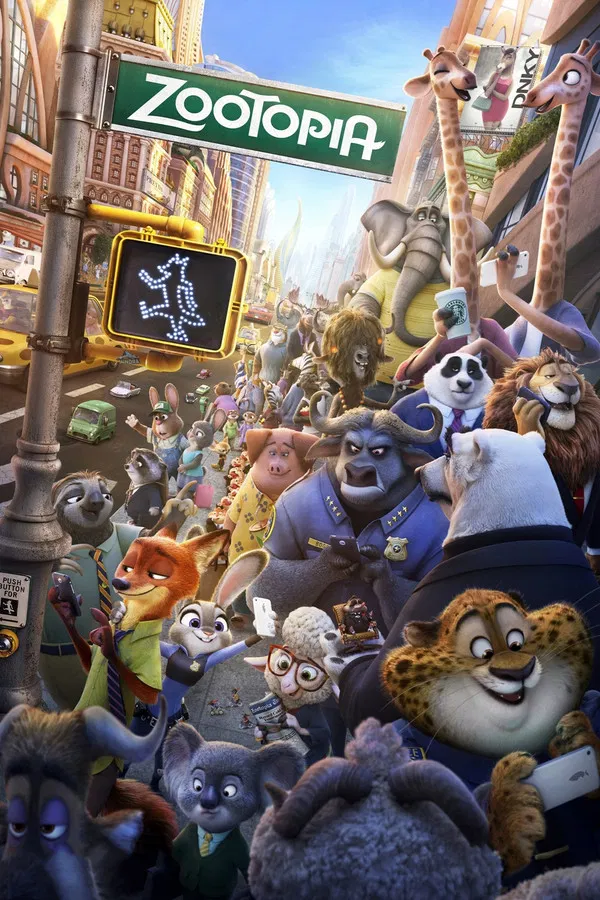
| 🎬 Title & Year | Zootopia (2016) |
| 🎥 Director | Byron Howard, Rich Moore |
| 👥 Starring | Ginnifer Goodwin, Jason Bateman, Idris Elba, Shakira |
| 🕒 Genre / Runtime | Animation, Adventure, Comedy · 108 mins |
| 🔞 MPA Rating | PG |
| ✝️ Core Faith Themes | God Uses the Humble, Overcoming Prejudice, Reconciliation, Perseverance in Faith |
| 📖 Key Scripture | Galatians 6:9, 1 Corinthians 1:27–29 |
Table of Contents
If someone were to ask me, “What is your favorite animated movie?” I would likely answer Frozen. However, if you ask which animated film truly challenged and deeply moved me, my answer is without a doubt Zootopia. (I will be sharing a reflection on Frozen very soon as well!)
Let’s dive into our very first animated film, Zootopia, through the lens of a Christian worldview.
No Earthly Utopia Lasts Forever
Have you ever thought about the meaning behind the word “Zootopia”? It combines Zoo (animal park) and Utopia (an ideal, perfect society)—meaning an “ideal paradise for animals.” For Christians, of course, the only true and eternal Utopia is Heaven, the Kingdom of God.
Even in a place called Zootopia, conflict and crime never cease. Throughout the story, Judy and Nick must investigate the hidden mastermind behind these rising tensions. This reveals a fundamental truth: the Zootopia on screen is not a genuine utopia at all.
Just like humanity building the Tower of Babel only to find their language confused and scattered by God, the animals dream of a self-made paradise where predators and prey coexist. Yet beneath the shiny surface lie hidden seeds of distrust, deep-seated prejudice, and political manipulation fueled by fear.
God Uses the Small and Humble
“God uses the weak and the small”—this is a theme I return to often. In countless movies and animations, protagonists begin in a state of vulnerability, while their antagonists often appear far more powerful and charismatic. In film classes, studies suggest that a large percentage of audiences are naturally drawn to compelling villains.
Consider typical narrative arcs: heroes start out powerless, but through testing, discipline, and maturity, they eventually overcome evil—a classic triumph of good over bad. Just as the humble Hobbits end up saving Middle-earth in The Lord of the Rings (another story we will explore later), Judy Hopps is introduced as a fragile little rabbit. During police academy training, she consistently falls behind the larger, stronger predators. Yet throughout the narrative, this small bunny outsmarts and overcomes the odds to solve the case.
Scripture continually shows us that God delights in using the small. Rather than viewing “smallness” merely as physical size or status, I see it as humility and godly character.
Heartbreak Comes from Those Closest to Us
In our own lives, complete strangers rarely cause us deep heartache. More often, our deepest disappointments stem from the people closest to us. When we invest immense trust and high expectations into a relationship, the resulting hurt can feel overwhelming when things go wrong.
In Zootopia, this dynamic plays out vividly between Judy and her partner, Nick. From a storytelling perspective, the contrast is stark: Judy is prey, and Nick is a predator. Instinctively, no one would be surprised if a fox turned against a rabbit. Yet Judy chooses to treat Nick with genuine respect as an equal partner—even through moments of painful misunderstanding and disappointment.
Nobody Learns Without Gettin’ It Wrong
What should we take away from this story? Is it simply about harmony between different backgrounds? Or striving to live courageously like Judy?
While those are worthy lessons, the phrase I want to leave with you comes directly from Shakira’s theme song, Try Everything:
“Nobody learns without gettin’ it wrong.”
Too often, we confess that God loves us and wants to use our lives, yet we remain passive, doing nothing of real substance. Especially in recent years, passive isolation, social media addiction, and severed relationships have grown increasingly common.
Whether your personality resembles Judy, Nick, or any other character in the city, God has entrusted you with a unique calling to step out and love your neighbors. Dare to “try everything” in faith. When mistakes happen, remember that learning requires stepping forward into the unfamiliar. Your everyday acts of love will shine the light of God’s Kingdom into this broken world.
“Let us not become weary in doing good, for at the proper time we will reap a harvest if we do not give up.”
Key Takeaways & Faith Insights
- The Illusion of Earthly Utopias: No self-made paradise can satisfy our broken world; true peace and unity are found solely in the eternal Kingdom of God.
- God Uses the Weak and Humble: Just as small Judy overcomes impossible odds, God delights in using the vulnerable and humble to confound the strong and fulfill His divine purposes.
- Faith in Action and Perseverance: Stepping out to love our neighbors means embracing mistakes and vulnerability, trusting that in due time we will reap a harvest if we do not give up. (Galatians 6:9)
“Life’s a little bit messy. We all make mistakes. No matter what type of animal you are, change starts with you.” — Judy Hopps
Explore More Screen Devotions:
- 🎬 Movies: Explore Other Faith-Based Film Reflections
- 🌍 Documentaries: Biblical Perspectives on Real-World Issues
Scripture taken from the Holy Bible, NEW INTERNATIONAL VERSION®, NIV® Copyright © 1973, 1978, 1984, 2011 by Biblica, Inc.® Used by permission. All rights reserved worldwide.