
Zootopia 2 Christian Review: When Truth Challenges the World We Thought We Knew
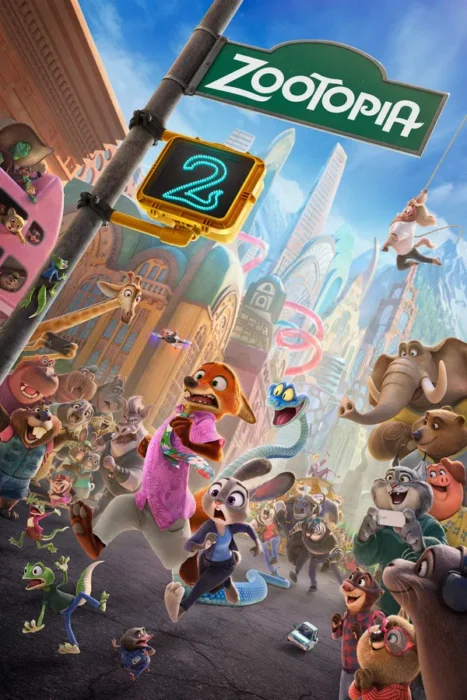
| 🎬 Title & Year | Zootopia 2 (2025) |
| 🎥 Director | Jared Bush, Byron Howard |
| 👥 Starring | Ginnifer Goodwin, Jason Bateman, Ke Huy Quan, Fortune Feimster, Quinta Brunson |
| 🕒 Genre / Runtime | Animation, Adventure, Comedy · 108 mins |
| 🔞 MPA Rating | PG |
| ✝️ Core Faith Themes | Hidden Prejudice, Truth and Freedom, Justice vs. Revenge, Biblical Reconciliation, Unity in Difference |
| 📖 Key Scripture | Romans 3:23, James 2:1–4, John 8:32, Romans 12:19–21, 1 Corinthians 12:12–27 |
Table of Contents
I have mentioned before that, among animated films, Zootopia is probably my favorite after Frozen. And now, Zootopia has returned with a sequel. The first Zootopia, released in 2016, used a city where different kinds of animals live together to explore prejudice and discrimination in an incredibly clever way. In my previous review, I also looked at Zootopia through a Christian worldview and reflected on whether we judge others based on where they come from, how they look, or stereotypes about the groups they belong to. Nearly ten years later, Zootopia 2 seems at first to ask a similar question, but this time it goes one step deeper.
In this film, Judy Hopps and Nick Wilde are now official police partners, but their relationship is not nearly as smooth as we might expect. If the first film was about learning to trust one another, the sequel asks whether two people with very different personalities and ways of living can continue to respect each other and remain a team. The film also reveals more clearly the different lifestyles and tendencies of herbivores and carnivores. At the same time, as Judy and Nick pursue Gary De’Snake, the first snake to appear in Zootopia in a century, they are forced to confront the possibility that the history of the city they thought they knew was never the whole truth.
When Gary De’Snake first appeared, I naturally thought of the biblical image of the “serpent.” In Genesis 3, the serpent deceives Eve by causing her to question what God has said, ultimately leading humanity into disobedience. Later, Revelation 12:9 identifies the “ancient serpent” with the devil and Satan. So as a Christian, when I saw a snake appear in the film, it was almost natural for me to wonder, “Will the snake once again represent evil and deception?”
But Zootopia 2 takes the story in a very different direction from what we might expect. Gary and his family, initially presented as suspicious and potentially dangerous, are eventually revealed to have been excluded from Zootopian society for generations, while even the achievements of their ancestors were stolen from them. I want to make one thing absolutely clear here. The fact that the snake in this movie is portrayed as a wronged character does not mean that we should reinterpret the serpent in the Garden of Eden—or Satan—as a misunderstood victim. These are completely different stories serving completely different purposes.
Instead, I found an interesting question in that very difference. Just because the serpent appears in Scripture as an image connected with sin and temptation, does that give us the right to describe another person as “snake-like” and treat that person as inherently evil? Of course not. Scripture does not teach that only certain kinds of people are sinners. Romans 3:23 tells us that
“all have sinned and fall short of the glory of God.”
In other words, sin is not something that belongs only to a particular appearance, race, group, or type of person. Before God, Judy, Nick, Gary, and we ourselves all stand in the same place: people in need of grace.
As I watched the story unfold, one question kept returning to me: “Because I believe that I am a good person, do I also assume that what I believe must naturally be right?” It is already difficult to admit that we have prejudices. But it may be even harder to accept that the history and social order we have believed to be true throughout our lives could themselves be wrong. Zootopia 2 begins precisely at that point.
Being a Good Person Does Not Mean We Are Free from Prejudice
Judy is fundamentally a good character. She wants to help other animals, she cares deeply about justice, and she does not want the weak to be ignored. In the first film, she overcame society’s prejudice that a rabbit could never become a police officer and achieved her dream. Because of that experience, Judy may have believed that she already understood prejudice very well.
But Zootopia 2 asks a slightly different question: Does overcoming one prejudice mean that every prejudice inside us has disappeared? Even in the world we live in, prejudice appears far too easily. We see it in the news, in society, and even in our everyday relationships. The problem is that prejudice does not always reveal itself as obvious hatred. Some prejudices may be so familiar to us that we live with them without even recognizing them as prejudice.
When Gary De’Snake appears in the city, many animals immediately assume that he is dangerous simply because he is a snake. Zootopia claims to be a city where every animal can live together, yet reptiles have been excluded from its history and community for generations. Gary wants to correct a historical wrong and help create a better world, but the animals around him judge his species and appearance before they judge his actions.
This reminded me of James 2:1–4, where believers are warned not to show favoritism based on outward appearance or social status. James describes a situation in which a wealthy person is treated with honor while a poor person is pushed aside, exposing how easily partiality can hide beneath behavior that may seem normal or respectable. It is easy for us to say, “I don’t discriminate against people.” Yet our prejudices may be hiding inside images we inherited from our families or society, vague discomfort toward certain groups, or assumptions we have accepted for so long that we have never thought to question them.
And while watching the film, I found myself asking an even more uncomfortable question: Were the citizens of Zootopia the only ones looking at Gary through prejudice, or had I, as a viewer, already decided, “He’s a snake, so he must be the villain”?
A Christian is not someone who declares that he is already right. A Christian should be someone who continually examines his own heart before the Word of God. In Scripture, the serpent in Eden is associated with temptation and evil that draw humanity away from God. But that does not mean we are free to label particular people or groups as “snakes” and declare them inherently evil. Scripture instead tells us that all of us are under sin and in need of God’s grace. Therefore, rather than quickly placing the label of “evil” on someone else, Christians should first examine the sin and prejudice within their own hearts.
The Courage to Face a Hidden History: Truth Makes Us Uncomfortable
As we follow the mystery of the film, we eventually uncover a hidden truth behind one of the greatest achievements in Zootopia’s history. Gary’s great-grandmother, Agnes De’Snake, designed the weather walls so that animals from radically different environments could live together in one city. But Ebenezer Lynxley stole her idea and framed her for his own crime. And because Agnes was a snake, society accepted the lie far too easily.
This is where I felt Zootopia 2 was confronting a more difficult issue than the first film. While the original mainly explored prejudice between individuals and groups, this sequel asks what happens when prejudice becomes embedded in history and institutions.
A lie does not become true simply because it is old. Something does not automatically become right simply because many people believe it. Yet accepting that a story we have trusted for years may be false is far more difficult than we might imagine. The truth can make us uncomfortable not merely because it exposes someone else, but because it may dismantle the very way we have understood the world.
Jesus says in John 8:32,
“Then you will know the truth, and the truth will set you free.”
But before truth can set us free, something must happen first: we have to face it. Judy’s pursuit of the truth also raises a question for our faith. Protecting what I already believe and pursuing the truth are not always the same thing. Sometimes, while reading Scripture, we discover that something we have believed for years was wrong. Sometimes, by listening to another person’s story, we realize that we have been looking at the world through a much narrower perspective than we thought.
Faith does not mean accepting truth only when that truth is comfortable for us. We need the courage to receive the truth even when it shakes our pride and exposes our prejudice.
Is Seeking Justice the Same as Seeking Revenge?
When we look at Gary’s story, it is difficult to describe his anger and actions as simply evil. His family truly suffered injustice. Their achievements were stolen, and reptiles were excluded from Zootopian society for generations. His desire to reveal the truth about the past and correct what was done to his family is therefore understandable.
But here, a Christian worldview raises another question: Where does the pursuit of justice end and revenge begin?
Telling someone who has been deeply wounded to “just forgive” can itself become another form of violence. The God of Scripture does not casually ignore injustice either. The prophets repeatedly confronted the oppression of the powerless by those in authority, and God demanded justice.
At the same time, Romans 12:19–21 warns believers not to take revenge into their own hands and instead calls them to overcome evil with good. This does not mean ignoring injustice. Rather, it means that we must distinguish between setting right what is wrong and wanting to destroy the person who wronged us.
This boundary is difficult in our own lives as well. When someone hurts us, the desire for justice can easily become mixed with the desire for that person to suffer as much as we have suffered. That is why we need to ask ourselves: “Do I truly want what is wrong to be made right, or do I want someone to be punished because of my pain?”
The historical injustice shown in Zootopia 2 cannot simply be resolved by saying, “Let’s forget what happened and get along.” First, the truth must be revealed. Wrongdoing must be acknowledged. And the place of those who were excluded for generations must be restored. Biblical reconciliation is not cheap peace that skips over truth and justice. It is restoration that becomes possible only after the truth has been faced.
Comparative Analysis: Prejudice, Truth, Justice, and Reconciliation
| Theme | Distorted Response | Biblical Response |
|---|---|---|
| Prejudice | Judging someone by appearance, species, background, or inherited stereotypes | Examining our own partiality and remembering that all people stand in need of grace |
| Truth | Protecting a comfortable story simply because it has been accepted for generations | Having the courage to face truth even when it challenges our assumptions |
| Justice | Allowing pain to become a desire to make the offender suffer in return | Seeking what is right without allowing revenge and hatred to control the heart |
| Reconciliation | Ignoring the past and demanding peace without acknowledging wrongdoing | Facing truth, acknowledging injustice, and pursuing genuine restoration |
Judy and Nick: We Need Each Other Because We Are Different
Another central part of this film is the relationship between Judy and Nick. They are now official partners, yet they are still very different from one another. Judy is idealistic and determined to pursue a case to the very end, while Nick is much more cautious and realistic. They even attend counseling because of problems in their partnership. Rather than portraying them as perfect friends, the film shows a relationship in which their differences create genuine conflict.
This part made me think about Christian community. We often think of community as being surrounded by people who fit naturally with us. Relationships are comfortable when people think like us, communicate like us, and even practice their faith in similar ways. But the body of Christ described in Scripture is not a community built on uniformity.
In 1 Corinthians 12:12–27, Paul compares the church to a human body made up of many different parts. The eye cannot say to the hand, “I don’t need you,” because each part has a different role and the body needs them all in order to function as a whole. We need one another precisely because we are different.
Judy’s idealism needs Nick’s realistic perspective, while Nick’s cynicism needs Judy’s hope. When Judy charges forward, Nick notices dangers that she may fail to see. And when Nick becomes too cynical about the world, Judy reminds him that change is still possible.
Christian community can work in much the same way. God does not place only people who are just like us around us. Sometimes, through someone whose personality and perspective are completely different from ours, God allows us to see what we could not see on our own. The problem is not that differences exist. The real question is whether we decide that someone is unnecessary simply because he or she is different from us.
Ultimately, Zootopia 2 is much more than a police story about chasing a snake. It asks us to consider the history we have believed too easily, the prejudices we have failed to recognize, the wounded person’s desire for justice, and the difficulty of living alongside people who are different from us. And I believe all of those questions connect naturally with the Christian faith.
Being Christians does not automatically make us people who are free from every prejudice. Reading the Bible does not mean that I am always the one who is right. Perhaps faith is instead a journey in which we stand before the Word of God and admit that we may be wrong, receive truth even when it makes us uncomfortable, pursue justice without becoming consumed by hatred, and learn how to live alongside people who are different from us.
Perhaps the most important question Zootopia 2 leaves us with is this:
“Am I truly a person without prejudice, or am I still living inside my own Zootopia—one whose prejudices I simply have not discovered yet?”
Key Takeaways & Faith Insights
- Examine the Prejudices We Cannot See: Prejudice does not always appear as obvious hatred. It can hide inside assumptions we have accepted for so long that we no longer think to question them. Faith calls us to examine our own hearts before judging others. James 2:1–4
- Truth Must Come Before Real Reconciliation: An old lie does not become true simply because generations have believed it. Genuine freedom and reconciliation begin not by hiding uncomfortable truth, but by revealing it and making what is wrong right. John 8:32
- Seek Justice Without Becoming Consumed by Revenge: The desire to correct injustice is not the same as the desire to make another person suffer in return. Christians should pursue justice without allowing revenge and hatred to rule the heart. Romans 12:19–21
- Different Does Not Mean Unnecessary: Just as Judy and Nick clash because of their different personalities yet ultimately need one another, the body of Christ becomes whole through people with different gifts, perspectives, and roles. Community is not about making everyone the same, but growing together through our differences. 1 Corinthians 12:12–27
“My family’s been trying to prove we’re not what everyone thinks for 100 years.”
Gary De’Snake
Explore More Screen Devotions:
- 🎬 Movies: Explore Other Faith-Based Film Reflections
- 🌍 Documentaries: Biblical Perspectives on Real-World Issues
Scripture taken from the Holy Bible, NEW INTERNATIONAL VERSION®, NIV® Copyright © 1973, 1978, 1984, 2011 by Biblica, Inc.® Used by permission. All rights reserved worldwide.