
The Tomorrow War: Would You Live Differently If You Knew the Future?
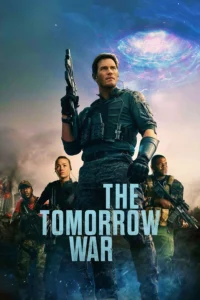
| 🎬 Title & Year | The Tomorrow War (2021) |
| 🎥 Director | Chris McKay |
| 👥 Starring | Chris Pratt, Yvonne Strahovski, J.K. Simmons, Betty Gilpin, Sam Richardson |
| 🕒 Genre / Runtime | Science Fiction, Action, Adventure · 131 mins |
| 🔞 MPA Rating | PG-13 |
| ✝️ Core Faith Themes | Time and Responsibility, Fatherhood, Faithful Presence, Generational Legacy, Knowing and Doing, Stewardship of Today |
| 📖 Key Scripture | James 4:13–15, James 1:22, Ephesians 5:15–17, Psalm 90:12, Deuteronomy 6:6–7 |
Table of Contents
Science-fiction films about time have always fascinated me. They make us wonder what we would change if we could turn time backward, what decisions we would make differently if we could see the future, and what would happen to our relationships if time moved differently for the people we love. While watching The Tomorrow War, I naturally thought of two other films: Edge of Tomorrow and Interstellar.
All three are stories about time, but they use it in completely different ways. In Edge of Tomorrow, the same day repeats again and again. In Interstellar, time moves at radically different speeds depending on where the characters are. In The Tomorrow War, the future and the present are directly connected. Yet all three eventually lead us toward a similar question:
When our relationship with time changes, how do we change—and what happens to the people we love?
What interests me most in The Tomorrow War is not even the extinction of humanity in the future. It is the moment when Dan Forester meets his adult daughter, Muri. For Dan, the future is not merely a world devastated by alien creatures. His little girl has grown into an adult woman, and she remembers a future version of her father that Dan himself has not yet become. What has not happened yet for Dan has already become a childhood wound for Muri. At that moment, The Tomorrow War becomes more than an alien-war movie. It asks a deeply uncomfortable question:
If I could meet my future family and hear exactly what my choices eventually did to them, would I live differently today?
1. Three Films, Three Kinds of Time: A Repeated Today, Lost Years, and a Future That Comes Back as a Warning
Edge of Tomorrow, Interstellar, and The Tomorrow War all deal with time, but each uses it to test human beings in a different way. In Edge of Tomorrow, time repeats. Cage dies, wakes up again, returns to the same battlefield, fails countless times, and gradually changes through the repetition. When I previously reflected on that film, I saw the repeated day through the idea of “dying daily” and the process of sanctification. The day may reset, but Cage does not remain the same person. Repetition becomes a kind of training through which he is slowly transformed.
In Interstellar, by contrast, time does not repeat. It disappears too quickly. A few hours for Cooper can become decades for Murph on Earth. Cooper cannot go backward and recover what he lost. He can only watch video messages as his children grow, become angry, suffer, and age without him. Cage receives repeated opportunities to correct failure, while Cooper loses years that can never be returned.
The Tomorrow War handles time differently again. The future comes back to the present. A generation from decades ahead appears before the people of today and essentially says, “We failed. Help us.” People from the present are sent into a war that has not yet begun in their own time, and some return carrying knowledge from the future. Here, time is neither a loop nor simply a distance. Time becomes a warning. The future tells the present, “If nothing changes, this is where you are going.”
Seen together, the three films ask three distinct questions. Edge of Tomorrow asks, “If I could live today again, could I become different?” Interstellar asks, “How do I live with time that can never be recovered?” And The Tomorrow War asks, “If I could see tomorrow’s consequences, would I make different choices today?”
Our lives are not exactly like any of these films. We cannot reset the day like Cage, cross relativistic distances like Cooper, or meet our adult children decades in the future like Dan. But one thing remains true: time continues moving forward, and today’s choices eventually become tomorrow’s consequences. James 4:13–15 reminds us that we do not know what tomorrow will bring. Scripture does not tell us to control the future. It reminds us precisely because we cannot control it that the life given to us today matters.
Comparative Analysis: Three Films, Three Relationships With Time
| Film | How Time Works | What Is Lost or Gained | Central Question |
|---|---|---|---|
| Edge of Tomorrow | The same day repeats | Failure becomes an opportunity to learn and change | If I could live today again, would I become different? |
| Interstellar | Time moves at different speeds | Years with loved ones are permanently lost | How do I live with time that cannot be recovered? |
| The Tomorrow War | The future reaches back into the present | Future consequences become a warning that can still shape today | If I saw tomorrow’s consequences, would I live differently today? |
2. Meeting His Daughter in the Future: Muri Is the Memory Dan Has Not Yet Created
When Dan meets the adult Muri in the future, the emotional center of the film changes completely. Muri is an accomplished scientist and military leader, but she is also a daughter deeply wounded by her father. Dan, in the present, loves his young daughter. He spends time with her, cares about his family, and certainly does not think of himself as the kind of father who would abandon them. Yet future Muri tells him something devastating: someday he will become bitter and distant, leave the family, and create a wound that stays with her long after he is gone.
To me, this is more frightening than the aliens. Imagine meeting your future child and hearing, “This is what your choices did to me.” Most of us imagine our future selves becoming better. We assume that even if we are immature today, we will eventually grow wiser, love our families better, and become more patient. But people do not automatically improve simply because time passes. Disappointment, pride, resentment, ambition, and failure can move us in another direction if we allow them to.
That is why Muri is more than Dan’s future daughter. She is a living witness to the consequences of choices he has not yet made. What is still only a possibility for Dan has already become childhood memory for her. The time-travel premise becomes emotionally powerful because knowing the future is no longer just knowing when the aliens will arrive. It means seeing what kind of person you will become to the people you love.
This makes me ask what kind of memories we are creating in the people closest to us right now. Parents leave more than words behind. Children remember the time we gave them, how we responded when angry, how we treated our spouse, how we reacted to failure, and which promises we kept or broke. I may experience today simply as the present, but for someone I love, the person I am today may eventually become part of the past they remember for the rest of their life.
3. Cooper and Dan: Both Lose Time With Their Daughters, but Not for the Same Reason
This is where comparing Dan with Cooper from Interstellar becomes especially interesting. Both men love their young daughters, and both eventually encounter those daughters as adults because time has moved abnormally around them. Yet their absences are not the same.
Cooper leaves Earth because he believes the mission may secure a future for humanity and for his children. Murph experiences his departure as abandonment and carries deep anger for years, but Cooper does not leave because he stops loving his family. Ironically, he leaves because he hopes to help give them a future. Yet good intentions do not erase consequences. When Cooper returns from Miller’s planet and watches decades of video messages in a single sitting, the cruelty of time becomes painfully clear. He left for his family, yet in doing so he lost years of that family’s life.
Dan is different. The absence remembered by future Muri is not the unavoidable cost of an interstellar mission. The future version of Dan becomes frustrated with his life, withdraws from his family, and eventually leaves. Cooper loses his daughter’s years because time moves differently for him. Dan nearly loses his daughter because he himself becomes different.
That distinction matters. Not every absence should be judged in the same way. A parent may be separated from family because of military service, illness, necessary work, immigration, ministry, or circumstances outside their control. Simply counting hours together cannot tell the entire story. At the same time, we should be willing to ask whether we sometimes hide behind the phrase, “I’m doing this for my family,” while endlessly postponing the family itself.
Both Cooper and Dan love their daughters, but both stories remind us that love and time cannot be completely separated. Love eventually asks for time: time to listen, time to wait, time to be present, and sometimes time that requires us to surrender another plan we would rather pursue.
4. Knowing the Future Is Not the Same as Changing Today
Dan eventually learns how his family falls apart, sees the destruction waiting in the future, and discovers information that could help stop the Whitespikes. But knowledge alone does not change anything. What matters is what he does with that knowledge once he returns to the present.
That feels uncomfortably realistic. Most of us already know many of the things that matter most in life. We know our health will not last forever. We know time with family is limited. We know careless words can leave long scars. As Christians, we know we are called to love, forgive, reject pride, and remember that our lives are temporary. Yet knowing these things and actually living according to them are not the same.
James 1:22 warns us not to merely listen to the Word while refusing to do what it says. Knowledge is not transformation by itself. In Dan’s story, the future becomes meaningful only when what he has learned begins to reshape his choices in the present.
That leaves me with a simpler question than, “Wouldn’t it be useful to know the future?”
What am I changing today because of truths I already know?
5. Saving the Future of Humanity—and the Future of One Family
On the surface, Dan’s mission is enormous: save the future of the human race. If the Whitespikes cannot be stopped, almost everyone in the future will die. But while Dan fights for that global future, he is also fighting for a much smaller one: the future of his own family.
I love the way those two futures become connected. We naturally admire big missions—changing the world, building something important, influencing many people, achieving something that lasts. Those can all be worthwhile. But sometimes the responsibility entrusted to us within one small relationship can be harder than the grand mission everyone else sees.
A person can talk about saving the world while deeply hurting a family. Someone can be respected by thousands while being irresponsible toward the people who know them best. Christian faith does not allow us to separate public mission and private character completely. Saying meaningful things to many people does not excuse failing to love the people placed closest to us.
For Dan, the war in the future is a war for humanity, but adult Muri makes that war personal. Saving the future no longer means only keeping billions of human beings alive. It also means creating a future in which one little girl is not abandoned by her father.
That makes me think about the balance between great calling and nearby responsibility. Perhaps the question, “What am I doing for the world?” must sometimes be accompanied by an equally important question: “What kind of person am I becoming to those closest to me?”
6. The Next Generation Inherits More Than Our Words
The premise of The Tomorrow War is generational from the beginning. A younger generation from the future returns to ask the present generation for help because the world they inherited is collapsing. That idea reaches beyond the relationship between Dan and Muri. It raises a broader question about what one generation leaves behind for the next.
Deuteronomy 6:6–7 tells God’s people to impress His words on their children and to speak of them throughout ordinary life. That is more than transferring information. Children also learn by watching what adults repeatedly value, excuse, prioritize, and pursue.
We can teach honesty while practicing small deceptions. We can speak about faith while living as though money, status, or success were our highest priorities. We can tell children that relationships matter while giving the people closest to us whatever time remains after everything else is finished. The next generation receives more than our advice. It also receives the habits, priorities, and consequences of the lives we actually live.
That is what makes Dan’s encounter with future Muri so powerful. He does not merely discover what he once told his daughter. He sees what he left behind in her.
7. We Do Not Need a Time Machine to Begin Living Differently
Cage in Edge of Tomorrow receives another chance to live the same day. Cooper in Interstellar eventually finds a way to communicate across time with his daughter. Dan in The Tomorrow War returns to the present carrying knowledge from a future that has not yet arrived. We have none of those advantages. We cannot reset the day, visit our future children, or send a warning backward through decades.
What we do have is today.
Psalm 90:12 asks God to teach us to number our days so that we may gain a heart of wisdom. I do not read that as an invitation to calculate exactly how many years we have left. It is a prayer to remember that life is finite and therefore worth living carefully. Ephesians 5:15–17 gives a similar call to live wisely and make good use of our time. Biblical wisdom is less about predicting the future than about recognizing what faithfulness requires in the present.
That is why The Tomorrow War ultimately makes me think less about seeing the future and more about what I am doing now. If the version of me thirty years from today could speak to me, what would he wish I had taken more seriously? More time with family? A quicker apology? Less energy spent on things that never mattered?
We already know enough to begin. We know time is limited. We know the people we love will not remain beside us forever. We know today’s habits and choices eventually become part of someone else’s memory.
Even without seeing the future, can I choose to live differently today?
Maybe the future is shaped not only by dramatic battles, but by the quieter choices that determine what kind of father or mother, husband or wife, friend, neighbor, and Christian I become today.
Key Takeaways & Faith Insights
- We Cannot Control Tomorrow, but We Are Responsible for Today: We cannot know or control the future, but uncertainty about tomorrow does not reduce our responsibility today. It gives us even more reason to live wisely with the life God has given us now. James 4:13–15
- Knowing the Truth Is Not the Same as Living by It: Dan returns from the future with knowledge, but that knowledge matters only when it changes his actions in the present. Faith likewise must move beyond knowing what is right and become visible in the choices we make. James 1:22
- Love Is Measured Not Only by Feelings but by the Time We Give: Cooper and Dan remind us that love and time are deeply connected. Saying that we love someone matters, but so does the actual time, attention, patience, and presence we give them. Ephesians 5:15–16
- Our Choices Become the Memories of the Next Generation: Today’s seemingly ordinary choices may one day become the memories our children and families carry with them. Remembering that our days are limited can help us live with greater wisdom and intention. Psalm 90:12
- One Generation Is Responsible for What It Passes On: We pass on more than possessions or information. Our values, habits, relationships, and the way we actually live our faith all become part of what the next generation receives from us. Deuteronomy 6:6–7
- Redeeming the Future Begins With Faithfulness in the Present: We cannot reverse time, but we can change the direction of a future that has not yet arrived. Instead of living in fear of tomorrow, we are called to live wisely and faithfully in the time entrusted to us today. Ephesians 5:15–17
“I’ll never leave this family. Because my best future, it turns out, was always right in front of me.”
Dan Forester
Explore More Screen Devotions:
- 🎨 Animation: Spiritual Insights in Animated Films
- 🌍 Documentaries: Biblical Perspectives on Real-World Issues
Scripture taken from the Holy Bible, NEW INTERNATIONAL VERSION®, NIV® Copyright © 1973, 1978, 1984, 2011 by Biblica, Inc.® Used by permission. All rights reserved worldwide.