
Don’t Cry for Me Sudan: Sacrificial Love That Bears Lasting Fruit
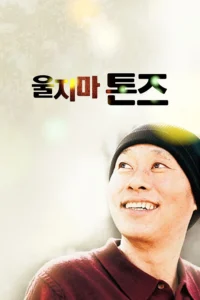
| 🎬 Title & Year | Don’t Cry for Me Sudan (2010) |
| 🎥 Director | Koo Soo-hwan |
| 👥 Starring | Fr. John Lee Tae-seok |
| 🕒 Genre / Runtime | Documentary · 90 mins |
| 🔞 MPA Rating | Not Rated (G / General Audiences) |
| ✝️ Core Faith Themes | Incarnational Love, Sacrificial Devotion, Healing and Shalom, A Grain of Wheat |
| 📖 Key Scripture | John 12:24, John 15:13, John 13:14–15, Matthew 25:40 |
Table of Contents
In this Don’t Cry for Me Sudan review, we explore how the late Father John Lee Tae-seok demonstrated his sacrificial faith through his actions for the people of Tonj.
You might wonder, “Why analyze a Catholic documentary?” However, regardless of the religion or the distinct tone of any movie, documentary, or animation, our focus is on looking beyond the scenes and reinterpreting them into our daily lives through the lens of a Christian worldview. This, you could say, is the very mission of this blog!
Regarding the seeds of wheat sown by the late Father John Lee Tae-seok, we frequently hear news today that the children who grew up watching him have now become medical doctors. Isn’t this an astonishing bearing of fruit? They still remember Father Lee with deep gratitude and longing. What exactly did he do that made them love him so dearly, and continue to miss and thank him to this very day? Shall we step into Tonj together?
A Doctor Who Headed to the Lowest Land
Leaving behind a guaranteed future and the secular comforts of being a medical doctor, this record of a man who headed to Tonj, South Sudan—a land trampled by prolonged civil war and famine—goes far beyond a simple humanitarian documentary. The film Don’t Cry for Me Sudan illuminates the life of the late Father John Lee Tae-seok, who lived out the sacrificial love of Jesus Christ on the cross amidst grinding poverty and the festering wounds of leprosy patients. What he left behind in this land of despair, where gunshots never ceased, was not grand doctrine or eloquent preaching, but the complete practice of the Gospel: willingly standing beside the naked, bleeding and weeping together with them.
The Practice of the Incarnation: Love That Washes Wounded Feet
Father John Lee Tae-seok did not treat the people of Tonj as mere recipients of charity or as pitiable others. He carried bricks with his own hands to build a hospital, personally disinfected the rotting, festering flesh of leprosy patients, and custom-made special shoes for their deformed feet. This is the incarnational spirituality that directly reenacts the humility of Jesus Christ, who took off his outer robe and washed the filthiest feet of mankind. The film eloquently proclaims that genuine Christian service does not begin with condescending warmth from a high place, but with descending to the deepest depths of wounds and becoming one with their suffering.
I believe Christians must also care for the members of the body from the lowest place and with the heart of the lowly—places where no one pays attention and where there is no honor. However, just because I say this does not mean you must unconditionally do so. God certainly grants such a mission and a heart to help others from those positions to certain individuals; He moves their hearts. Even if it is not medical missions or places like Africa like Father Lee, looking around where we currently live can be the very same as entering into a lowly posture.
A Brass Band Resounding in the Desolate Wilderness: Healing and Shalom
There is a scene in this documentary that brought the deepest reflection and resonance to my heart: the brass band. For young boys who had lost their parents to war and shut the doors of their hearts, he placed musical instruments in their hands instead of guns and formed a brass band. When children who could not even read sheet music breathed together in clumsy unison to create harmony, the parched wilderness of Tonj finally experienced God’s complete peace—Shalom. When I see children on the autism spectrum or individuals living with physical disabilities gathering in hospitals to sing in a choir or perform as an orchestra with musical instruments, I am often profoundly moved by such breathtaking sights.
The Gospel does not merely stop at resolving physical hunger; it reveals a holistic salvation that restores human dignity and inner brokenness shattered by war trauma through art and love. Instead of handing them guns and weapons, he presented them with the gift of music, offering them a true opportunity to heal.
A Single Grain of Wheat: Eternal Fruit That Swallows Death
As I walk through life, there have been several people close to me who passed away early from cancer. Standing at their funeral services, I often wondered why God took them home at such a young age when they were clearly loved by Him and were people He intended to use greatly.
Yet, I vividly remember the words of a pastor who led one funeral service:
“Though they departed this world suddenly due to cancer, a heavenly banquet is currently taking place in heaven. God loved them so dearly that He took them home first to use them even more greatly in heaven than on this earth.”
I do not know how each of you might receive those words, but while I considered it a comforting message for the bereaved family, it also helped me understand, even a little, that God loved them so much that He brought them into heaven quickly.
Likewise, when watching Father John Lee Tae-seok pass away at the young age of 48 before the sudden suffering of cancer, I naturally think how wonderful it would have been if he had lived longer, stayed in Tonj longer, served them longer, and lived alongside them for many more years.
I also wondered what it would have been like if he had sought treatment earlier when his health deteriorated during his mission work. However, he worried about the children and patients left behind in Tonj far more than his own physical body. Yet, as I mentioned in the introduction, his life did not end in a tragic, premature death.
Like a single grain of wheat that falls to the ground and dies, the love he planted bore the miracle of raising countless children of Tonj into medical doctors and civil servants, saving yet other lives. Through this Don’t Cry for Me Sudan review, we realize that the paradox of the cross—emptying oneself to give life to others—is indeed the greatest imprint a Christian must leave upon this world.
In our lives today, are we living in a way that serves as an inspiring example to someone else, allowing the image of God to be seen through us?
“Very truly I tell you, unless a grain of wheat falls to the ground and dies, it remains only a single seed. But if it dies, it produces many seeds.”
John 12:24
Key Takeaways & Faith Insights
- Incarnational Service in the Lowest Place: True Christian ministry does not look down from positions of privilege, but descends into the deepest wounds of broken humanity to suffer alongside those in pain. (John 13:14–15)
- Restoring Broken Dignity Through Shalom: The Gospel addresses far more than physical hunger; it redeems war-torn hearts and silenced spirits through holistic love, music, and divine peace. (Isaiah 35:1–2)
- The Living Witness of Sacrificial Love: Genuine faith is proven not through lofty doctrines or words, but through concrete acts of compassion that serve the most vulnerable as unto Christ Himself. (Matthew 25:40)
- The Grain of Wheat That Defeats Death: When a life is willingly poured out and dies to self for the sake of others, God multiplies that sacrificial love into enduring fruits of salvation and eternal transformation. (John 12:24)
“The most important thing is not what we do, but how much love we put into what we do.”
Fr. John Lee Tae-seok, remembered in Don’t Cry for Me Sudan
Explore More Screen Devotions:
- 🎬 Movies: Explore Other Faith-Based Film Reflections
- 🎨 Animation: Spiritual Insights in Animated Films
Scripture taken from the Holy Bible, NEW INTERNATIONAL VERSION®, NIV® Copyright © 1973, 1978, 1984, 2011 by Biblica, Inc.® Used by permission. All rights reserved worldwide.