
Finding Nemo: The Relentless Love That Seeks the Lost
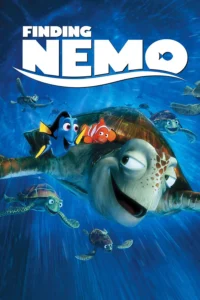
| 🎬 Title & Year | Finding Nemo (2003) |
| 🎥 Directors | Andrew Stanton, Lee Unkrich |
| 👥 Voice Cast | Albert Brooks, Ellen DeGeneres, Alexander Gould, Willem Dafoe, Allison Janney |
| 🕒 Genre / Runtime | Animation, Adventure, Comedy, Family · 100 mins |
| 🔞 MPA Rating | G |
| ✝️ Core Faith Themes | The Parable of the Prodigal Son, Spiritual Incompetence in the Fish Tank, The Relentless Pursuit of the Shepherd, Restoration and Sanctification |
| 📖 Key Scripture | Luke 15:4, Luke 15:11–32, Isaiah 53:6, Romans 8:38–39, 1 John 4:19 |
Table of Contents
Welcome, everyone to this Finding Nemo Christian Review as we dive into Pixar’s beloved classic to discover the profound gospel parable of the prodigal son, our spiritual helplessness in the worldly fish tank, and the relentless, pursuing grace of our Heavenly Father. When I watched Finding Nemo once again, I discovered that it contains an incredibly clear message. Shall we talk about Finding Nemo—a movie easily understood by everyone from children to adults—through a Christian worldview together?
Pixar’s masterpiece Finding Nemo is, on the surface, an adventure story of a father and son fish set in the beautiful ocean. However, when looking through a spiritual lens, it is a masterpiece of the gospel that most perfectly and movingly translates the “Parable of the Prodigal Son” and the “Parable of the Lost Sheep” recorded in Luke 15 of the New Testament onto the screen.
As a father raising twin children, when I watch this movie again with a parent’s heart, I feel a deep thrill seeing the father Marlin throw himself without hesitation into the pitch-black sea with no end in sight. This goes beyond a family movie simply emphasizing paternal love; it is a massive redemptive epic showing God the Father’s “Relentless Love,” willingly tracking us down even to the valley of the shadow of death when we sin and run away. Aren’t most fathers, including myself, just like Marlin?
Rebellion Beyond the Father’s Boundaries: The Beginning of Sin and the Fall
At the beginning of the movie, the father Marlin overprotects his only surviving son, Nemo, due to the past trauma of losing his wife and other eggs. Truly, looking at scenes like this, it is an embarrassing but naked reflection of South Korea’s reality. In Korea, there are many dual-income households, and because parents try to raise their children to be exceptionally smart, they end up trying to live their entire lives solely for their children. Consequently, most fathers and mothers tend to overprotect their children. Thus, in Korea, they are called “Broom Parents” (Curling Parents).
I don’t know what results you might get if you search it on Google, but looking at AI results, it says they are “parents who intervene minimally to help only when insurmountable obstacles appear.” I think this is wrong. They don’t do it minimally; I believe they are parents who sweep away obstacles with a broom before the children even encounter them. It is simply to make them focus on studying, and only studying, unconditionally.
Anyway, it felt bitter because Korea’s reality overlapped with the sight of Nemo being overprotected.
Returning to Nemo’s story, dad Marlin draws a strict boundary preventing him from going out into the deep sea (the drop-off) beyond the coral reef. However, to Nemo, whose ego and curiosity have grown, his father’s protection merely feels like suffocating interference and “oppression that binds us.” Ultimately, with pride and a rebellious spirit thinking “I can do it myself!”, Nemo crosses his father’s boundary and dashes toward the human boat.
This scene accurately depicts the fall of Adam who ate the forbidden fruit in Genesis, and the “Parable of the Prodigal Son” who took his father’s inheritance and left for a distant country. Isaiah 53:6 describes human sinfulness by saying:
“We all, like sheep, have gone astray, each of us has turned to our own way.”
We often mistakenly think that God’s Word and laws oppress our freedom. We believe that leaving God’s embrace, making our own decisions, and going out into the wide sea of the world is true freedom. However, the price of that false freedom was the miserable confinement of being caught in a human diver’s net and trapped in a dentist’s narrow fish tank.
A Fish Tank That Cannot Save Itself: An Incompetent Self Placed Under Judgment
The reality of Nemo, who left the coral reef and is trapped in a dentist’s fish tank in a glamorous city (Sydney), starkly symbolizes the spiritual state of fallen humans trapped in the pleasures of a sinful world. On the surface, the fish inside the tank appear to live safe and regular lives. Food is given every day, and they enjoy playing among plastic toys. It is no different from modern people living trapped in a narrow fishbowl of worldly money, success, and comfort, completely forgetting the sea of eternal life. Perhaps it’s a look quite similar to our own, isn’t it?
However, that fish tank is by no means an eternal haven. A date is set for a visit by Darla, a cruel little girl who violently shakes fish to death. Darla is a symbol of “death and judgment” that we cannot avoid by our own strength.
Nemo and his fish tank friends attempt to escape by jamming a pebble into the water filter with their own strength, but all their human efforts and wisdom ultimately end in failure. The film heavily conveys the desperate spiritual awakening that humans, trapped in the yoke of sin and death, are thoroughly incompetent beings who cannot break the glass wall and achieve salvation on their own; only a “savior coming from the outside” can save them.
A Fierce Pursuit Across the Pacific: The Love of a Shepherd Seeking the Lost Sheep
To save the prodigal son Nemo, who cannot save himself, the most fragile and cowardly father, Marlin, begins to move. Usually unable to go even one meter outside the coral reef, he crosses the entire Pacific Ocean, physically enduring the threat of terrifying schools of sharks, the terror of deep-sea anglerfish, and the agony of deadly swarms of jellyfish, all to find his one and only lost son.
Marlin’s life-risking journey shows the pursuit of the Good Shepherd—our Father God—who leaves the ninety-nine sheep in a safe place and crosses rugged mountains and pushes through thorny bushes to find the one lost sheep.
The parable of the lost sheep in Luke 15:4 clearly shows what God’s method of salvation is like. The sheep does not seek out the shepherd. The shepherd pursues without giving up until he finds the sheep. God did not stand by as an onlooker toward us, who were floundering in the deep sea of sin, saying, “Since you rebelled and left, figure out how to come back on your own.”
Of course, sometimes there is also the image of Jesus silently waiting until we return. However, dad Marlin’s appearance showed the image of Jesus going out to find one young lamb. By personally sending His Son Jesus Christ down into the deepest abyss of suffering and death on the cross, He rescued us with an overwhelming love of the cross that no swarm of sharks or jellyfish (the power of death) could ever break.
Comparative Analysis: Rebellion in the Fish Tank vs. The Father’s Pursuing Love
| Analytical Category | Rebellion Toward the World and the Fish Tank (The Way of the Prodigal Son) | The Father’s Pursuit and the Sea (God’s Love and Salvation) |
|---|---|---|
| Misunderstanding of Freedom | Mistaking escaping the father’s control as true freedom | True peace enjoyed when dwelling within the father’s protection and grace |
| Spiritual Reality Faced | A narrow fish tank that looks glamorous but has judgment (Darla) waiting | A foundation of creation pulsating with true vitality despite numerous hardships |
| Subject of Problem Solving | Complete spiritual incompetence unable to break the glass wall oneself | Absolute grace that comes seeking to the end, risking threats to life |
| Core Bible Verse | “We all, like sheep, have gone astray, each of us has turned to our own way” (Isaiah 53:6) | “Neither height nor depth, nor anything else in all creation, will be able to separate us from the love of God” (Romans 8:39) |
True Freedom Enjoyed Within Grace and a Restored Mission
Finally, Nemo, who bounces out into the ocean through the dentist’s drain, has a dramatic reunion with his father, Marlin, who risked his life to find him. Just as in Luke 15:20, when the prodigal son, battered and stained by false freedom, returned, the father ran from afar, embraced his neck, and kissed him; the sight of the father and son fish embracing in the middle of the sea brings the overwhelming thrill of salvation completed by absolute grace.
However, the gospel does not stop at the place of being saved. Nemo, who realized his father’s fierce love and was restored, was no longer a young child full of rebellion. At the film’s conclusion, when Dory and countless fish are trapped in a fisherman’s massive net and face the crisis of being pulled up, Nemo jumps into the net without hesitation and shouts to the fish, “Swim down!” Ultimately, with their united strength, they break the net and gift freedom to the captives.
The weak prodigal son, who could not even save his own life, was reborn as a person with a mission, a “little savior” leading others to life after experiencing the father’s cross-like love. This is exactly the life of Sanctification shown by a Christian worldview.
We may still be fragile beings who, like Nemo, are led astray by curiosity or chase the comfort of a narrow fishbowl. However, the love of God the Father, who insists on finding us even if He has to turn the Pacific Ocean upside down, is approaching us even at this very moment. Meditating deeply on that love, I hope that we, too, can live as instruments of grace who reach out to someone dying trapped in the world’s net and shout the direction of life.
Key Takeaways & Faith Insights
- False Freedom and the Fall: Stepping outside God’s boundaries is not true freedom, but a spiritual pride and rebellion that locks oneself inside a fish tank of death. (Isaiah 53:6)
- Desperate Spiritual Incompetence: Inside worldly pleasures that appear glamorous, Darla (judgment) ultimately awaits. We cannot break the glass wall of death and achieve salvation through our own human efforts alone.
- The Love of a Shepherd Who Pursues to the End: Father Marlin’s journey, enduring every deadly threat for his lost sheep across the Pacific, reflects the overwhelming love of God who sought us through the cross. (Luke 15:4)
- A Restored Life of Mission and Sanctification: Just as the saved Nemo dove into the net to save other fish, a believer who has experienced the Father’s relentless love must live as a conduit of grace guiding the lost to true freedom. (1 John 4:19)
“I promised I’d never let anything happen to him.”
Marlin“That’s a funny thing to promise. You can’t never let anything happen to him. Then nothing would ever happen to him!”
Dory
Explore More Screen Devotions:
- 🎬 Movies: Explore Other Faith-Based Film Reflections
- 🌍 Documentaries: Biblical Perspectives on Real-World Issues
Scripture taken from the Holy Bible, NEW INTERNATIONAL VERSION®, NIV® Copyright © 1973, 1978, 1984, 2011 by Biblica, Inc.® Used by permission. All rights reserved worldwide.