
Love Letter: What Grief Teaches Us About Memory and Hope
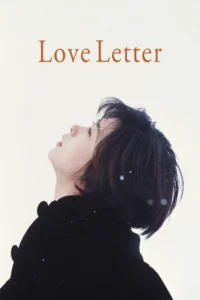
| 🎬 Title & Year | Love Letter (1995) |
| 🎥 Director | Shunji Iwai |
| 👥 Starring | Miho Nakayama, Etsushi Toyokawa, Miki Sakai, Takashi Kashiwabara |
| 🕒 Genre / Runtime | Romance, Drama · 116 mins |
| 🔞 MPA Rating | PG |
| ✝️ Core Faith Themes | Grief and Hope, Memory and Healing, Humility in Love, Love Through Action, Resurrection Hope |
| 📖 Key Scripture | 1 Thessalonians 4:13–14, 1 Samuel 16:7, 1 John 3:18, John 11:25–26 |
Table of Contents
“Ogenki desu ka? Watashi wa genki desu.” Hearing those words will probably bring one particular film immediately to mind for many people: Shunji Iwai’s Love Letter. Until now, Screen Devotions has focused mainly on American and Korean films, but from here on I would also like to begin sharing Japanese films one by one. I am especially excited because there are so many Japanese animated films I hope we can reflect on together in the future.
Whenever I think of Love Letter, the first thing that comes to mind is its distinctive quietness. Many American and English-language films move their stories forward through large events, spectacle, and fast pacing, while Korean and Japanese cinema often has a remarkable ability to enter deeply into human emotion through things that seem almost insignificant—a small memory, an old letter, a glance, or a silence. I believe Love Letter is one of the finest examples of that kind of storytelling.
The film begins with Hiroko Watanabe, who continues to live with the memory of her deceased fiancé, Itsuki Fujii. Hiroko sends a letter to Itsuki’s former address without expecting any response. Yet, surprisingly, a reply arrives. Another person named Itsuki Fujii is living there: a woman who had been in the same class as Hiroko’s late fiancé during their school years. I find this shared-name premise incredibly beautiful.
A letter written because one woman cannot let go of someone she loved reaches a completely different person, and through that correspondence, memories and pieces of the dead man’s past—things Hiroko herself never knew—begin to emerge. A letter that begins as an attempt to hold onto someone who has died gradually becomes part of the process through which she begins to let him go.
That is why I do not think of Love Letter simply as a film about first love. Instead, it asks something deeper: When we lose someone we love, what are we supposed to hold onto? Does memory give us the strength to keep living, or can it become a thread that keeps us tied to the past?
A Letter to Someone Who Has Died: Why Is It So Hard to Let Go of the Past?
If we think about Hiroko’s decision rationally, sending a letter to the dead Itsuki seems a little strange. There is no reason to believe the letter could ever reach him, and there can be no reply. But the heart of someone who has lost a loved one is rarely that simple. Even when the mind knows that the person will never return, the heart can still feel as though he or she must somehow continue to exist somewhere.
That may be why people keep photographs, preserve letters, or return to places they once visited together. We do these things because we do not want to forget. Memory can feel like the final evidence that the person we loved truly existed. Scripture does not tell us that grief in the face of death is wrong. Jesus Himself wept at the death of Lazarus. Faith does not erase the pain of losing someone we love, and Christianity does not deny grief.
Yet in 1 Thessalonians 4:13–14, Paul tells believers not to grieve “like the rest of mankind, who have no hope.” This does not mean Christians are forbidden to cry. We hurt, we miss people, and we shed tears just like anyone else. But Christian grief carries something alongside the sorrow: the hope that death is not the end.
Hiroko continues living while holding onto the memory of the dead Itsuki, but the film does not leave her trapped inside that memory forever. By walking backward into the past, she discovers parts of Itsuki she never knew, and in doing so she slowly begins preparing herself to release him. Perhaps healthy memory does not mean remaining forever in the past. Perhaps it means carrying the person we loved within us while still learning how to walk forward again.
Even the Person I Loved Had Stories I Never Knew
To Hiroko, Fujii Itsuki was the fiancé she loved. But through her correspondence with the female Itsuki Fujii, Hiroko begins to realize that the man she loved had an entire period of his life that she knew nothing about. During their school years, the two students named Fujii Itsuki were constantly paired together because they shared the same name. They worked as library committee members, teased and irritated one another, and accumulated small memories that seemed insignificant at the time. As the story unfolds, however, we gradually begin to understand that the male Itsuki may have carried feelings for the female Itsuki that he never expressed directly.
I find this remarkably true to life. We believe we know the people we love well. After spending many years with family members, a spouse, or close friends, it is easy to assume that we know almost everything about them. Yet every human being carries memories and emotions that cannot be completely revealed to another person.
1 Samuel 16:7 reminds us that human beings look at outward appearances, but the Lord looks at the heart. We can observe someone’s words and actions, but only God knows the human heart completely. Even the person we believe we are closest to may carry pain, memories, or thoughts that we have never known.
Perhaps love, then, begins not with saying, “I know everything about you,” but with the humility to say, “There may still be parts of your story that I do not know.” Love does not trap another person inside the image I have created of him or her. It recognizes that every person possesses a depth that I may never fully understand.
What Hiroko discovers through the letters is not merely the identity of her late fiancé’s first love. She discovers that the man she loved was also a person with memories, experiences, and a past that existed beyond what she herself had known.
Even Unspoken Love Leaves a Trace
One of the most beautiful aspects of Love Letter is that the male Itsuki’s feelings are revealed only very late in the film. He never directly confesses his love. During their school years, he often appears indifferent, awkward, and even playful. But near the end, the female Itsuki discovers a drawing of herself on the back of an old library card. In that moment, actions that once seemed meaningless suddenly take on an entirely different significance.
He never said the words, but love had already left traces in small things.
That scene makes me think that love does not always reveal itself through grand gestures. A small act of kindness left for someone, a sentence we remembered, a photograph or letter kept for years—things that seemed insignificant when they happened may carry a meaning we never expected once enough time has passed.
Scripture also refuses to reduce love to emotion or words alone. 1 John 3:18 tells us not to love merely with words or speech, but with actions and in truth. Of course, I am not trying to identify the male Itsuki’s unspoken first love directly with biblical love. But the traces he leaves behind make me wonder what kind of traces we are leaving in the lives of those we love.
If someone remembers me after I am gone, what will that person remember? Will they remember how successful I was or how much I owned? Or will they remember the small kindnesses and love I gave them? Strangely, when a person is gone, it is often the smallest things that remain.
Comparative Analysis: Memory That Holds Us vs. Memory That Helps Us Move Forward
| Theme | Memory That Holds Us | Memory That Helps Us Move Forward |
|---|---|---|
| Relationship to the Past | Trying to remain inside what has already been lost | Honoring the past while continuing to live in the present |
| Grief | Believing that moving forward means betraying or forgetting the person we loved | Allowing ourselves to grieve while accepting that love can remain even as life continues |
| Love | Holding tightly to the image of someone as we remember them | Receiving the person’s full story with humility, including parts we never knew |
| Christian Hope | Looking only backward because death appears to have the final word | Remembering with grief while looking forward in the hope of resurrection |
“How Are You?”: From Longing to Hope
In the film’s most famous scene, Hiroko stands before the snow-covered mountains and cries out, “Ogenki desu ka?” Then she answers, “Watashi wa genki desu.”
“How are you? I’m doing well.”
I believe this scene means more than simply expressing longing for a dead lover. At first, the words sound like a question addressed to Itsuki, but perhaps Hiroko is also speaking to herself: “Am I all right now?”
After losing someone we love, we sometimes believe that moving forward requires us to forget that person. But Love Letter presents something gentler. Hiroko does not forget Itsuki. She does not erase his memory. Instead, she learns how to carry that memory in a different way.
I think this resembles Christian grief in certain ways. We do not overcome sorrow by erasing the people we loved. We learn how to remember them without allowing the memory to bring our entire lives to a permanent stop. We carry that love while learning how to walk forward again.
And at this point, the Christian faith adds something more: the hope of resurrection.
We can miss those who have died without falling into endless despair because we believe that death is not the final chapter of God’s story. In John 11:25–26, Jesus tells Martha, “I am the resurrection and the life.” He does not deny the reality or pain of death. In that very chapter, Jesus Himself weeps. Yet He also declares that death does not possess the final word.
Love Letter is not a Christian film, nor does it teach resurrection, so there is no need to force its message into a direct representation of the gospel. But as I watch a story about the memories and love left behind after a person dies, I find myself thinking even more deeply about how extraordinary the Christian hope is in the face of death.
Hiroko’s “How are you?” receives no answer. But Christians are not people who stand before death expecting only eternal silence. We wait for the day when every tear will be wiped away and death will be no more.
Remembering someone we loved, then, does not necessarily mean living forever trapped in the past. We can remember that person and still live today. We can carry traces of love and still learn to love others again. And in Christ, we can carry the hope that even death itself will not remain the final goodbye.
After watching Love Letter, I am ultimately left with two questions: What kind of memories am I leaving with the people I love? And when I lose someone I love, do I remain standing inside the memory, or am I learning to carry that love with me as I walk forward again?
The traces of someone we loved can make us cry. But those same traces can also become part of what gives us the courage to continue living. Perhaps faith does not erase our longing. Perhaps it shows us that there is hope even beyond that longing.
Key Takeaways & Faith Insights
- Christians Grieve, but Not Without Hope: Faith does not erase the pain of losing someone we love. Yet Christian grief carries the hope that death is not the end and that resurrection belongs to the story God is writing. 1 Thessalonians 4:13–14
- Only God Fully Knows the Human Heart: Even those closest to us have memories and depths we may never completely understand. Love requires the humility to recognize that another person is always more than the image we have formed of them. 1 Samuel 16:7
- Love Leaves Traces Through Our Actions: Feelings left unspoken can still leave traces through small acts of kindness and care. What others remember most may not be our achievements or possessions, but the ways we chose to love them. 1 John 3:18
- Death Does Not Have the Final Word: Love Letter explores the memories and longing left behind after death, but Christian faith takes us one step further. In Christ, we look toward the hope of resurrection and believe that death will not remain the final separation. John 11:25–26
“Ogenki desu ka? Watashi wa genki desu.”
Hiroko Watanabe
Explore More Screen Devotions:
- 🎨 Animation: Spiritual Insights in Animated Films
- 🌍 Documentaries: Biblical Perspectives on Real-World Issues
Scripture taken from the Holy Bible, NEW INTERNATIONAL VERSION®, NIV® Copyright © 1973, 1978, 1984, 2011 by Biblica, Inc.® Used by permission. All rights reserved worldwide.