
Pinocchio: From Puppet to Child of God
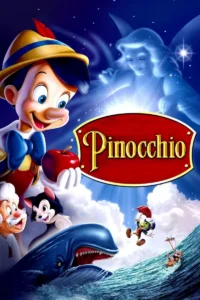
| 🎬 Title & Year | Pinocchio (1940) |
| 🎥 Director | Ben Sharpsteen, Hamilton Luske |
| 👥 Starring (Voices) | Cliff Edwards, Dickie Jones, Christian Rub, Mel Blanc, Walter Catlett |
| 🕒 Genre / Runtime | Animation, Family, Fantasy, Musical · 88 mins |
| 🔞 MPA Rating | G |
| ✝️ Core Faith Themes | Sanctification & Regeneration, Holy Spirit as Guide (Conscience), Repentance, Self-Sacrificial Love |
| 📖 Key Scripture | 2 Corinthians 5:17, Jonah 2:1–10, Romans 10:13, Galatians 5:1 |
Table of Contents
Exploring Disney’s classic animation through a Christian worldview reveals powerful Pinocchio faith lessons for our spiritual walk today. Following our discussions on Disney animation classics—Beauty and the Beast and Dumbo—the third installment in our series is none other than Pinocchio! Just like Dumbo and Beauty and the Beast, these classic Disney animations coming up on the blog were precious childhood companions that I used to watch repeatedly on VHS tapes. Although I am now blessed with a wonderful wife and am raising twin boys, the timeless warmth and nostalgia of classic Disney remain unforgettable. I believe this enduring emotional resonance is precisely what gives the Disney brand its immense influence today.
Without further ado, let us dive into our third Disney masterpiece! Are you ready to venture into the belly of the whale alongside Pinocchio?
When you think of the classic Disney animation Pinocchio (1940), what comes to mind first? The iconic growing nose whenever he tells a lie, the timeless melody of “When You Wish Upon a Star” sung under the night sky, or perhaps the wise little cricket, Jiminy Cricket, who faithfully stays by Pinocchio’s side.
When viewed through a Christian worldview, the journey of Pinocchio offers timeless Pinocchio faith lessons on sanctification and redemption—vividly illustrating how we, who were once spiritually dead in sin, are reborn as true children of God through His transforming grace.
“When You Wish Upon a Star”: Beyond Wishing on a Star to True Prayer Before God
I chose Pinocchio’s iconic signature theme as our first topic because its opening lyrics resonated deeply with me and hold profound spiritual beauty when viewed through a Christian worldview:
“When you wish upon a star, makes no difference who you are…”
The world constantly evaluates people based on social status, qualifications, background, or physical appearance. Before God, however, “who you are” or how unqualified you may feel does not matter. Even if we are sinners—fragile and unworthy like a wooden marionette—God extends His unconditional grace, listening to the cries of anyone who calls upon His name. I firmly believe that God hears every single one of our heartfelt prayers and longings.
I cannot recall in which exact post I shared this personal memory before, but during my university years, a professor once said that whenever we see the sun, the trees, or the clouds, our thoughts should immediately turn to God. In the same way, while people of the world gaze at the unreachable stars in the night sky and wish upon vague fate, we as Christians approach the living Creator God who fashioned those very stars and hears our deepest groans. Therefore, when we look up at the stars and the moon tonight, we ought to remember the Lord who created us. Just as one gazes at a star shining in the dark, pouring out our sincere hearts toward God in the midst of despair moves the faithful hand of His divine providence. I hope these opening lyrics from Pinocchio speak powerfully to your heart as they did to mine.
Jiminy Cricket: The Indwelling Holy Spirit and the Voice of Conscience
Hearing Geppetto’s earnest prayer, the Blue Fairy breathes life into the wooden puppet Pinocchio and formally appoints Jiminy Cricket as Pinocchio’s official “Conscience” and guide. It is truly remarkable how directly the film identifies Jiminy Cricket as the conscience:
“A conscience is that still, small voice that people won’t listen to. That’s just the trouble with the world today.”
Whenever Pinocchio is swayed by the world’s myriad temptations and fleeting pleasures, Jiminy Cricket stays by his side, helping him discern right from wrong. This beautifully illustrates the role of the Holy Spirit (the Paraclete, our Advocate and Helper), who constantly guides believers with a still, small voice, convicting us of sin and leading us into all truth. In a world full of deafening noise, tuning our spiritual ears to the quiet voice of conscience and the Holy Spirit within us is vital. In another practical sense, parents often serve as Jiminy Cricket while our mischievous, headstrong children are like Pinocchio.
The Growing Nose: The Inescapable Nature of Sin and the Snare of Deceit
On his way to school, Pinocchio falls for the false promise of quick fame and easy success, ending up sold to a puppet show. When confronted by the Blue Fairy, he brazenly piles on lies to cover up his mistakes. With every falsehood, his wooden nose grows longer like a tree branch, eventually sprouting leaves and even a bird’s nest.
Once started, a lie snowballs, trapping the liar in their own web. The lengthening nose visually demonstrates the spiritual reality that hidden sin cannot remain concealed forever, and that persistent sin exposes ugly, binding consequences. Just as Pinocchio’s nose returns to normal only when he honestly confesses the truth, transparent confession and repentance before God are the only keys that break the chains of sin.
Think about when our children try to tell us a lie—does it ever really work? Parents can see right through their children’s fabrications. Seeing Pinocchio continue to lie even as his nose visibly grows reminds us of children who keep spinning excuses, unaware that their parents already know the truth and are simply waiting to offer grace and a chance to come clean.
Inside Monstro the Whale: The Sign of Jonah and the Place of Spiritual Turning
After narrowly escaping the danger of turning into a donkey on Pleasure Island, Pinocchio learns that his father Geppetto was swallowed by the giant whale Monstro while searching the seas for him. Without a moment’s hesitation, Pinocchio dives into the deep, dark ocean and enters the belly of the beast.
This scene parallels the Old Testament account of the prophet Jonah, who fled from the presence of the Lord and was swallowed by a great fish:
- The End of Disobedience and Wandering: Just as Jonah abandoned his calling to flee toward Tarshish and ended up trapped in the depths of a sea creature’s belly, Pinocchio chases self-indulgence and worldly temptations only to face rock-bottom despair inside the pitch-black whale.
- A Spiritual Tomb and Place of Rebirth: The belly of the whale was not merely a place of destruction. For Jonah, it was a secret chamber of repentance and prayer where his pride was broken; for Pinocchio, it was a pivotal turning point where he reunited with his father and discarded his self-centered, immature puppet identity.
Only after passing through the belly of the whale did both Jonah and Pinocchio emerge into the world as completely transformed individuals. In many ways, God utilized the belly of the sea creature as a spiritual training ground for both of them.
Self-Sacrificial Love to Save the Father: Born Anew into True Life
After escaping the whale by lighting a fire to create smoke, the enraged Monstro pursues them through crashing waves. Pinocchio holds onto his weakening father and swims desperately toward safety. After successfully pushing Geppetto onto the shore, Pinocchio lies lifeless, face down on the cold beach.
The selfish wooden puppet who once lived only for his own desires made the ultimate sacrifice—laying down his own life out of selfless love to save his father.
As Geppetto weeps and prays over the lifeless wooden body, the Blue Fairy reappears and declares:
“Now that you have proven yourself brave, truthful, and unselfish, you are ready to be a real boy.”
Awakened by divine light, Pinocchio is no longer a puppet controlled by external strings, but is resurrected as a real, living son with a beating heart and warm blood. This touches the very core of the Gospel. When we lay down our old selves and embrace sacrificial love, we are freed from being puppets of sin and worldly desires, reborn as true children of God who possess eternal spiritual life. Through Pinocchio’s sacrifice, our hearts naturally turn to Jesus Christ, who died on the cross in our place.
Furthermore, as we will explore in a future post, this mirrors the final hurdle in The Pilgrim’s Progress, where the protagonist Christian must cross the River of Death before entering the Celestial City. Ultimately, both Pinocchio and The Pilgrim’s Progress remind us that we must die to our old selves and be regenerated by God’s grace to become entirely new creations.
“What are the invisible strings of the world still pulling and controlling your life today?”
“Therefore, if anyone is in Christ, the new creation has come: The old has gone, the new is here!”
2 Corinthians 5:17
Key Takeaways & Faith Insights
- The Grace of Sincere Prayer: Just as Geppetto’s humble longing reached the heavens, God listens to our honest prayers regardless of our worldly qualifications, moving His faithful providence in our darkest nights. (Romans 10:13)
- The Guiding Voice of the Holy Spirit: Like Jiminy Cricket acting as Pinocchio’s official conscience, the Holy Spirit dwells within us as our Counselor (Paraclete), gently convicting us of truth amid the loud distractions of the world. (John 14:26)
- True Repentance and the Sign of Jonah: The dark belly of the whale was not a dead end, but a transformative chamber of repentance—mirroring the sign of Jonah where self-centered pride dies so new life can emerge. (Jonah 2:1–10)
- Regeneration Through Sacrificial Love: Laying down one’s life to save the father broke the strings of worldly bondage, transforming a lifeless wooden puppet into a living child of God through self-sacrificial love. (2 Corinthians 5:17, Galatians 5:1)
“When you wish upon a star, makes no difference who you are… Anything your heart desires will come to you.”
— Pinocchio
Explore More Screen Devotions:
- 🎬 Movies: Explore Other Faith-Based Film Reflections
- 🌍 Documentaries: Biblical Perspectives on Real-World Issues
Scripture taken from the Holy Bible, NEW INTERNATIONAL VERSION®, NIV® Copyright © 1973, 1978, 1984, 2011 by Biblica, Inc.® Used by permission. All rights reserved worldwide.