
The Drop Box: When Sacrificial Love Speaks Louder Than Words
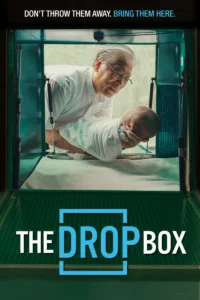
| 🎬 Title & Year | The Drop Box (2015) |
| 🎥 Director | Brian Ivie |
| 👥 Starring | Lee Jong-rak, Chun-ja (Chung-hee), Lee Eun-man, Brian Ivie |
| 🕒 Genre / Runtime | Documentary, Faith, Drama · 79 mins |
| 🔞 MPA Rating | PG-13 |
| ✝️ Core Faith Themes | Sanctity of Life (Imago Dei), Sacrificial Agape Love, Spiritual Adoption, Faith in Action |
| 📖 Key Scripture | John 9:3, Psalm 139:13–14, James 2:17, Romans 8:15 |
Table of Contents
Welcome, everyone! In this post, exploring The Drop Box faith lessons through a Christian worldview reveals how Brian Ivie’s moving 2015 documentary challenges us to live out the Gospel today.
Until now, we have discussed movies, animations, and documentaries largely produced within Western and American culture. But stay tuned! Going forward, I plan to cover not only Korean films, documentaries, and animations, but also remarkable works from the UK, Japan, China, and across the globe. Because I love cinema so much and have watched countless films over the years, I am constantly revisiting and reflecting on stories to re-examine them through a biblical perspective.
Returning to our main topic: as we look at The Drop Box, our first documentary set in South Korea, it is worth noting that while the physical backdrop and real-life protagonist—Pastor Lee Jong-rak and his baby box ministry—are in Seoul, the film itself is classified as an American documentary in terms of production and industry background.
In a fallen world marked by convenience and self-preservation, the documentary The Drop Box confronts us with the raw reality of abandoned infants in Seoul, South Korea, and the extraordinary sanctuary created by Pastor Lee. More than just an emotional human-interest story or an exposé on social challenges, this film is a living testament to the transforming power of God’s grace. It urges us to ask: Is our faith merely an intellectual confession of the lips, or is it demonstrated through sacrificial, life-altering actions?
A Lifeline in the Cold: Embracing the Sanctity of Every Life
The documentary centers on a simple, heated wooden box built into the exterior wall of Pastor Lee’s home—a sanctuary designed to rescue newborn infants who would otherwise perish in the freezing winter cold. Driven by the harrowing memory of nearly losing an abandoned infant left at his front gate in a cardboard box, Pastor Lee built this baby box so that no child in his community would die in secret.
Although I lived in Korea until my 20s, I honestly had no idea that something like the Baby Box even existed back then. Watching this documentary, every single scene filled me with deep conviction and self-reflection, realizing how little I had truly loved and cared for the individual souls and members of the church body around me.
As a father raising twin boys, I felt especially humbled. As shown in the film, Pastor Lee’s own biological son, Eun-man, was born with severe cerebral palsy and full-body paralysis. Pastor Lee cared for Eun-man in the hospital for 14 years, even selling his own home to provide for his son.
If my own children were in such a situation, I would do everything in my power to care for them, yet I honestly wondered if I could ever display the absolute selflessness and devotion that Pastor Lee demonstrated. Throughout the entire film, I was in awe of his extraordinary dedication.
At the same time, seeing the heartbreaking reality of child abandonment—not only in Korea but as a global social issue—grieved me deeply. It broke my heart to see so many irresponsible parents abandoning their children, especially knowing that every single one of these little ones is deeply loved and treasured by God.
Modern society often measures human worth by physical perfection, economic productivity, and social convenience. However, biblical truth stands in stark contrast to this utilitarian mindset.
Pastor Lee and his wife, Chun-ja (Chung-hee), do not view these vulnerable infants as social burdens or cold statistics. Through decades of caring for Eun-man bedridden at home, they came to realize that every child, regardless of physical ability or societal stigma, carries the sacred image of God (Imago Dei).
The baby box teaches us that unconditional love means embracing the weakest among us without asking what they can ever give back in return.
Agape Love in Action: Addressing Brokenness with Compassion
While watching the documentary, one defining phrase kept echoing in my mind: Agape Love. The film does not look away from the complex social tragedies surrounding infant abandonment—extreme poverty, the harsh social stigma placed on unwed mothers, and restrictive legal systems that push desperate parents into a corner.
While society often responds to these dilemmas with legislative debates and finger-pointing, Pastor Lee responds with direct, hands-on mercy. The world might label Pastor Lee’s choices as foolish, but it leads us to meditate on how differently God views his selfless obedience.
Whenever the bell chimes in the middle of the night, Pastor Lee does not stop to question why the world is so broken; he simply sprints down the stairs to embrace the child and offer compassionate counseling and pastoral support to the weeping parent outside.
This profound demonstration of mercy reflects the very heart of the Gospel: while we were still helpless and lost in sin, Christ gave His life to bring us into the family of God.
As I have shared in a previous post, during my school vacations in Korea, I used to volunteer at a school for children on the autism spectrum, running, playing, and sharing meals with them. Being around those children, I saw pure, innocent souls completely untainted by the corrupt culture of this world.
Even if they experienced physical limitations or communication challenges, they were, without question, precious children created by God.
Yet in the documentary, so many babies born with Down syndrome, cerebral palsy, or physical deformities are left in the drop box alongside desperate letters from parents confessing, “I have neither the financial ability nor the courage to face society’s cold stares.” Seeing that reality stirred deep sorrow and righteous anger within me.
As many of you know, the adoption process in countries like the United States is extraordinarily rigorous and demanding. When fostering or adopting a child from another family, there is always the emotional risk that biological parents may reappear, and raising a child requires immense dedication to ensure they are genuinely loved and never neglected. Because of this, the required coursework, background checks, and preparation programs are extensive. That is why online videos of grown children presenting surprise adult adoption papers to their step-parents—embracing and weeping together in gratitude—are so profoundly moving.
Adoption is a challenging, sacrificial road. Seeing Pastor Lee and his wife dedicate their entire lives to adopting and raising these children in their own home is truly miraculous. I am convinced that such life-giving devotion is impossible apart from the unconditional, Agape love of God.
A Testimony Louder Than Words: The Radical Conversion of Director Brian Ivie
Perhaps the most astonishing faith lesson from this documentary happened behind the camera lens. Brian Ivie, then a young film student from USC, originally traveled to South Korea simply looking for a compelling documentary story that could elevate his Hollywood directing career. In the beginning, he was an outside observer—a filmmaker chasing a story, not a faithful disciple of Christ.
Yet, as Ivie watched Pastor Lee surrender his personal comfort, weep over nameless newborns, and welcome severely disabled children as his own, he experienced a profound inward shift. He witnessed something that abstract sermons and intellectual debates could never convey: the living, breathing love of Jesus Christ in real time.
Moved by this sacrificial lifestyle, Brian Ivie underwent a radical personal conversion to Jesus Christ during the filming of the documentary. He came to understand the true essence of the Gospel: just like those abandoned infants left inside that small wooden box, every human being was once spiritually orphaned, broken, and helpless in sin. Yet God did not leave us outside in the cold; in His infinite mercy, He opened the door, paid our ransom through the Cross, and adopted us into His family.
We are witnesses to an incredible reality: not just a scripted scene within the camera frame, but a real-life transformation behind the camera. Director Brian Ivie’s conversion proves that one genuine, sacrificial act of love carries far greater evangelistic power than a thousand spoken words. People are rarely changed through theological arguments alone; their hearts are moved when they witness the tangible love and sacrifice of Christ lived out in someone’s life.
What kind of witness are we presenting today? When walking down the street, we often see people holding signs and shouting, “Jesus is our Savior! Believe in Him!” While their intention is not inherently wrong, I firmly believe that demonstrating God’s love through one authentic, sacrificial action is infinitely more powerful and effective in reaching someone’s heart than shouting words a hundred times.
“Jesus answered, ‘Neither this man nor his parents sinned, but this happened so that the works of God might be displayed in him.'”
John 9:3
How are we approaching our families, our friends, and our coworkers today?
Key Takeaways & Faith Insights
- The Inherent Sanctity of Every Life: God creates every soul with divine purpose. A person’s true worth is never determined by physical perfection, abilities, or social circumstances, for every child bears the sacred image of God (Imago Dei). (Psalm 139:13–14)
- Sacrificial Action Preaches Louder Than Words: Authentic Christian love is not proven through empty rhetoric, but through self-giving sacrifice. Just as Brian Ivie was moved to true repentance by watching Pastor Lee’s devotion, a Christlike lifestyle is our most powerful witness. (James 2:17)
- Spiritual Adoption into the Family of God: We were once spiritual orphans, abandoned and helpless in our brokenness. Remembering the unconditional grace that adopted us as sons and daughters of God compels us to extend sacrificial hospitality and compassion to a hurting world. (Romans 8:15)
“They are not the unnecessary ones in the world. God sent them here with a purpose.”
— Pastor Lee Jong-rak, The Drop Box
Explore More Screen Devotions:
- 🎬 Movies: Explore Other Faith-Based Film Reflections
- 🎨 Animation: Spiritual Insights in Animated Films
Scripture taken from the Holy Bible, NEW INTERNATIONAL VERSION®, NIV® Copyright © 1973, 1978, 1984, 2011 by Biblica, Inc.® Used by permission. All rights reserved worldwide.