
The Notebook Meaning: Love, Memory, Marriage, and Faith
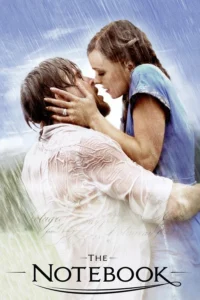
| 🎬 Title & Year | The Notebook (2004) |
| 🎥 Director | Nick Cassavetes |
| 👥 Starring | Ryan Gosling, Rachel McAdams, James Garner, Gena Rowlands, Joan Allen, James Marsden |
| 🕒 Genre / Runtime | Romance, Drama · 123 mins |
| 🔞 MPA Rating | PG-13 |
| ✝️ Core Faith Themes | Love as Commitment, Faithfulness in Suffering, Marriage as Covenant, Self-Giving Love, Resurrection Hope |
| 📖 Key Scripture | 1 Corinthians 13:4–7, Romans 5:8, Ephesians 5:25, John 11:25–26 |
Table of Contents
When people think of great romance films, The Notebook is one of the movies that almost always comes to mind. The first time we watch it, what stays with us most strongly may be the passionate love between young Noah and Allie—their different social backgrounds, their separation and reunion, the letters that never arrive, and of course the famous scene in the rain when they finally confront the love that never disappeared. But after watching the film all the way to the end, I find myself thinking less about the romance of their youth and more about Noah and Allie in old age. The film’s deepest question seems to be not simply, “How passionately did these two people love each other?” but rather, “Can I still love someone when the person I love no longer remembers me?”
Love in youth can be intense. We want to see the other person, be near them, and know that we are loved in return. But time changes almost everything. Bodies grow weaker, memories fade, personalities can be altered by illness, and the person beside us may no longer respond in the ways we once knew. The Notebook asks what remains when many of the things that made love feel effortless begin to disappear. Can love still endure when recognition itself starts to fade?
Love May Begin as a Feeling, but It Remains as a Choice
Young Noah and Allie come from completely different worlds. Noah is a poor young man, while Allie is the daughter of a wealthy family. They fall in love quickly over the course of one summer, but reality proves far more complicated than their feelings. Family opposition, social differences, misunderstanding, and separation eventually pull them apart. Noah writes Allie a letter every day for a year, but the letters never reach her, and Allie comes to believe that he has forgotten her. If the story stopped there, The Notebook might simply be remembered as a classic story of passionate first love and unfortunate timing.
But the deeper story begins decades later. Elderly Allie suffers from dementia and often forgets who she is and who Noah is. Noah reads the same story to her again and again, hoping that something familiar will return. Sometimes she recognizes him. Sometimes she remembers their life together for only a few minutes before the memory disappears again. At other times, she becomes frightened because the man sitting beside her feels like a stranger. Yet Noah continues to return. He reads again. He waits again.
That is where the meaning of love begins to change for me. Young Noah’s love says, “I want to be with you.” Old Noah’s life seems to say something much harder:
“Even when you cannot remember me, I will remember you.”
1 Corinthians 13:4–7 tells us that love is patient and kind, and that it perseveres and endures. We hear those words so often at weddings that it can be easy to forget how demanding they really are. Patience sounds beautiful when two people are young and in love. It becomes much heavier when love requires repeating the same story, enduring confusion, receiving little recognition in return, and remaining present when the other person can no longer give back what they once could.
That does not mean every unhealthy or destructive relationship should simply be endured in the name of love. Christian love does not require ignoring abuse, wisdom, boundaries, or the need for protection. But within the film’s portrayal of aging and illness, Noah’s devotion raises an uncomfortable question: Do I measure love mainly by what another person can return to me? If my love depends entirely on being appreciated, remembered, affirmed, or emotionally rewarded, what happens when those things disappear?
When Memory Fades, Does the Relationship Disappear?
One of the most painful things about The Notebook is that Allie does not forget Noah because she has stopped loving him. She forgets him because of illness. His name disappears from her mind, along with the years they shared, the family they built, and sometimes even her awareness of who she herself is. Most human relationships are held together partly by memory. We remember first meetings, conversations, promises, anniversaries, arguments, reconciliations, private jokes, vacations, disappointments, and ordinary days that became meaningful simply because we lived them together. Memory becomes part of the relationship itself. So when memory begins to disappear, it raises a difficult question: does the relationship disappear with it?
Noah’s answer is no. Inside Allie’s mind, he repeatedly disappears and returns, but Noah’s love continues even in the spaces where she cannot remember him. Her ability to remember him does not determine whether his love exists. That distinction makes me think about the faithfulness of God. Human love and divine love are not the same thing, and Noah should not be turned into a direct image of Christ. Still, Scripture repeatedly shows that God’s faithfulness is not sustained by the stability of our emotions, memory, or strength. Romans 8:38–39 declares that neither death nor life, nor anything else in all creation, can separate us from the love of God that is in Christ Jesus. Human memory weakens. Emotions change. Bodies age. Yet God’s love does not appear and disappear according to our changing condition.
This question becomes especially powerful when we think about marriage. The first half of The Notebook gives us the kind of scenes that define cinematic romance: the rain, the letters, the restored house, the excitement of finding each other again. But I believe the film becomes much stronger when Noah and Allie are old. Dating often allows us to see someone at their best—the carefully chosen clothes, the exciting conversations, the attraction, laughter, and desire to spend more time together. Marriage, however, means sharing a much longer stretch of life. There are healthy days and sick days, joyful seasons and exhausting ones, moments of beauty and moments of weakness.
That is one reason Christian marriage has historically been understood not merely as romance but as covenant. Feelings matter, but covenant does not survive on feelings alone. In Ephesians 5:25, husbands are called to love their wives as Christ loved the church and gave Himself up for her. The direction of that love is self-giving rather than merely self-satisfying. It asks not only, “What am I receiving from this relationship?” but also, “How can I remain faithful when love becomes costly?”
At the same time, I do not think every choice Noah and Allie make in their youth should be treated as a model of biblical romance or marriage. Their relationship is impulsive in places, emotionally volatile, and their reunion occurs while Allie is already engaged to another man. A Christian reading of the film should not declare every part of their love story beautiful simply because it is passionate. In fact, that makes the later part of the film more meaningful to me. The most convincing picture of love in The Notebook may not be the famous kiss in the rain. It may be an old man sitting beside a woman who sometimes no longer knows who he is.
“Do You Think Our Love Can Take Us Away Together?” — Love, Death, and Hope
Near the end of the film, Allie briefly regains her memory and recognizes Noah. For a moment, the years return. They remember the life they shared, look at each other again as husband and wife, and Allie asks whether their love can somehow take them away together. Eventually, they die beside one another, holding hands in the same bed. As a cinematic ending, it is heartbreaking and beautiful. But from a Christian worldview, it also reveals the limit of human love. No matter how deeply we love another person, human love cannot ultimately defeat death.
We can remain beside someone until the end. We can hold a hand, keep a promise, care for a failing body, and refuse to abandon someone when illness changes everything. But we cannot, by the power of our own love, keep another human being alive forever. That is precisely why the Christian hope of resurrection matters. In John 11:25–26, Jesus declares, “I am the resurrection and the life.” Christianity does not teach that the greatest fulfillment of love is simply growing old together and dying on the same day. It offers a hope beyond the grave: in Christ, death itself does not have the final word.
That changes the way I read the ending of The Notebook. Noah’s faithfulness is beautiful, but it still reaches a boundary he cannot cross by his own strength. Human love can accompany another person to the edge of death, but it cannot conquer death. Christian hope rests not in the power of human love but in Christ, who promises life beyond it. That does not make grief disappear or make loss less painful, but it means death does not have to become the final chapter of the story.
As I watch Noah and Allie in their final years, I find myself returning to the question of what love actually is. Is love only staying while someone is beautiful, healthy, emotionally available, and able to return my affection? Is love valuable only while the other person remembers me and says, “I love you” back? Or can love sometimes say,
“Even in your weakness, even in your illness, even when you do not recognize me, I will still see you as the same person I promised to love”?
Young Noah sent Allie hundreds of letters, but perhaps old Noah does something far more difficult. He sits beside the same woman and tells the same story again and again. He waits for memories that return only briefly before disappearing. He remains when she is frightened by him, and he comes back even after the person he loves looks at him as though he were a stranger. To me, that is the most beautiful expression of love in the film.
The excitement of first love can change over time. Youth fades. Appearance changes. Even memory itself can disappear. But if love becomes something more than emotion—if it becomes commitment, patience, presence, and faithfulness—it begins to take on an entirely different depth. So after watching The Notebook, I am left with a question that feels much more difficult than asking whether Noah and Allie were meant to be together:
Do I love only when I am being loved in return, or do I love because I have chosen to love?
And if someone I love someday changes dramatically from the person I once knew, will I still be able to recognize the same precious person in front of me?
Perhaps love is not simply saying, “I love you because you remember me.” Sometimes love may simply say:
“Even when you no longer remember me, I will remember you.”
Key Takeaways & Faith Insights
- Love Is More Than a Feeling: Love may begin with emotion, but emotion alone cannot sustain it forever. Patience, endurance, and the choice to remain present when another person becomes weak can give love a much deeper meaning. 1 Corinthians 13:4–7
- True Love Does Not Depend Only on What We Receive: We should not measure the value of love only by what another person can give back to us. God loved us before we could ever repay that love, reminding us that love sometimes moves toward another person before receiving anything in return. Romans 5:8
- Marriage Is a Covenant, Not Only a Romance: Marriage is more than sharing excitement and happy moments. It is a covenant that may include walking together through illness, weakness, aging, and seasons when love requires costly faithfulness. Ephesians 5:25
- Death Does Not Have the Final Word: Human love ultimately encounters the boundary of death, but Christian faith looks beyond that boundary toward resurrection. In Christ, separation by death is not the final chapter of the story. John 11:25–26
“Do you think our love can take us away together?”
Allie
Explore More Screen Devotions:
- 🎨 Animation: Spiritual Insights in Animated Films
- 🌍 Documentaries: Biblical Perspectives on Real-World Issues
Scripture taken from the Holy Bible, NEW INTERNATIONAL VERSION®, NIV® Copyright © 1973, 1978, 1984, 2011 by Biblica, Inc.® Used by permission. All rights reserved worldwide.