
The Odyssey: Pilgrimage, Repentance, and the Long Voyage Home
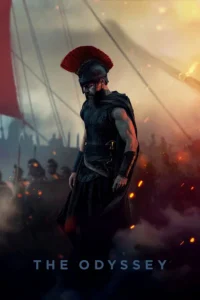
| 🎬 Title & Year | The Odyssey (2026) |
| 🎥 Director | Christopher Nolan |
| 👥 Starring | Matt Damon, Anne Hathaway, Tom Holland, Robert Pattinson, Charlize Theron |
| 🕒 Genre / Runtime | Action, Adventure, Drama · 172 mins |
| 🔞 MPA Rating | R |
| ✝️ Core Faith Themes | Spiritual Pilgrimage, Contrite Repentance, Sacred Hospitality (Xenia), Divine Judgment |
| 📖 Key Scripture | Psalm 51:17, Matthew 4:4, Luke 12:35–37, Luke 15:20–24, Hebrews 11:13–16 |
Table of Contents
About a month after the theatrical release of The Odyssey, my wife and I finally had the chance to watch it together last week. Exploring The Odyssey Christian worldview offers believers an incredible opportunity to reflect on our own spiritual journey through this epic storytelling. This cinematic narrative contains an immense depth of theological layers.
For those who prefer to explore specific themes, feel free to navigate directly to the relevant subheadings in the table of contents. However, for those who desire to meditate deeply on the entire epic through a biblical lens, taking the time to read through each chapter will undoubtedly offer profound spiritual insight and a precious moment to re-evaluate how we ought to live in this present world. Let us dive into the spiritual voyage of The Odyssey.
Homer’s ancient epic, The Odyssey, depicts the grueling twenty-year journey of Odysseus, King of Ithaca, following the fall of Troy. Far from being a mere mythological tale of seafaring exploits and mythical monsters, this narrative functions as a profound spiritual pilgrimage of the soul traversing a broken world saturated with temptation and sin to reach its true home. It closely mirrors Christian’s arduous path in John Bunyan’s The Pilgrim’s Progress, as he flees the City of Destruction toward the Celestial City. Simultaneously, it reflects the journey of the prodigal son in Luke 15, who returns home in humble brokenness only after losing everything in a distant, desolate country.
Underlying this entire journey is the ancient Greek law of hospitality, known as Xenia—a sacred mandate overseen by Zeus. This hospitality directly parallels God’s biblical standard of justice and righteousness, which commands His people to welcome the stranger and show impartial mercy to the fatherless and the widow (Matthew 25:40, James 2:1). To violate this divine law of care and exploit the weak inevitably invites spiritual judgment and inescapable ruin.
1. Circe’s Indictment: The Beastly Degradation of Humanity and the Image of God
Intoxicated by worldly triumph and the spoils of the Trojan War, Odysseus and his fleet arrive at the island of the sorceress Circe. Blinded by unchecked greed and gluttony, the crew hastily devours the luxurious banquet laid before them, only to be instantly transformed into literal swine by Circe’s sorcery. Circe delivers a stinging indictment: humans are often worse than brute beasts, unable to master their base desires while perpetuating relentless plunder, bloodshed, and war.
This harrowing episode unmasks the tragic reality of humanity’s fallen condition. Though created in the magnificent image of God (Imago Dei), men and women who surrender to carnal appetite degrade themselves into something far baser than animals. It reveals the utter devastation that occurs when individuals reject God’s spiritual rule in favor of the desires of the flesh.
Upon deeper observation, this confrontation connects directly with the film’s climax. Near the end of his journey, when Odysseus returns to his palace, he pours out his heart to his wife, laying bare the heinous acts and failures of his past as an act of raw confession. He openly acknowledges the truth of Circe’s accusation: he, too, was a fragile, fallen man who repeatedly broke the sacred laws of heaven. Herein lies the profound contrast: Agamemnon, forever intoxicated by military pride, met a gruesome death; Odysseus, having acknowledged his sin and humbly entered his home as a beggar, found life and restoration. This stark divergence sets the stage for the revelation that follows.
2. Encounter in the Underworld: The Divergent Fates of Two Kings and Agamemnon’s Warning
In his quest to consult the blind prophet Tiresias, Odysseus descends into the Underworld—the land of the dead situated at the far western edge of the world. There, he confronts the restless, tormented ghost of Agamemnon, the supreme commander of the Greek forces. Prior to sailing for Troy, Agamemnon’s blind ambition drove him to deceive his wife, Clytemnestra, falsely claiming that their daughter Iphigenia was to marry the hero Achilles, only to slaughter her as a sacrificial offering for favorable winds. Though he returned home wrapped in military prestige, the rotten harvest of his deceit awaited him: he was ruthlessly murdered by his own wife at his celebratory homecoming feast.
From the shadows of death, Agamemnon imparts a somber warning to Odysseus: “When you return to your native land, do not enter openly with royal arrogance. Disguise yourself in the rags of a beggar and enter secretly, observing first the true condition of your household.” Agamemnon’s catastrophic ruin serves as a grave warning against worldly success built upon pride and deceit, providing the crucial spiritual wisdom Odysseus needed to empty himself of entitlement and cultivate divine discernment.
3. The Sirens’ Seduction: Voluntary Restraint to the Mast and Spiritual Discernment
Acting upon Circe’s instruction, Odysseus charts his vessel near the rocky domain of the Sirens, creatures whose enchanting songs lure mariners into catastrophic shipwrecks. Confronted with a lethal allure that strips men of reason and draws them to leap into the depths, Odysseus blocks the ears of his crew with beeswax to silence the noise, while commanding them to lash his own body securely to the ship’s central mast.
The allure of sin can never be conquered through mere human willpower. Just as Odysseus bound his flesh to the wooden mast, believers must anchor themselves firmly to the wood of the Cross and the truth of God’s Word when facing the lust of the flesh and the lust of the eyes (Romans 13:14). It is only through voluntary self-denial and intentional surrender to divine truth that our souls remain anchored against the toxic songs of this world.
Furthermore, Odysseus does not steer away; he confronts the path of the Sirens directly. This mirrors the Christian’s calling to navigate through the fallen world. We could hypothetically isolate ourselves, closing our ears to reality, but can we truly survive completely severed from human society? We cannot. We are placed within secular cultures, daily exposed to worldly ideologies, inevitably hearing the seductive calls of the age.
For this very reason, we must bind our lives to the mast of the Cross and Scripture. Even when our carnal instincts scream in torment like Odysseus struggling against his ropes, the steadfast anchor of the Word holds fast.
Taking this reflection even deeper, Odysseus commanded his crew to ignore his desperate pleas, strictly forbidding them from untying him no matter how fiercely he begged. Do you have spiritual companions, family members, or church brothers and sisters who firmly refuse to untie you when you are tempted by the world? Conversely, are there loved ones begging you to release their spiritual restraints? When those around us battle against the seductions of the world, what kind of spiritual allies will we choose to be?
4. Scylla and Charybdis: A Leader’s Cold Silence and the Agony of Utilitarian Sacrifice
Odysseus’s vessel approaches a perilous channel bounded by catastrophic doom on either side. To the right lies the craggy cliff of Scylla, a six-headed predatory beast; to the left churns Charybdis, an immense whirlpool that swallows whole ships into the abyss. Knowing that steering toward Charybdis meant absolute annihilation for the entire crew, Odysseus chooses the path near Scylla’s cliff.
Knowing with absolute certainty that six of his loyal men would be snatched and devoured alive, he keeps this horrifying outcome hidden from them to prevent mass panic. When the monster strikes, lifting six screaming soldiers into the sky as they desperately cry out Odysseus’s name, the king stands entirely helpless, weeping in agonizing silence.
This scene lays bare the moral limitations of human leadership, where leaders routinely make cold calculations to sacrifice the few for the survival of the many. Odysseus is exposed not as a sinless savior, but as a compromised, limited mortal who falls short of upholding the absolute sanctity of life. It serves as an unvarnished portrayal of human weakness, showing a man brought face-to-face with unbearable moral compromises and unavoidable boundaries.
5. The Cattle of Helios and Ravenous Hunger: The Sins of Appetite and the True Spirit of Fasting
Eventually, the weary crew lands on Thrinacia, the sacred island of the sun god Helios. Odysseus gives strict orders never to lay a hand upon the sacred cattle. However, when violent headwinds trap the ship and all rations run dry, the men, driven to desperation by starvation, slaughter the forbidden herd while Odysseus withdraws to pray. The consequences of failing to govern physical appetite are immediate: once the ship puts out to sea, a divine tempest shatters the vessel with lightning, plunging every single sailor except Odysseus into a watery grave.
Throughout the Scriptures, physical hunger serves as an unrelenting test of faith. In the wilderness, Satan targeted Christ’s human hunger, urging Him to turn stones into bread. Jesus answered: “Man shall not live by bread alone, but by every word that comes from the mouth of God” (Matthew 4:4).
The crew’s destruction unveils the urgent, holy purpose of biblical fasting (Tsom). Fasting is far more than physical abstinence from food; it is a sacred spiritual posture through which we profess that our existence does not rely upon earthly bread, but on the living hand of God. By intentionally subduing our bodily appetites, we surrender control back to the Spirit. Perhaps it was precisely to confront this primal weakness that providence led them to the shores of Thrinacia.
6. Seven Years on Calypso’s Island: Forsaking Hedonistic Immortality for Divine Calling
Having lost his crew and adrift on the open sea, Odysseus washes ashore on Ogygia, an isolated paradise ruled by the nymph Calypso. Calypso provides for him with tender care, offering him eternal youth, exemption from death, and endless indulgence, keeping him bound to her island for seven years.
Yet, Odysseus refuses to let earthly paradise lull him into spiritual complacency. Day after day, he sits upon the coastal rocks, weeping bitterly as his heart longs for his homeland of Ithaca, his wife, and his son. The moment divine permission arrives, he willingly abandons the promise of eternal comfort, constructs a frail wooden raft with his own hands, and pushes out into the violent, storm-tossed seas.
True believers do not settle in the synthetic ease of worldly success. Though fierce tempests lie ahead, the authentic posture of faith demands stepping forward into the calling and family God has entrusted to our care. This prompts us to examine our own lives: what are the modern “lotus blossoms” and Calypso-like comforts that entice us to forget our heavenly identity and drift into the hedonism of secular culture?
7. Clinging to a Solitary Plank: The ‘River of Death’ in The Pilgrim’s Progress and Absolute Self-Denial
For me personally, this specific sequence carries an exceptionally profound weight, alongside the climactic confession Odysseus later shares with his wife.
His departure from Calypso’s sanctuary toward Ithaca was anything but smooth. Poseidon unleashes a furious tempest, smashing Odysseus’s handmade raft into splintered pieces. Stripped of everything, he has no crew to pull an oar, no sails to harness the wind, and no hull to weather the waves. Left with nothing but a single, shattered wooden plank, he is forced to cast his fragile body entirely into the mercy of the violent surf and howling winds.
This scene bears a striking resemblance to the climactic moment in John Bunyan’s The Pilgrim’s Progress, where Christian must cross the deep “River of Death” before passing through the gates of the Celestial City. Across that river, there is no bridge; pilgrims can cross only by abandoning worldly security, stepping into the current, and trusting entirely in divine grace. Just as salvation meets Odysseus only when his power, status, and self-reliance are stripped down to a broken plank, believers reach the heavenly country only by passing through absolute self-denial, relinquishing human strength to rest entirely on God.
Our life journey cannot be explained apart from the unmerited grace of God. Do we not confess Him as Ebenezer—the God who has helped us thus far? The more fiercely we grasp our money, worldly acclaim, and temporal control, the faster we sink into the abyss. Only when we confess that nothing belongs to us, that all things originate from God, and choose self-denial can we successfully navigate life’s waters under His divine guidance.
8. Argos the Faithful Hound: The Vigilant Heart of the Bride Awaiting the Master
Upon finally stepping onto Ithaca’s soil, Odysseus heeds Agamemnon’s counsel, disguising himself as an impoverished, withered beggar. After twenty years of absence, not a single inhabitant of the palace recognizes his face. Yet outside the gates, lying discarded upon a rotting heap of dung and covered with swarming vermin, rests Argos—the faithful hunting hound Odysseus raised in his youth.
Though too frail and broken to stand, the dying hound instantly picks up his master’s scent and voice. He perks his ears, wags his tail in joy, and, having clung to life for two decades solely to witness his master’s return, peacefully breathes his last.
As someone who loves dogs, this scene is deeply touching. Yet it carries a powerful spiritual message. For twenty long years, Queen Penelope guarded her integrity amidst relentless torment from invasive suitors. Does her unyielding endurance not closely mirror the steadfast loyalty of Argos?
The quiet faithfulness of both Argos and Penelope illustrates the spiritual posture of the bride awaiting the return of Jesus Christ. Our Lord declared: “Stay dressed for action and keep your lamps burning, and be like men who are waiting for their master to come home” (Luke 12:35–36). While the world indulges in hedonism, forgetting the true King and scorning Him when He appears in the humble garb of the needy, we must maintain the pure, discerning faith of Argos—recognizing the Shepherd’s voice and remaining watchful until the very end.
9. The Cowardice of Antinous: The True Nature of Evil and Inescapable Judgment
Antinous, the arrogant ringleader of the suitors, personifies systemic corruption. He desecrates the sacred laws of hospitality, pillages the royal estate, terrorizes Penelope, and schemes to murder young Prince Telemachus. When Odysseus enters as a beggar pleading for scraps, Antinous hurls a footstool at him, mocking his poverty with cruel contempt.
Yet, when Odysseus reveals his royal identity and strings his great bow of judgment, Antinous’s bravado instantly crumbles. Instead of drawing his blade with courage, he cowers, attempts to pass the blame onto his fallen companions, and desperately searches for an escape route.
Antinous’s disgraceful end unmasks the true character of Satan and the nature of sin. Evil masquerades as supreme and unyielding when oppressing the vulnerable, but when confronted by the righteous judgment of the sovereign King, it collapses into cowardly excuses (Revelation 20:11–15). The wicked acts committed during the master’s absence will inevitably face uncompromising justice before the fiery eyes of God.
10. Confession Behind the Veil: Odysseus’s True Repentance vs. Agamemnon’s Deceit
This quiet exchange represents the absolute climax of The Odyssey.
Before executing judgment upon the corrupt suitors, Odysseus, still clad in beggar’s rags, sits in the shadows of an adjoining room, conversing with his wife Penelope through a partition wall while his identity remains veiled. Unlike Agamemnon, who deceived his wife behind a veneer of victorious military glory and suffered a violent end, Odysseus uses this intimate space to confess his weaknesses, failures, and overwhelming grief.
He candidly speaks of his inability to uphold the divine laws of hospitality, weeping over the agonizing reality that he could not save his brothers-in-arms and was the sole survivor. Stripping away all pretensions of heroism, this heartfelt confession behind the veil was an act of genuine repentance (Metanoia). Like King David in Psalm 51, who cast himself down before God with a broken and contrite heart, Odysseus acknowledges his guilt and human limitations. Because he chose this path of brokenness, he escaped the deadly fate of Agamemnon, receiving marital restoration and redeeming grace.
In truth, both Agamemnon and Odysseus committed horrific atrocities during the sack of Troy: slaughtering innocents, plundering cities, burning sanctuaries, and desecrating the sacred statues of the gods. In their fallen nature, they were identical. Odysseus bore the heavy consequences of his transgressions, losing his youth, his ships, and every one of his comrades throughout his agonizing voyage. Yet, what distinguished Odysseus was his willingness to make atonement, confess his guilt, and genuinely repent. This true confession is the very posture we must bring before the throne of God.
11. Conclusion: The Odyssey Christian Worldview and the Final Horizon
Early in the narrative, Penelope voiced a quiet longing to leave her chaotic palace behind and sail toward the distant “western edge of the world.” At the conclusion, having reclaimed his throne, his household, and his royal dignity, Odysseus does not settle into domestic luxury or imperial entitlement. Instead, carrying an oar upon his shoulder, he prepares to embark once again toward the western horizon—to honor the fallen souls of his comrades and fulfill his spiritual vows of peace with heaven.
Having regained everything the world counts as ultimate—power, wealth, honor, and sovereign rule—he willingly lays it all down. His departure reminds us that no earthly kingdom can ever serve as our final resting place. Like the faithful patriarchs described in Hebrews 11:13–16, we confess that we are merely strangers and pilgrims passing through this temporal world. The Christian life does not consist of building permanent monuments of comfort on earth; it is an ongoing, consecrated pilgrimage of picking up our cross daily and rowing faithfully toward the better, heavenly home prepared for us.
“The sacrifices of God are a broken spirit; a broken and contrite heart, O God, you will not despise.”
As you navigate your own voyage of life, hold fast to the conviction that God is your steadfast compass. Though the horizon beyond the tumultuous waters may seem boundless and unseen, I pray for each of you who continues to sail faithfully forward today, anchoring your trust entirely in Him.
Key Takeaways & Faith Insights
- The Sacred Duty of Hospitality (Xenia): Violating God’s call to love our neighbor and protect the vulnerable inevitably invites spiritual ruin and divine judgment.
- The Discipline of Holy Fasting: Physical hunger tests our spiritual allegiance; unchecked appetites shipwreck the soul, while true fasting anchors our dependency on God’s Word.
- The “River of Death” & Absolute Self-Denial: Clinging to a broken plank in furious waves reminds us that reaching the heavenly country requires casting off worldly self-reliance to trust solely in divine grace.
- The Watchful Posture of Argos: Like the faithful hound waiting twenty years amidst palace corruption, believers are called to keep their lamps burning, discerning the Master’s return.
- Brokenness Over Deceitful Hubris: Unlike Agamemnon’s unrepentant arrogance, true restoration and reconciliation are born when we confess our sins behind the veil with a contrite heart.
“The clearest view of a man is from below.”
— Odysseus, The Odyssey
Explore More Screen Devotions:
- 🎨 Animation: Spiritual Insights in Animated Films
- 🌍 Documentaries: Biblical Perspectives on Real-World Issues
Scripture taken from the Holy Bible, NEW INTERNATIONAL VERSION®, NIV® Copyright © 1973, 1978, 1984, 2011 by Biblica, Inc.® Used by permission. All rights reserved worldwide.